Why Non-Diabetics Are Wearing CGMs Now
At a Glance
- A normal A1c doesn't rule out spikes. A Stanford study found the most reactive quarter of testers hit prediabetic range up to 15% of the time.
- A 7,000-person study confirmed glucose responses vary widely between people, the real case for tracking your own instead of guessing.
- Evidence that CGMs improve health for non-diabetics is still thin, worth knowing before you spend $150 to $300 a month on one.
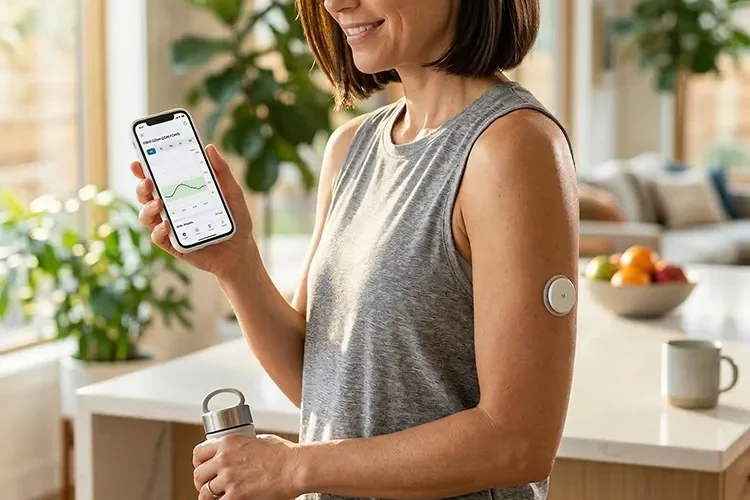
Using a CGM to track real-time glucose data for proactive lifestyle choices. (Image: AI-generated)
For a long time, glucose monitors were strictly a diabetes tool. These are the small wearable sensors also known as CGMs, short for continuous glucose monitors, or sometimes just called blood sugar monitoring. That's shifting. More people without a diagnosis are wearing one anyway, just to see what their own blood sugar is actually doing.
It's a fair question whether that's overkill if your annual A1c already comes back normal. Here's the honest answer. A yearly blood draw is one snapshot. A CGM is closer to watching the whole rest of the movie, meal by meal, day by day.
Why a Healthy-Looking Blood Sugar Can Still Spike
Plenty of people who'd call themselves healthy are surprised the first time they see their own numbers. A bowl of fruit or a slice of whole-wheat bread can push blood sugar to 160 mg/dL or higher, territory most people assume is reserved for diabetics.
A Stanford study that tracked continuous glucose data across a group of people considered normal by standard testing found something unexpected. Not everyone who tested normal looked the same up close. About a quarter of them showed a distinctly more reactive pattern, and for that group specifically, readings drifted into prediabetic range up to 15% of the time, and diabetic range up to 2% of the time, even though nothing on their annual labs would have flagged it.[1]
That's exactly what led the researchers to coin the term glucotypes in the first place. Two people can eat the exact same meal and land in completely different places, depending on which pattern their body runs.
That's really the whole case for a CGM. Your body's reaction to a specific food is yours, not a population average.
The 3 PM Crash, Explained
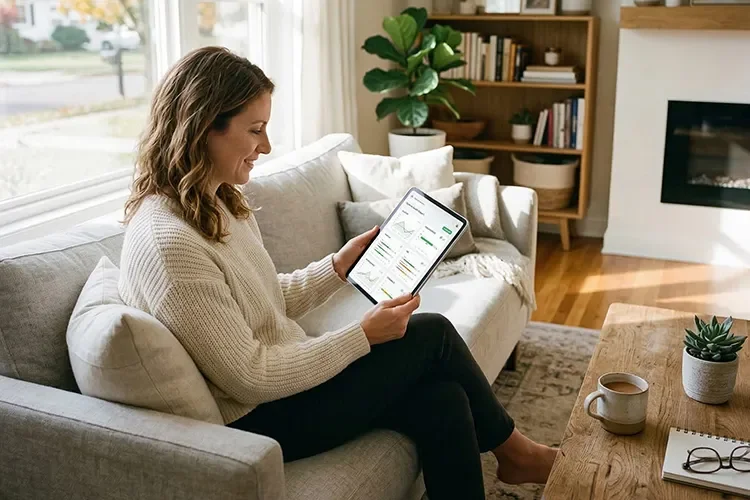
That familiar wave of fatigue in the mid-afternoon is often reactive hypoglycemia, a crash that follows a bigger spike from lunch. Seeing your own curve on a phone screen tends to reveal patterns fast. Some people find a salad before pasta keeps them under 110 mg/dL, while the pasta alone sends them well past it.
A Harvard Health review of consumer CGM use put it plainly. There's currently no published research showing that wearing one actually improves health outcomes for people without diabetes.
There's one small bright spot worth mentioning, though. In a separate small study, sedentary adults without diabetes who were overweight or obese wore a CGM alongside an activity tracker for 10 days, right after a counseling session on how movement affects blood sugar. Afterward, they reported feeling more motivated to exercise.[2] That's motivation, not a measured health outcome, so it's a small data point rather than proof the device changes anything long-term. The data itself is real. What you do with it, and whether it actually moves the needle on your health, is still more personal experiment than proven medicine.
Your Numbers Are Yours, Not a Population Average
Getting Started, Without Overthinking It
Watch Your Baseline First
Eat normally for a few days before changing anything, so you know your actual starting point.
Try Reordering Your Plate
Fiber and protein before carbs tends to soften the spike that follows.
Notice Sleep and Stress
A bad night or a stressful morning can move your fasting glucose as much as food does.
Connect the Dots
Cravings, irritability, and sudden fatigue often line up with a spike you can't feel happening in the moment.
Frequently Asked Questions
-
Yes. Since 2024, the FDA has cleared over-the-counter sensors built specifically for people without diabetes, including Dexcom Stelo and Abbott Lingo, sold directly online or at pharmacies. Prescription-grade sensors for medical diagnosis still require a doctor. Many people pair their sensor with an app like Levels or Nutrisense for easier tracking.
-
Most plans won't cover one without a diabetes diagnosis, so expect $150 to $300 a month depending on the brand and whether you add a data app. A lot of people wear one for just 1 to 3 months to find their personal trigger foods, then take it off rather than wearing it indefinitely.
-
It's a small flexible filament under the skin, not a needle, most people describe it as a quick pinch. The sensors are water-resistant and last 10 to 14 days, so showering, swimming, and workouts are all fine with it on.
Data You Can Actually Use
The real shift here isn't the sensor itself. It's moving from generic nutrition advice to eating based on how your own body actually responds, meal by meal. That's a meaningfully different kind of information than what a once-a-year lab panel can give you.
Sources & References
- [1] Hall, H., et al. (2018). "Glucotypes Reveal New Patterns of Glucose Dysregulation." PLOS Biology.
- [2] Shmerling, R.H. (2024). "Is Blood Sugar Monitoring Without Diabetes Worthwhile?" Harvard Health Publishing.
- [3] Keshet, A., et al. (2023). "CGMap: Characterizing Continuous Glucose Monitor Data in Thousands of Non-Diabetic Individuals." Cell Metabolism.
Read Next