Did I Sleep Well Today? How to Self-Assess Your Sleep Quality
At a Glance
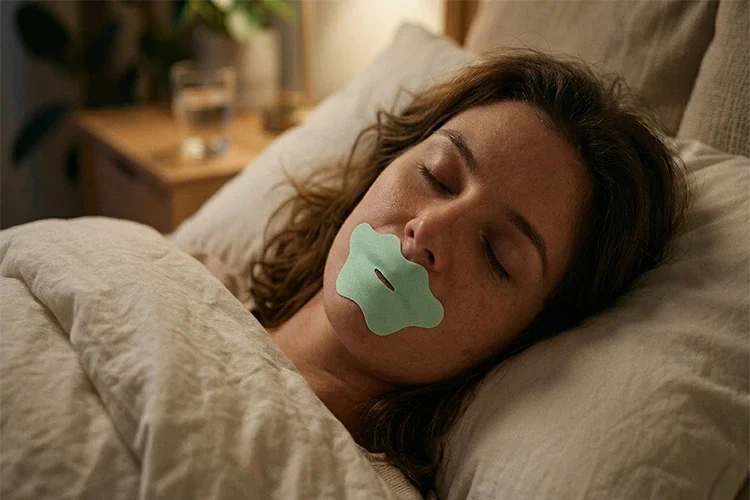
Click a point below to jump to the details.Creating a dark, quiet, and cool sleep environment to optimize physiological recovery. (Image: AI-generated)
Every morning, we subconsciously evaluate our rest. However, simple feelings of being "refreshed" cannot fully capture the complex regenerative processes occurring within.
Sleep is a precise engineering process where the biological system organizes data and repairs cells for the coming day.
Healthy sleep is achieved when multiple physiological elements work in harmony.
Let’s examine the scientific indicators that determine the actual quality of your sleep.
Sleep Latency and the Nervous System
Sleep latency is the time it takes to transition from wakefulness to sleep.
This duration reveals the current state of your autonomic nervous system.
Falling asleep in less than 5 minutes suggests a severe Sleep Debt. Your brain is essentially forcing a system shutdown due to exhaustion.
Taking over 30 minutes signals that cortisol remains elevated, keeping the brain in a state of hyper-arousal.
The Architecture of Sleep Continuity
The "density" of your sleep depends on how long you remain in an uninterrupted state.
Disrupting the cycles prevents the Glymphatic System—the brain's waste clearance mechanism—from functioning effectively.
High sleep efficiency is defined by minimal awakenings throughout the night.
Waking up once or twice is normal, provided you fall back asleep within 20 minutes.
Sleep Inertia and Daytime Resilience
Your morning sensation is the result of hormonal regulation.
The key is how quickly Sleep Inertia—the temporary grogginess upon waking—dissipates.
If your mind clears within 30 minutes, you likely woke up at the optimal point in your sleep cycle.
Sustaining focus without caffeine is a primary indicator of successful cellular repair.
Persistent heaviness suggests a lack of Slow-wave sleep (Stage 3), the deep phase where growth hormones facilitate physical restoration.
Scientific Q&A: Understanding Sleep Metrics
-
While it may provide temporary relief from fatigue, it can be counterproductive for your circadian rhythm.
Excessive sleeping on weekends causes "social jetlag," which worsens sleep inertia on Monday mornings. Maintaining a consistent wake-up time is the most refined strategy for shortening sleep latency and stabilizing your internal clock.
-
Dreaming primarily occurs during REM (Rapid Eye Movement) sleep, a stage dedicated to cognitive processing and emotional regulation.
Remembering dreams often means you woke up during or shortly after a REM cycle, but dreaming itself is not a sign of poor sleep quality. However, if your dreams leave you feeling exhausted, you should evaluate your overall sleep continuity.
-
Wearable devices are excellent for monitoring general trends and patterns, but they lack the medical precision of a clinical polysomnography (sleep study).
Avoid obsessing over the numbers—a condition known as "orthosomnia"—as this stress can hinder actual sleep. Instead, use your morning mental clarity and daytime energy levels as your primary benchmarks for success.
Engineering the Environment for High-Density Rest
To shift from mere "sleep" to biological "optimization," consider these variables:
Thermoregulation
Photobiological Protection
Melatonin is only secreted in darkness. Blue light mimics sunlight, sending signals to the brain to halt melatonin production.
Circadian Consistency
Keeping a fixed wake-up time, even on weekends, stabilizes your internal clock and improves sleep latency.
Sleep is the most precious regenerative process we offer ourselves. Tonight, instead of obsessing over the clock, listen to the subtle signals of your body.
Your Strategic Path to Recovery
Sleep is not a passive state of rest, but an active, "precise engineering" period for neural detoxification and cellular repair.
By monitoring your sleep latency and optimizing your environment—especially thermoregulation—you are not just sleeping; you are strategically biological-resetting your system.
Tonight, listen to your body's subtle signals rather than just the clock.
Sources & References
- [1] National Sleep Foundation. "What is Sleep Quality? Clinical Definitions and Assessment" TheNSF.org Official Resources.
- [2] Xie L, et al. (2013). "Sleep Drives Metabolite Clearance from the Adult Brain" Science (NIH/NINDS Funded Research).
- [3] Sleep Foundation (2024). "Sleep Efficiency Methodology: Evaluation standards for personal sleep metrics" Sleep Medicine Review.
- [4] The Joint Commission (2021). "Healthy Sleep Habits: Recommendations for neuro-recovery and sleep hygiene" The Joint Commission Journal on Quality and Patient Safety.
Read Next