Why Your Skin Is Rejecting Your Foundation
At a Glance
- Cakey foundation is often a sign of dead skin buildup or dehydration, not a bad product.
- Giving your skincare a 3-minute Golden Window to absorb can help your base last longer.
- Basics like hydration and double cleansing often matter more than expensive products.
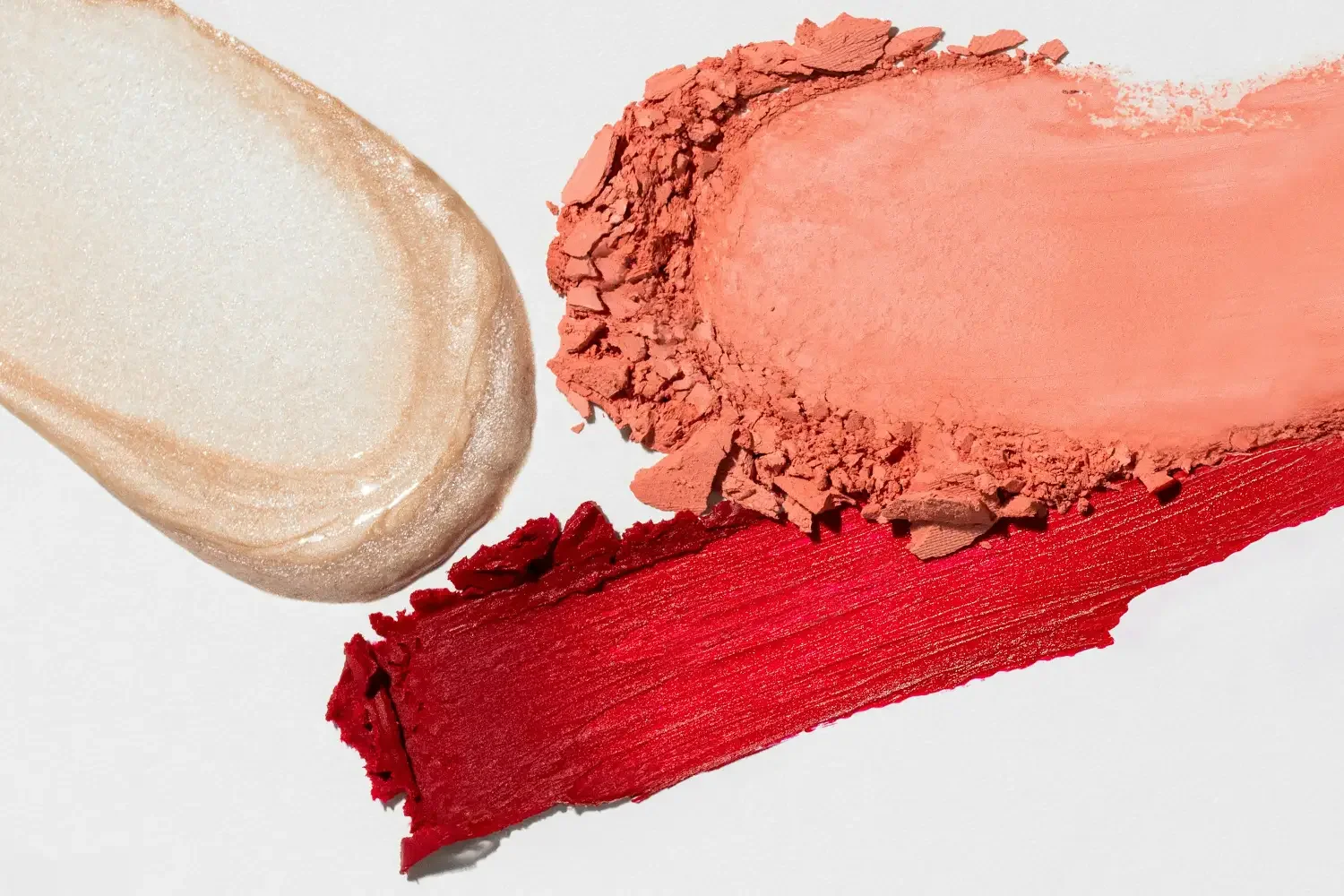
Decoding your skin's signals. The first step to a balanced, perfect canvas. (Image: AI-generated)
You spend thirty minutes perfecting your base. An hour later, it settled into your fine lines and started peeling around your nose.
It's frustrating, but this isn't just a streak of bad luck. It's your skin sending a distress signal.
While most people immediately look for a new foundation, the culprit is usually the canvas, not the paint. Your skin is a living ecosystem, and if the preparation is sloppy, even the most expensive formula will eventually fail.
When these cells don't shed naturally, they create a rough, uneven texture that foundation clings to in all the wrong ways. It's like trying to apply a sticker to a dusty surface. There's simply no grip.
This is what's really happening to your skin when makeup turns cakey.
The Rush Job That's Working Against You
In the morning rush, every second counts, but speed is the enemy of a flawless finish.
Layering serum, moisturizer, sunscreen, and foundation in rapid succession creates a literal mudslide on your face.
The ideal state for makeup application is when your skin feels tacky and plump to the touch, not slippery or wet.
If your face still feels greasy three minutes after your skincare routine, you've likely applied too much product for your skin type to handle. In this case, gently blotting your T-zone with a clean tissue is a necessary step.
Over-moisturizing is just as detrimental to makeup longevity as under-moisturizing.
Apply toner immediately after cleansing to prep the skin while it's still damp.
Layer thin coats of hydrating serum rather than one thick glob for better penetration.
Use a pea-sized amount of cream to seal the barrier without creating excess slip.
Balancing Exfoliation and Hydration
A smooth surface is a key foundation for a "glass skin" finish, but over-exfoliating is a one-way ticket to a compromised skin barrier.
Instead of harsh physical scrubs, opt for gentle chemical exfoliants that refine texture without causing micro-tears. When your skin is irritated or inflamed, it becomes significantly more difficult for makeup to sit naturally.
Once or twice a week, dedicate time to a deep hydration ritual with a sheet mask or a wash-off pack. The key here is ensuring that any residual essence is fully patted into the skin before you even think about picking up a foundation brush.
Any leftover residue sitting on the surface will act as a lubricant, causing your makeup to slide right off. True radiance comes from deep internal hydration, not from the sticky film left by a mask.
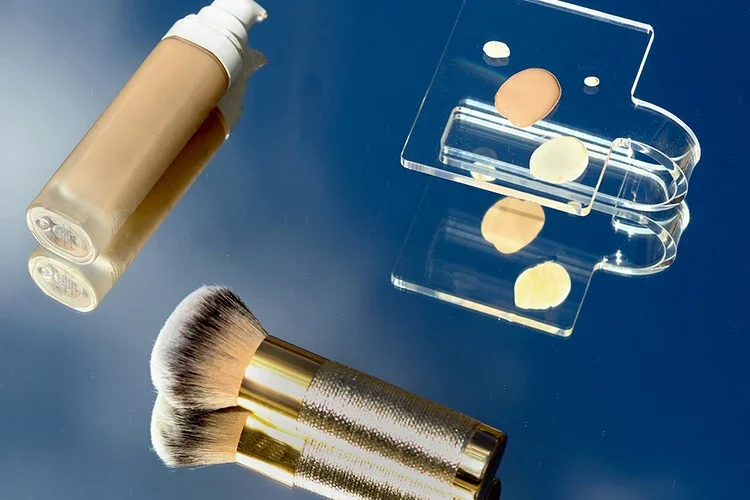
Credit: Karen Morales / Unsplash
Sponges, Brushes, and the Blending Truth
Your fingers are great, but they aren't always the best tools for the job. The natural heat from your hands can cause some foundations to set too quickly or unevenly.
For those dealing with visible pores or uneven texture, tools offer a level of precision fingers can't match. If you use a sponge, dampen it with lukewarm water and squeeze it out until it's barely moist. This allows the sponge to press moisture into the skin while depositing a thin, even layer of pigment.
If you prefer a brush, use a light hand and follow the natural direction of your skin's texture. Applying too much pressure can buff away the skincare you just applied. Try using half the amount of product you think you need.
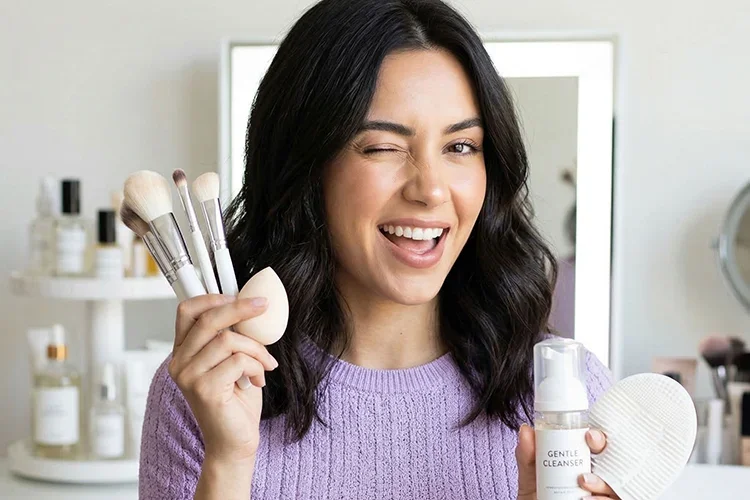
But here's the thing, even the best blending technique won't work if your brush is caked with old makeup and bacteria. Check out our quick guide on how to clean your makeup brushes to keep your tools fresh and skin safe.
Thin, strategic layers are the professional secret to preventing makeup from caking. Remember, coverage should be built, not dumped on all at once.
Habits That Protect Your Glow Until 5 PM
A flawless morning application means nothing if it doesn't survive the day.
Environment plays a huge role; low humidity in air-conditioned offices can zap the moisture from your face in an instant. Keeping a small humidifier at your desk can drastically reduce the need for touch-ups.
If you're dehydrated internally, your skin will reflect it by looking dull and parched.
Your evening routine also dictates your morning success. Failing to double cleanse can often leave behind debris that will clog your pores and create texture issues the next day.
Cleansing isn't just about removing today's makeup. It's about preparing the canvas for tomorrow.
Frequently Asked Questions
-
Every second counts in the morning. If you're in a rush, focus on layering thin amounts rather than applying one thick layer. You can use the warmth of your palms to press the product in or even a small hand-held fan to help set the moisture barrier.
The best trick? Do your skincare first, then dry your hair or pick your outfit. This naturally creates that absorption window without you having to sit around doing nothing.
-
This is usually a matter of ingredient compatibility. Certain gel-based moisturizers contain polymers that form a film on the skin, which can ball up if you swipe foundation over them.
Try not to swipe. Use a sponge to pat and press the makeup onto your skin. Also, try switching to a lightweight lotion instead of a heavy gel-cream before your makeup routine to avoid that clumping effect.
-
Pounding more cushion or powder on top of a mess is like adding fuel to a fire.
First, lift away the excess oil and bunched-up makeup using a cotton swab or a pad with a tiny bit of lotion. Once the area is clean, apply a very small amount of concealer or cushion only where needed. Remember, the key to a fresh touch-up is subtractive, not additive. It’s best to clear the canvas before you repaint it!
Less Product, More Patience
Makeup shouldn't be this stressful. If your foundation isn't sitting right, that's your skin asking for a simpler routine, not a stronger one. Get protection, balance, and patience right, and the rest follows. Not even a "miracle" product beats that.
Sources & References
- [1] Walters, M. (2022). "Boost Your Skin's Regeneration Process for a Glowing, Vibrant Complexion." Healthline.
- [2] Verdier-Sévrain, S., et al. (2007). "Skin Hydration: A Review on Its Molecular Mechanisms." Journal of Cosmetic Dermatology.
- [3] National Eczema Association. (n.d.). "Moisturizing for Eczema." National Eczema Association.
- [4] Mayo Clinic. (2026). "Water: How Much Should You Drink Every Day?" Mayo Clinic.
- [5] Oyetakin-White, P., et al. (2015). "Does Poor Sleep Quality Affect Skin Ageing?" Clinical and Experimental Dermatology.
Read Next