Beyond Skin Twins: Rewriting Your Epigenetic Clock for True Skin Longevity
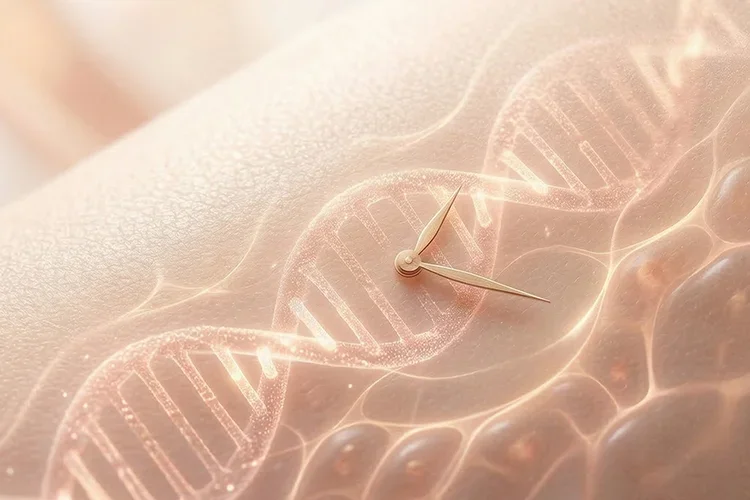
A new era where biological time is optimized through cellular analysis. (Image: AI-generated)
The modern beauty landscape is shifting. It is no longer just about "anti-aging"—it is about the science of biological rejuvenation. We are moving past simply covering up the passage of time. Instead, we are learning to decode the "software" that runs our cells.
Personally, I find this perspective revolutionary. It means aging is a process we can learn to navigate and recalibrate, rather than just observe as a passive decline.
Understanding Epigenetics
Think of your DNA as a grand piano. You are born with 88 keys—your genes—and they never change. But how that piano actually sounds? That is Epigenetics. It is the tuning, the technique, and the constant care you give the instrument.
Over time, environmental "noise" like stress or UV exposure can make the strings drift out of tune. Skin longevity isn't about buying a new piano. It is about the art of precision tuning—restoring the original, high-resolution output of your own biology.
The Epigenetic Clock — Real Age vs. Calendar Age
Your calendar age is just a number, but your biological age—how old your cells actually act—is the true measure of your skin’s health. This is tracked by the Epigenetic Clock, which monitors how much environmental "dust" has accumulated on your genetic switches.
The goal of precision beauty is to address these internal signals early. By doing so, we can support the skin and recalibrate its performance before visible changes like deep wrinkles or sagging become prominent.
Case Study: Future Scenarios
Imagine a 42-year-old whose AI Skin Twin identifies a biological skin age of 48. By following a six-month precision regimen tailored to their unique data, it became possible to see a measurable reversal in these aging markers. This journey proves that with the right data, we can actively recalibrate our skin’s future, keeping it younger than the numbers suggest.
*Note: This scenario is an illustrative example of how AI skin data and epigenetic protocols can interact; individual results may vary.
Nurturing 'Youth Signals' through Cellular Support
This process focuses on supporting Sirtuin proteins, often called the "guardians of the genome." These proteins act like a specialized repair crew, helping to maintain the health of your DNA and encouraging the genes responsible for natural collagen.
To support this internal environment, many are exploring high-performance ingredients:
NAD+ Precursors
These act like a battery recharge for your cells, boosting the energy (ATP) required for deep repair.
Sirtuin Activators
Think of these as personal trainers for your "guardian" proteins, keeping your genomic health in peak condition.
Exosome
These are the sophisticated messengers of the cellular world, helping your skin communicate and regenerate more effectively.
Precision Over Guesswork
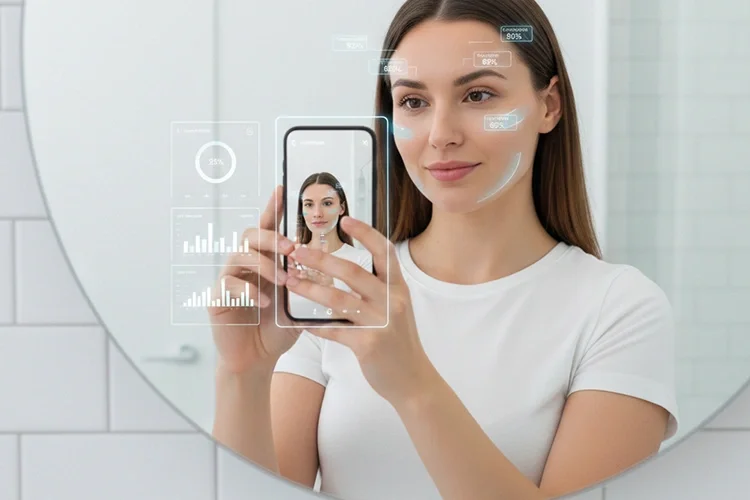
Instead of guessing what your skin needs, the AI Skin Twin lays out what's genuinely going on beneath the surface. It takes your biological data and turns it into something you can follow, often catching changes well before they show up visibly.
Imagine being able to predict how a new serum will react with your skin before you even open the bottle. AI-driven simulations make this possible.
This approach helps reduce the expensive trial and error that often leads to skin irritation. Personalizing your routine with AI data helps ensure that your choices are aligned with your skin's real-time needs.
The Future of Your Biological Legacy
Engaging with longevity experts and utilizing real-time AI tracking is becoming the new standard for those intentional about their health. Ultimately, you are no longer a passive observer of your reflection in the mirror. You are becoming an active participant in your skin’s future. In my view, that is the true definition of a biological legacy.
Sources & References
- [1] Yang, J. H., et al. (2023). "Loss of Epigenetic Information as a Cause of Mammalian Aging." Cell.
- [2] Horvath, S., & Raj, K. (2018). "DNA Methylation-Based Biomarkers and the Epigenetic Clock Theory of Ageing." Nature Reviews Genetics.
- [3] Lu, Y., et al. (2020). "Reprogramming to Recover Youthful Epigenetic Information and Restore Vision." Nature.
- [4] L'Oréal Group (2026). "L'Oréal Advances Leadership in Beauty Tech by Bringing the Power of Infrared Light to Hair and Skin at CES® 2026." Official Press Release.
Read Next