At a Glance
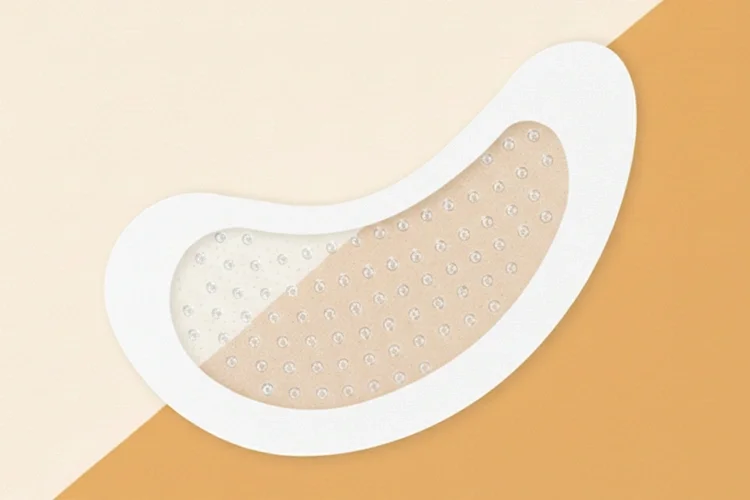
- Flexible OLED patches glow across their whole surface, so they can bend along the face and spread light evenly instead of in a grid of dots.
- Early research on OLED light looks promising for collagen, but the results so far come from lab-grown cells and mice, not people wearing patches at home.
- Red light isn't for everyone. A darker skin tone, a light-sensitive condition, or certain medications are all reasons to talk with a dermatologist first.
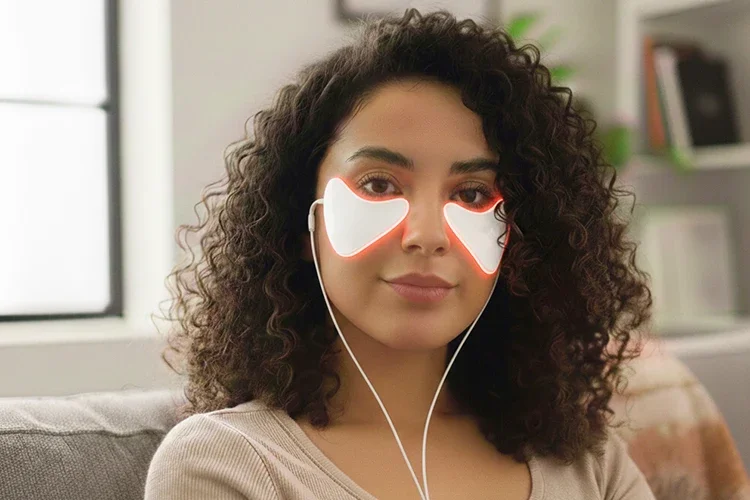
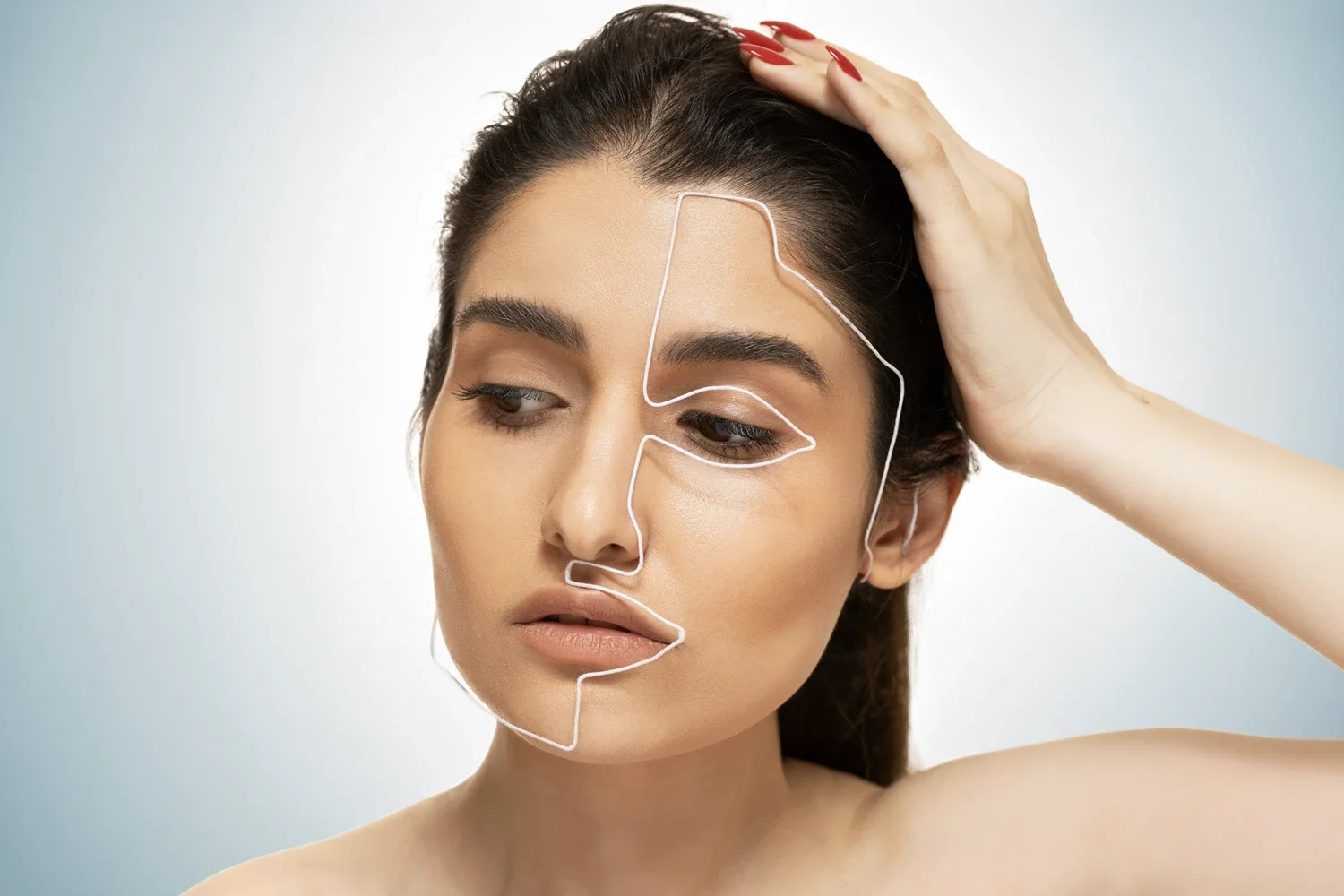
A flexible light patch is designed to rest flat against the skin, rather than hovering above it like a rigid mask. (Image: AI-generated)
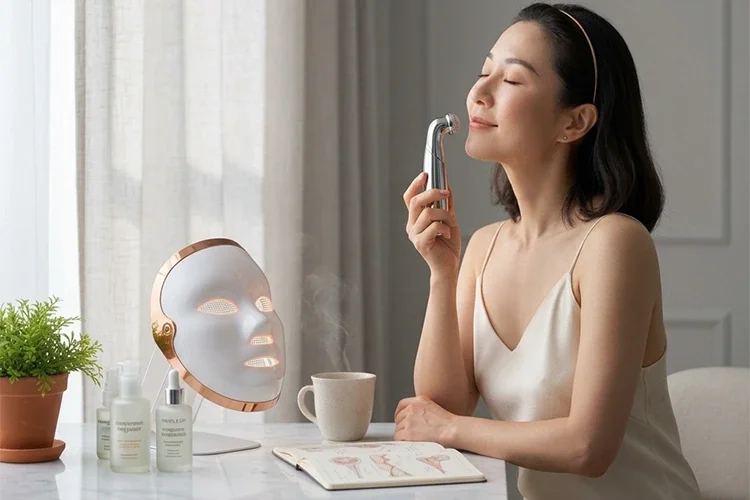
LED masks earned their spot on the vanity for good reason. They’re also rigid, a little heavy, and they hover over your face rather than touching it.
That gap is where flexible OLED patches come in. Instead of a hard shell studded with tiny bulbs, picture a sheet of light thin enough to bend along your cheekbone.
That mask is LED, not OLED. But it points in the same direction. Lighter, closer to the skin, and far easier to fit into an ordinary evening.
What Makes OLED Different From an LED Mask
Standard LEDs are point sources. Each tiny bulb shines from a single spot, which is why an LED mask glows in a pattern of dots.
OLED stands for organic light-emitting diode. Instead of separate bulbs, a thin organic film lights up across its entire surface.
Distance plays a part too. Light spreads out as it travels away from its source. A patch resting flat against the face closes the gap a rigid mask leaves around the nose, jawline, and under-eyes.
What the Research Shows So Far
OLED is newer, so its evidence base is thinner. One study stands out.
So the honest read is promising, not proven, and the form factor is a real step forward for comfort.
Who Should Pause Before Trying One
Thinner hardware doesn’t change the basic rules of red light. The guidance below comes from dermatologists’ advice on at-home red-light devices in general, since it covers red light broadly rather than OLED patches specifically.
Getting the Most From a Light Patch at Home
Begin with clean, dry skin. Oils and rich creams can scatter or block some of the light before it reaches you, so save them for after the session.
Session length varies from device to device, so go by the directions that come with yours rather than a general rule.[3]
Red light isn't a one-and-done treatment. Results build with regular use over time, and not everyone sees them.[3]
A patch sits directly on skin, so clean it after every use with the method the manufacturer recommends.
Frequently Asked Questions
-
OLEDs run without overheating, so there’s less warmth sitting against your skin.[2] The main side-by-side comparison so far was done on cells in a lab, though, so gentler is still a design advantage more than a proven result in people.
-
A light, water-based layer is usually fine. Oils and thick creams can scatter or block some of the light, so apply richer products once the session is done.
-
Short-term use of red-light devices appears safe, and regular use is how results build. How often depends on the device, so follow its directions. Look for FDA clearance too, which means the FDA considers the device low risk, though it says nothing about how well it works.[3]
What’s Known, and What’s Still Open
Known so far
An OLED film can bend, spread light evenly, and run without overheating.
In lab-grown cells and mice, red OLED light raised collagen activity.
Red LED devices already have human studies behind them, and short-term use appears safe.
Still open
How patches perform on real faces, at home, over months.
What regular red-light use does over the long term.
How well patches suit darker skin tones, which can react to visible light.
The design already fits an everyday routine, and human trials are the next chapter to watch.
Sources & References
- [1] L'Oréal Groupe (2026). "L'Oréal advances leadership in Beauty Tech by bringing the power of infrared light to hair and skin with two breakthrough innovations at CES® 2026." L'Oréal Groupe.
- [2] Lee, Y. I., et al. (2024). "Exploring the Safety and Efficacy of Organic Light-Emitting Diode in Skin Rejuvenation and Wound Healing." Yonsei Medical Journal.
- [3] Ludmann, P. (n.d.). "Is red light therapy right for your skin?" American Academy of Dermatology.
Read Next