
Is a Smart Laser Helmet the Answer to Hair Loss?
At a Glance
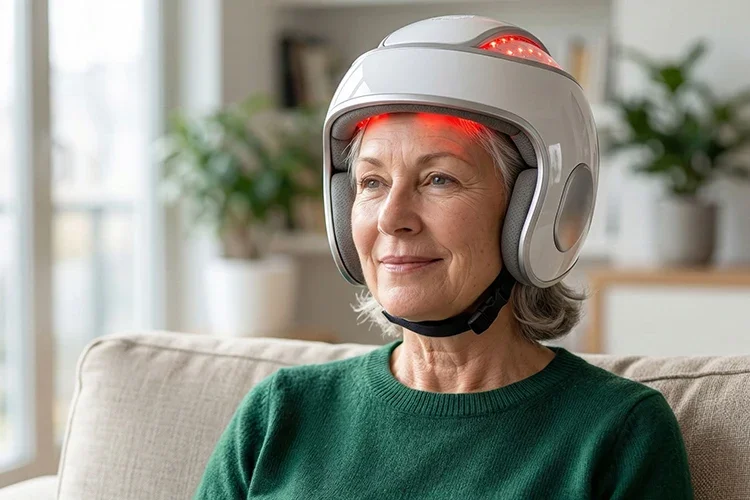
Click a point below to jump to the details.Modern hair wellness. Integrating clinically-backed tech for lasting scalp vitality. (Image: AI-generated)
Hair thinning is a concern that hits close to home for many of us. We’ve all spent a moment or two in front of the mirror, wondering if our part is looking a bit wider or if that ponytail feels lighter than it used to.
While the market is full of serums and gummies, one of the most intriguing breakthroughs in hair wellness isn't a liquid at all—it’s a device. Smart Laser Hair Growth Helmets have moved from the specialist's office right into our living rooms, offering a high-tech way to address thinning hair with comfort and ease.
This isn't just another gadget; it's a piece of advanced equipment designed to work with your body's biology. You can simply sit back and watch your favorite show while clinical-grade lasers do the quiet work of supporting your scalp. It’s a great "set it and forget it" routine for those who want professional-level care without the frequent clinic visits.
Before investing in this premium tech, it's helpful to understand the science that makes these helmets more than just a glowing accessory.
The Science of LLLT: Helping Follicles Find Their Strength
Once there, the light energy is absorbed by the mitochondria—think of these as the "power plants" of your cells. This process encourages the production of ATP (Adenosine Triphosphate), which is the essential energy your cells need to function at their best.
When your follicle cells have this extra energy, they can move from a sluggish state into an active growth phase. This boost in cellular activity also supports better local circulation, helping oxygen and vital nutrients reach the roots more effectively. It’s essentially a way to help your scalp stay in the Anagen (growth) phase longer and spend less time in the Telogen (resting) phase.
Why Laser Tech Offers a Unique Advantage
Many of us start with volumizing shampoos or topical treatments. While these have their place, shampoos mostly clean the surface, and topicals can be a bit messy or stay on the skin's top layer. A laser helmet provides a targeted energy boost that reaches deeper into the tissue.
What to Look for in a Hair Growth Device
Since these devices are an investment, it helps to look for a few markers of quality to ensure you're getting a reliable experience:
FDA Clearance
It’s a good idea to choose a device that has been cleared by the FDA for safety and efficacy. This means the claims are backed by reviewed data.
Laser Diode Density
There is a difference between simple LEDs and medical-grade laser diodes. Higher-end models usually feature more true lasers to provide consistent energy.
Comfort and Fit
Since consistency is what leads to results, look for a lightweight design—usually around 1.5 lbs (0.68 kg)—that feels comfortable for regular use.
Safety Sensors
Many smart models include sensors that only turn the lasers on when the helmet is properly in place, which is a great safety feature.
Who Is This For?
If you’ve noticed your hair looking a bit less vibrant or your scalp becoming more visible under bright lights, this could be a great time to start.
It’s also an option worth considering for women dealing with postpartum thinning or anyone with a family history of hair loss who wants to be proactive.
The goal is "Pro-Aging" for your scalp—keeping your existing hair looking its best for as long as possible.
Frequently Asked Questions
-
Most guidelines suggest using the device 3 to 4 times a week, though many models are safe for more frequent use. Since LLLT is a "cold laser" technology, it doesn't generate heat or cause discomfort, making it a gentle option for home care.
-
Because of the natural hair growth cycle, it typically takes 3 to 6 months of consistent use to see visible improvements. You might even notice a little temporary shedding at first—this is actually often a sign that the follicles are resetting to make room for new, stronger hair.
-
LLLT works best where hair follicles are still active but just need a boost. In areas where the scalp has become completely smooth, the results may be more limited. This is why many experts suggest starting as soon as you notice changes.
The Bottom Line
The smart laser helmet represents a move toward high-performance, "at-home" professional care. It’s less about "fixing a problem" and more about investing in the long-term vitality of your scalp. By choosing data-backed technology, you're taking an active role in your own self-care routine. Your future self—and your hair—will likely thank you for choosing science over the latest fad.
Sources & References
- [1] Avci, P., et al. (2014). "Low-Level Laser (Light) Therapy (LLLT) for Treatment of Hair Loss." Lasers in Surgery and Medicine. (PMC: 3944668)
- [2] Jimenez, J. J., et al. (2014). "Efficacy and safety of a low-level laser device in the treatment of male and female pattern hair loss." American Journal of Clinical Dermatology. (PMID: 24474647)
- [3] Zarei, M., et al. (2016). "Low level laser therapy and hair regrowth: an evidence-based review." Archives of Dermatological Research. (PMID: 26690359)
- [4] Barikbin, B., et al. (2017). "Comparison of the effects of 665 nm low level diode Laser Hat versus and a combination of 665 nm and 808nm low level diode Laser Scanner." Journal of Cosmetic and Laser Therapy. (PMID: 28513251)
Read Next






Are you feeling discouraged every time you look in the mirror because your hair feels thinner? Are you tired of taking supplements that don't seem to work? It’s helpful to look beyond the ingredients on the back of your shampoo bottle.