At a Glance
- Your AI Skin Twin is a digital model of your skin that lets you test how a product might react before you actually put it on your face.
- It also factors in where you are, adjusting your routine as UV index and humidity shift throughout the day.
- It's a useful tool for daily upkeep, but it's built to work alongside a dermatologist, not replace one for anything more serious.
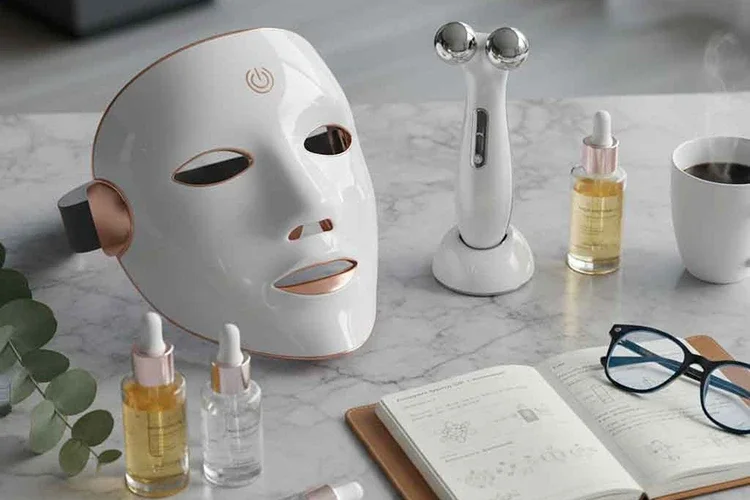
Using unique skin data for a safer, more effective daily regimen. (Image: AI-generated)
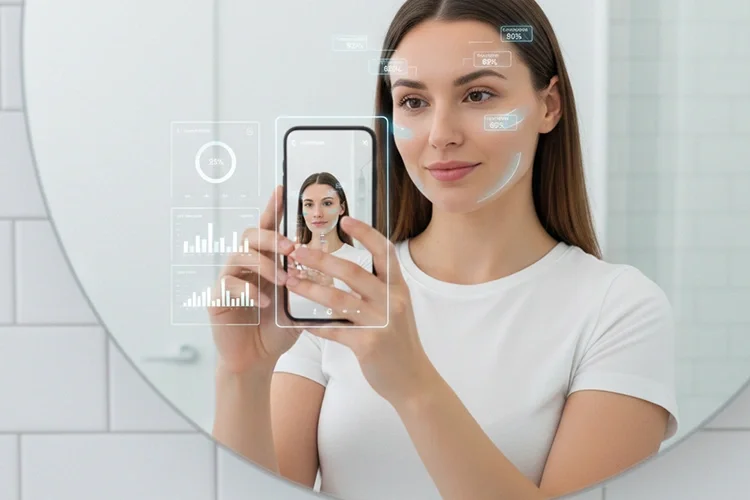
An AI Skin Twin is a digital model of your skin, built from photos and sensor data, that can show roughly how your skin might react to a product before you actually use it.
It's part of a broader shift in skincare, away from picking products by trend or packaging and toward picking them based on what your own skin is actually doing.
The technology is still new, and it isn't going to replace a dermatologist. But for everyday decisions like which serum to try next, it's a useful layer of information most of us didn't have before.
What It Actually Measures
Deep-Layer Hydration
It can flag dehydration happening below the surface, not just how dry your skin looks on top.
Sun Damage and Pigment
It can pick up on UV damage and pigment clusters before they ever show up as visible dark spots.
Elasticity and Collagen
It tracks small changes in skin's bounce over time as a rough way to monitor aging patterns.
Ingredient Simulation
How It Adjusts to You in Real Time
No single routine works for everyone, no matter how well it worked for someone on your feed. An AI Skin Twin skips the social trends and works from your own biological and environmental data instead.
Environmental Syncing
Your skin in New York isn't reacting to the same conditions as your skin in Seoul. The AI adjusts your routine based on the UV index, humidity, and pollution levels wherever you actually are.
Real-Time Biological Feedback
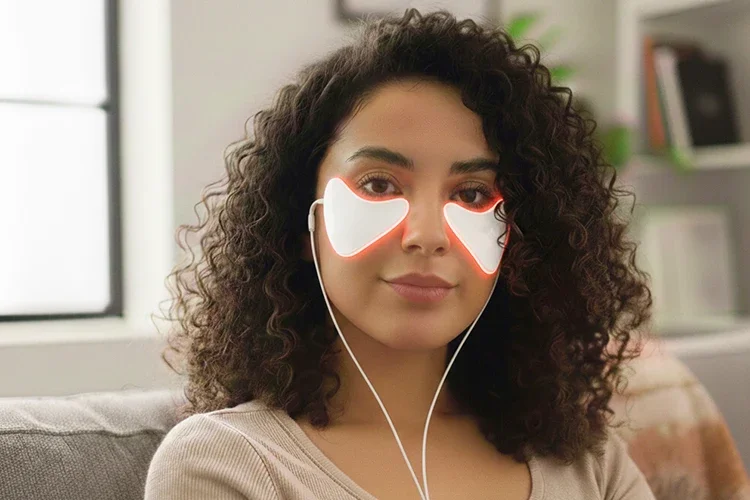
It also factors in things like poor sleep, stress, and hormonal shifts, and can suggest adjusting your nighttime routine accordingly.
Less Product Waste
When you only buy what your Twin confirms is compatible, you end up with fewer half-used bottles sitting unused in your cabinet.
Where a Dermatologist Still Comes In
Does this replace an actual dermatologist? No, and it isn't trying to.
What it can do is give your dermatologist a fuller picture. Walking into an appointment with months of tracked data tends to make that visit more useful for both of you.
What's Already Out There
A few platforms already do a version of this today.
SkinConsult AI by Vichy
Developed by L'Oréal, this one draws on a clinical database of over 25,000 images to analyze texture and signs of aging.
Effaclar Spotscan by La Roche-Posay
Built for acne-prone skin. It grades your skin health and suggests up to a few suitable products based on the result.
YouCam Makeup App
An accessible option that tracks how your skin is doing over time, so you can see how your routine is performing over weeks and months.
Proven Skincare
Uses its own Skin Genome Project database to formulate custom products based on your AI-generated profile.
Frequently Asked Questions
-
Not entirely, and no app should be trusted to make that call on its own. Most platforms are designed to flag products containing an ingredient you've reacted to before, but they can't foresee a brand-new allergy they have no data on. A patch test is still the more reliable step before trying anything new, and if you have a history of serious reactions, that's worth a conversation with your doctor, not an app.
-
About once a week is a reasonable baseline. Your skin shifts with hormones, weather, and stress, so more frequent scans keep the recommendations relevant.
-
No. Most platforms work fine with a standard smartphone camera. The main thing to get right is lighting, consistent and natural light gives the algorithm a cleaner read on your skin's texture and tone.
A Smarter Starting Point
An AI Skin Twin won't make every skincare decision for you, and it isn't meant to. What it does is give you a more informed starting point instead of a guess based on whatever's trending that week.
That data still needs your own observation layered on top of it, and for anything more serious than daily maintenance, your dermatologist is still the one making the call.
Used that way, it's a genuinely useful tool. Not a replacement for paying attention to your own skin, just a better set of eyes helping you do it.
Sources & References
- [1] Young, A.T., et al. (2020). "Artificial Intelligence in Dermatology: A Primer." Journal of Investigative Dermatology.
- [2] Lee, J., et al. (2024). "Deep Learning-Based Skin Care Product Recommendation: A Focus on Cosmetic Ingredient Analysis and Facial Skin Conditions." Journal of Cosmetic Dermatology.
- [3] Du-Harpur, X., et al. (2020). "What Is AI? Applications of Artificial Intelligence to Dermatology." British Journal of Dermatology.
Read Next