At a Glance
- Chronic muscle pain without a clear cause is real. It isn't imagined, and mind-body research backs that up.
- Tension Myositis Syndrome is one theory for why this happens. Sarno's original version was never clinically tested, but a modern descendant of it just cleared a real randomized trial.
- If pain is new or getting worse, it's still worth ruling out a physical cause with a doctor first.
- Slow breathing and naming what you're feeling have real research behind them for calming an overactive nervous system.
Credit: Studio PantsAnts
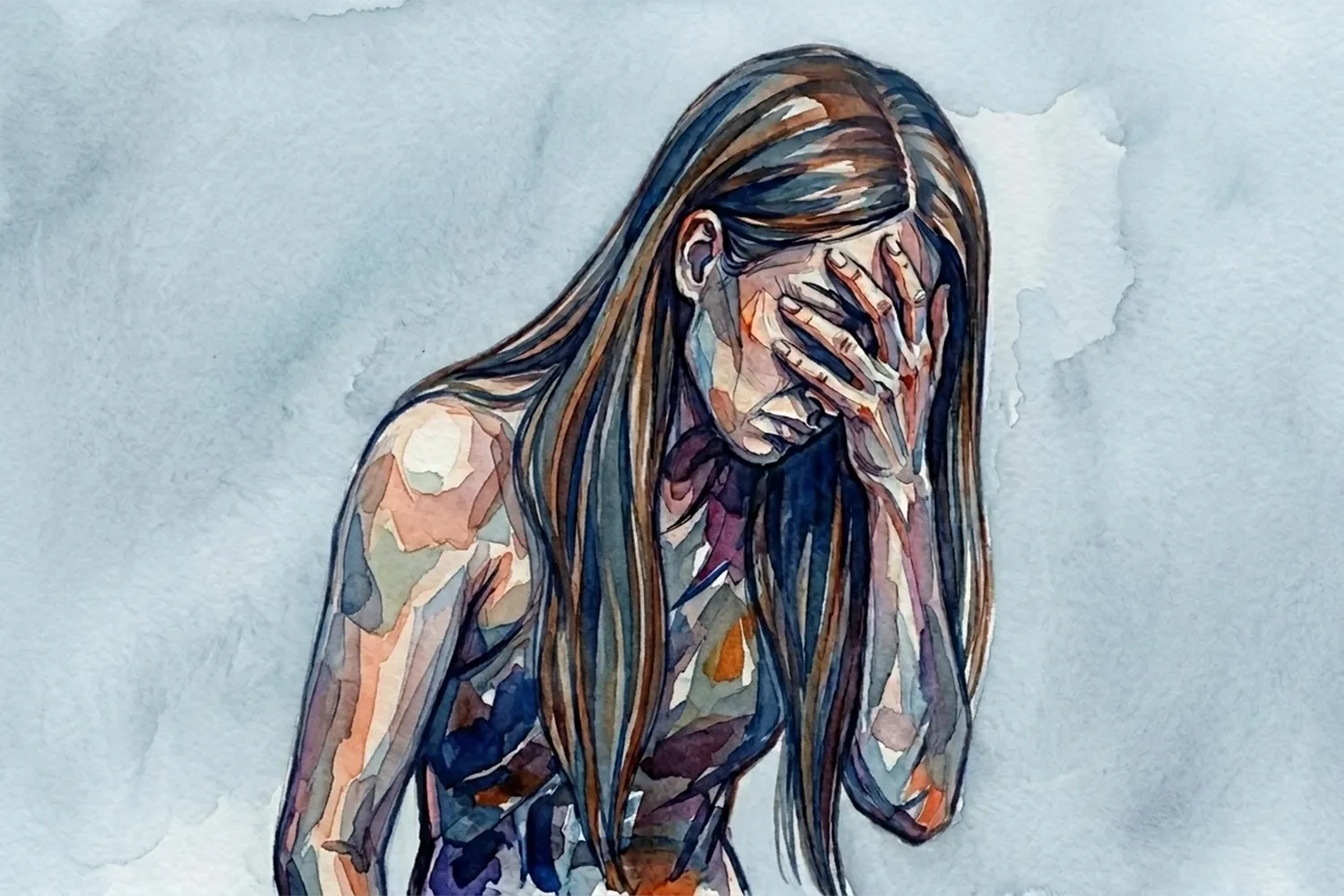
Stand in front of a mirror for a moment. Notice the shoulders pulled up toward your ears, or the base of your skull that never quite lets go. Deep tissue massage, a stretch routine, an extra hour of sleep, sometimes none of it works, and the ache just relocates somewhere else in the body. That pain is real. It is not imagined, and it is not a personal failing.
What Tension Myositis Syndrome Actually Proposes
One framework for understanding this connection is called Tension Myositis Syndrome, or TMS, first proposed by Dr. John Sarno at New York University School of Medicine. Sarno's original theory was never tested in a controlled trial during his lifetime, and for decades mainstream medicine treated it as pseudoscience. That's shifted somewhat.
The theory isn't settled science, but it's no longer fringe either. If pain is new, severe, or getting worse, seeing a doctor first to rule out a physical cause is still the right move, and nothing here is meant to replace that.
With that said, the framework itself is worth understanding. Sarno's idea was that when people suppress anger, unprocessed grief, or the anxiety that comes with chronic perfectionism, the brain can respond by redirecting that distress somewhere else entirely.
Rather than making someone confront emotional pain that feels too big to face directly, the nervous system redirects attention toward physical sensation instead, in Sarno's telling. Working through the autonomic nervous system, the network quietly running functions we don't consciously control, it generates tension in specific muscle groups. Physical discomfort becomes a kind of subconscious diversion, protecting a person from feelings they're not ready to sit with yet.
None of this means the body is fundamentally broken when tightness lingers without a clear cause. It might be closer to a signal, from emotions that never got acknowledged. For some people, just understanding this pathway, even loosely, seems to be enough to help the nervous system start to settle.
The Emotions Our Muscles Tend to Hold
Untangling physical knots often starts with looking at which emotions tend to settle into the body in the first place. A lot of people swallow how they actually feel when they've decided a certain kind of strength is expected of them, or when being endlessly accommodating starts to feel like the only acceptable way to be seen.
A few patterns show up again and again.
Perfectionism, and the quiet exhaustion of trying to please everyone at once.
Grief that was never fully processed, or anger that never found anywhere to go.
Anxiety that keeps the nervous system on alert longer than it probably needs to be.
Left unaddressed, these pressures don't just sit quietly. Chronic stress raises cortisol, and rising cortisol is increasingly linked to how the fascia, the connective tissue wrapping around and supporting muscle, holds tension over time.
Meeting the Pain Instead of Fighting It
When pain speaks up, it can help to stop treating your own body like an opponent. Instead of resenting the discomfort or expecting it to disappear overnight, some people find it useful to think of that tension as a record of how hard the nervous system has been trying to protect them.
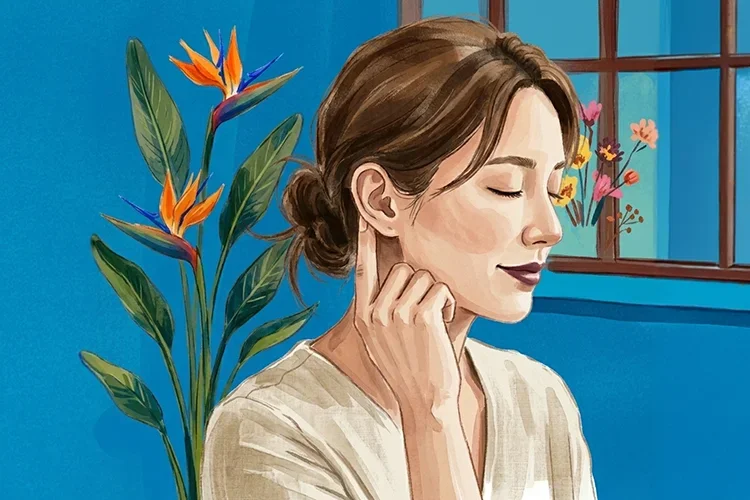
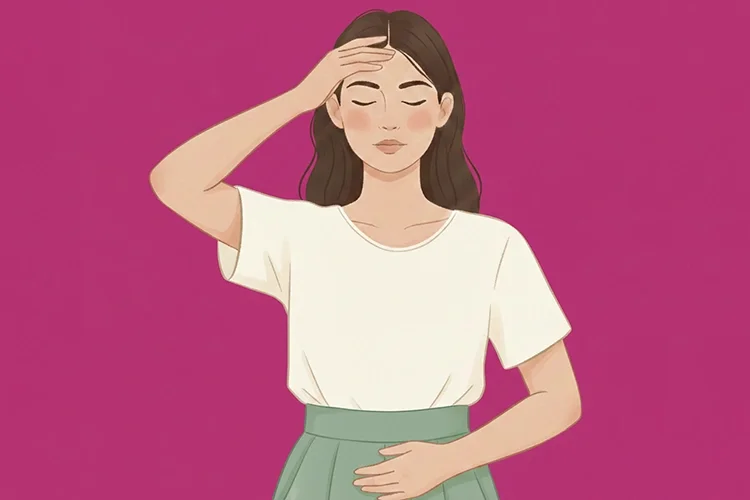
Something as simple as placing a warm hand over the area of discomfort, and naming what's underneath it, is a small practice rather than a clinical treatment, but it costs nothing and plenty of people find it genuinely grounding. Giving language to the tension, the way a clinician might listen for what a patient isn't saying, seems to be enough for some people to loosen the brain's grip on the physical distraction.

Credit: William Randles / Unsplash
Small Habits That Calm an Overactive Nervous System
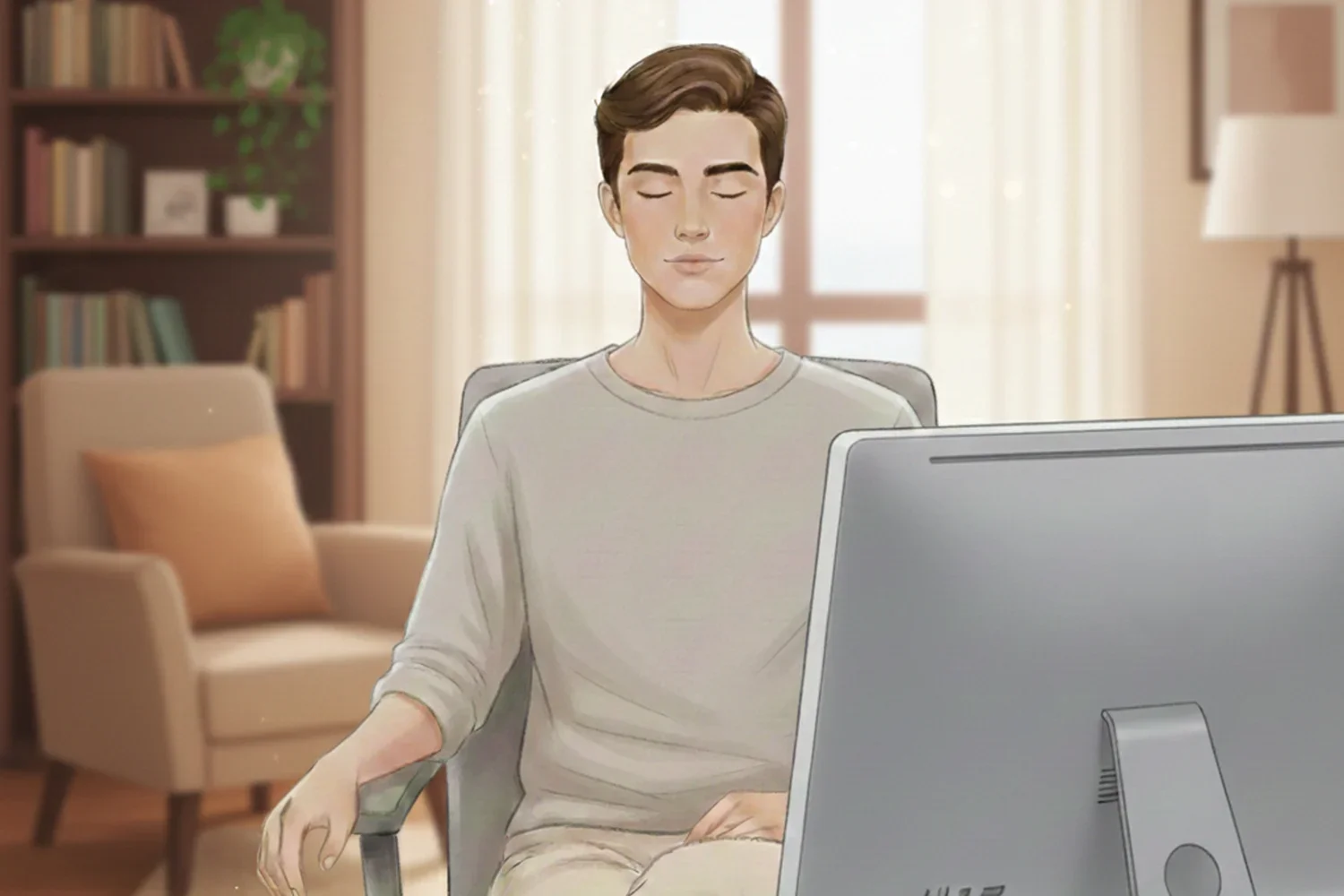
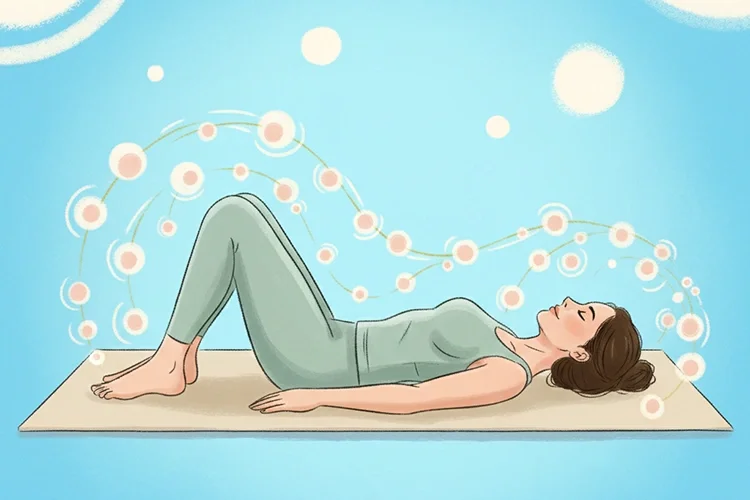
A few small, steady habits can help bring the parasympathetic nervous system, the system responsible for rest and digestion, back online. None of these work instantly, and that's fine. Small, repeated signals of safety add up faster than most people expect, and the shift, once it starts, tends to build on itself.
Slow, Rhythmic Breathing
A Drop of Essential Oil
Massaging the neck, shoulders, or the skin behind the ears with a calming oil is a common recommendation in wellness circles, and the touch itself likely does real work regardless of what's in the bottle.
A Few Unedited Minutes on Paper
Journaling gives frustration, jealousy, or grief somewhere to go without needing to make sense of it right away. Some people find it helps to tear up or discard the page afterward, a small, symbolic way of letting go.
Healing Doesn't Follow a Fixed Timeline
There's no fixed timeline here, and wanting it to move faster doesn't change how long it actually takes. Persistent pain isn't proof that something in you is broken. Whatever the exact explanation turns out to be, treating that pain as information, a signal pointing toward parts of yourself that haven't been fully listened to, tends to help more than treating it as an enemy to defeat. Patience tends to make more room for that process than urgency does.
Sources & References
- [1] Godman, H. (2026). "5 ways to ease pain using the mind-body connection." Harvard Health Publishing.
- [2] Cosio, D., et al. (2016). "The Use of Mind-body Medicine in Chronic Pain Management: Differential Trends and Session-by-Session Changes in Anxiety." Journal of Pain Management and Medicine.
- [3] Ashar, Y. K., et al. (2022). "Effect of Pain Reprocessing Therapy vs Placebo and Usual Care for Patients With Chronic Back Pain: A Randomized Clinical Trial." JAMA Psychiatry.
- [4] Ashar, Y. K., et al. (2025). "Pain Reprocessing Therapy vs Placebo and Usual Care for Patients With Chronic Back Pain: 5-Year Follow-Up of a Randomized Clinical Trial." JAMA Psychiatry.
- [5] Zaccaro, A., et al. (2018). "How Breath-Control Can Change Your Life: A Systematic Review on Psycho-Physiological Correlates of Slow Breathing." Frontiers in Human Neuroscience.
- [6] Sattayakhom, A., et al. (2023). "The Effects of Essential Oils on the Nervous System: A Scoping Review." Molecules.
Read Next