What Your Heart Rate Variability Tells You About Your Sleep Quality
At a Glance
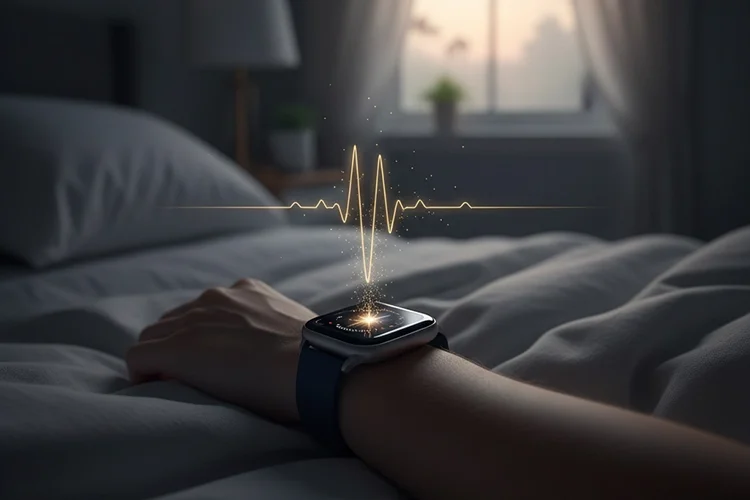
Click a point below to jump to the details.Optimizing recovery through advanced sleep science data. (Image: AI-generated)
We often assume that a heart beating with the steady precision of a clock is the ultimate sign of health. Surprisingly, the opposite is true. A healthy heart is flexible, constantly shifting its rhythm to meet the body's needs.
This variation is known as Heart Rate Variability (HRV). Think of it as your body’s most honest report card, reflecting how well you truly recovered while you were asleep.
Why HRV is a Key Metric in Sleep Science
The primary goal of sleep is to recalibrate your autonomic nervous system—the internal control center that manages everything from your breathing to your digestion.
While you sleep, your body works to calm the sympathetic branch (your "gas pedal" or stress response) and activate the parasympathetic branch (your "brake pedal" or rest-and-repair mode). When this "brake pedal" is working well, the time between your heartbeats becomes more varied, leading to a higher HRV.
The Connection Between Sleep Stages and HRV
HRV isn't a flat line; it shifts as you move through different sleep cycles.
Deep Sleep
This is when physical tissue repair and growth hormone release are most intense.
REM Sleep
This is where your brain processes emotions and memories. Because your brain is more active during dreams, your HRV may become more irregular, reflecting this mental "filing" process.
Signals of Poor Sleep Quality
Lower Measured HRV
Your nervous system stays tense, causing the heart to beat with a rigid, metronomic consistency.
Elevated Resting Heart Rate
This often suggests your body is maintaining a minor stress response instead of focusing on deep recovery.

Credit: Erik Mclean / Unsplash
Factors That Can Quietly Disrupt Your Recovery
If you feel like you slept enough hours but your morning HRV is lower than usual, these common "recovery thieves" might be at work:
Late Night Alcohol
While it might help you fall asleep faster, alcohol keeps your heart rate elevated and prevents your nervous system from switching into deep repair mode.
Room Temperature
A bedroom that is too warm can interfere with your body’s natural cooling process, keeping your nervous system in a state of low-level stress.
Late Workouts
Intense exercise very close to bedtime can leave your heart in a state of tension long after you’ve closed your eyes.
Using HRV Data for Your Daily Routine
Checking your HRV in the morning offers a data-driven way to plan your day:
High HRV Days
Your recovery was efficient. This is often a great time for challenging workouts or high-focus tasks.
Low HRV Days
Your body is still processing stress. Consider prioritizing active recovery, like a light walk or meditation, to help your system catch up.
Deep Insights: Sleep Science & HRV FAQs
-
Sleep quantity and sleep quality are two different things. You might have been in bed for 8 hours, but factors like a heavy late-night meal or caffeine can keep your nervous system "running" in the background. A low HRV suggests your heart was busy dealing with these stressors rather than reaching a state of true, deep rest.
-
It often does. Alcohol may quiet the brain, but it forces the heart to work "overtime." Even one glass can flip your nervous system into a minor emergency mode, which blocks the deep restorative work that happens when HRV is high.
-
Our minds can sometimes be more optimistic than our bodies. While you can push through, a low HRV is an honest signal that your nervous system is still recovering. Choosing a "strategic rest" or a lighter activity on these days often leads to better long-term progress and helps avoid burnout.
Important Considerations
HRV is highly individual; your "normal" will look different from someone else's. It is most helpful to watch your own 7-day trend to understand your body's unique patterns. While HRV is a fantastic tool for wellness, it is not a replacement for medical diagnosis. If you feel chronic exhaustion or chest discomfort, please consult a healthcare professional.
Sources & References
- [1] da Estrela, C., et al. (2021). "Heart Rate Variability, Sleep Quality, and Depression Symptoms: A Repeated Measures Study." Journal of Psychosomatic Research. (PMID: 32525208)
- [2] Burgess, H. J., et al. (1999). "Heart rate variability during sleep in healthy humans." Journal of Sleep Research. (PMID: 10352553)
- [3] CDC (2024). "Sleep and Sleep Disorders: Data and Statistics." Centers for Disease Control and Prevention.
Read Next