Why They Call It The World’s Greatest Stretch
At a Glance
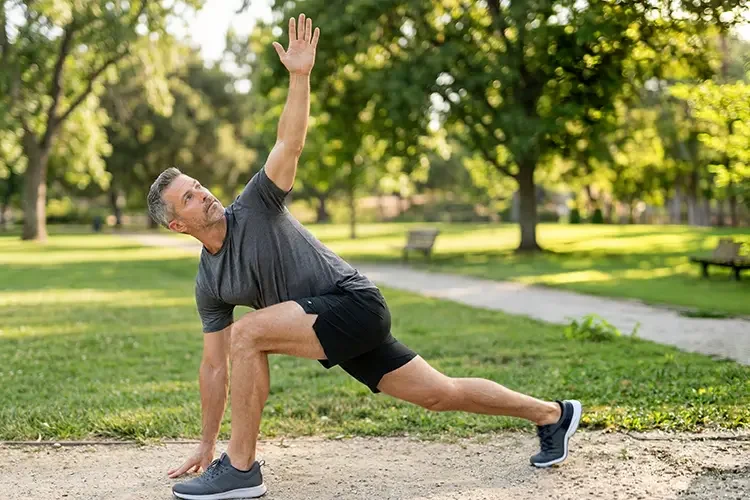
Click a point below to jump to the details.A five minute full body reset after a long day of sitting. (Image: AI-generated)
If you were stranded on a desert island and could only perform one physical movement to keep your body functional, this would be a top contender.
Why It’s Called “The Greatest”
You might know this movement as a Lunge with Rotation, a Runner’s Lunge with Twist, or even a Spiderman with Thoracic Rotation. Although the names differ, every variation shares the same essential goal of building deep, functional mobility.
The reason fitness professionals worldwide call this "The World's Greatest Stretch" is its unparalleled efficiency. It is one of the few movements that addresses the three most common areas of tightness—the hips, the mid-back (thoracic spine), and the hamstrings—in a single, continuous flow. By integrating stability and mobility into one rep, it provides a total-body recalibration that usually requires five or six separate exercises.
How It Targets Your Entire Body
What makes this specific sequence so effective is its ability to address multiple muscle groups and joints simultaneously. Most stretches focus on one isolated muscle, such as the hamstrings or the chest. However, the human body does not move in isolation; we move in integrated patterns. This stretch mirrors those patterns by combining a deep lunge, a spinal twist, and a hamstring release into one fluid motion.
Hip Flexors: It opens the front of the hips, which often shorten and tighten from prolonged sitting.
Thoracic Spine (Mid-Back): It introduces rotation to the mid-back, easing the stiffness that frequently leads to neck and shoulder discomfort.
Hamstrings and Calves: It lengthens the back of your legs (the posterior chain), providing relief for the lower back.
Glutes and Adductors: It stretches the deep muscles of the pelvis and inner thighs that are often ignored in traditional routines.
By hitting all these markers in a single rep, you save time while achieving a level of systemic nervous system feedback that static stretching simply cannot provide.
How to Do It Step-by-Step
To reap the benefits without risk of injury, form is everything. Think of this not as a fast exercise, but as a moving meditation for your joints.
You don't need a gym or a yoga mat. Just find about 6 feet of clear floor space.
Great Lunge
Start in a high plank position with your hands directly under your shoulders. Step your right foot forward and place it just outside your right hand. Aim for a 90-degree angle at your right knee, and keep your left back leg as straight as comfortable, pressing your heel away.
Elbow Drop
Keeping your left hand firmly planted on the ground, gently bring your right elbow down toward the inside of your right ankle. Avoid forcing the movement; the goal is simply to feel a deep opening in your right hip and groin.
Reach and Rotate
This is a crucial part for your posture. Lift your right hand off the floor and reach it toward the ceiling, following your hand with your eyes. This creates a wonderful rotation through your mid-back. Hold this for a full breath, feeling your chest open up.
Hamstring Shift
Place both hands back on the floor, framing your right foot. Shift your hips backward as you straighten your front leg and pull your toes toward your shin. This transition targets the back of the leg and the lower back.
Reset
Return to the plank position and repeat the entire sequence on the left side.
Watch How It’s Done
Seeing the movement in action is the fastest way to master the proper alignment. We have selected this high-quality demonstration from Evolution Physical Therapy to show you the exact flow from the deep lunge to the spinal rotation.
Pay close attention to how the expert keeps the back leg active and synchronizes their breath with the twist. Watching this 1-minute clip will help you perform each rep safely and effectively for maximum mobility.
Video Credit: Evolution Physical Therapy & Fitness
Observe the expert’s breathing and hip positioning to ensure safe and effective mobility.
The Science of Why It Works
Fitness and physical therapy experts often recommend this because it targets the "Joint-by-Joint" theory. This concept suggests that the human body is a stack of joints that alternate between needing stability and needing mobility. For example, the ankles need mobility, the knees need stability, the hips need mobility, and the lower back needs stability. This stretch addresses those needs beautifully by stabilizing the core and knee while mobilizing the hips and ankles.
Frequently Asked Questions
-
A deep stretch is expected, but a sharp, pinching sensation in the front of your hip usually indicates that your joint capsule is experiencing some compression. If you feel this, try widening your stance by moving your front foot slightly further to the outside. This creates more space in the hip socket. Also, check that you are engaging your core to avoid over-arching your lower back, which can shift unwanted pressure to the front of the hip joint.
-
Since the World’s Greatest Stretch is a dynamic mobility drill, it works best when you don't hold it like a traditional static stretch. Aim for a controlled flow where you pause for about 2 to 3 seconds in each of the four phases (the lunge, elbow drop, rotation, and hamstring shift). This rhythmic movement helps pump blood into the tissues and lubricate the joints without reducing your muscles' explosive power before a workout.
-
In many cases, this stretch can help ease lower back discomfort by releasing tension in the hips and mid-back, areas that often cause the lower back to overcompensate. However, if you are experiencing acute pain or a known injury, it is best to consult a healthcare professional first. To keep it gentle on a sensitive back, focus on rotating from your mid-back (rib cage area) rather than twisting from your waist, and keep your movements small and controlled.
Safety and Modifications for Every Body
While this move is powerful, it can be intense if you are just starting out or dealing with stiff joints. It is always important to listen to your body and avoid pushing into sharp discomfort.
For sensitive knees: You can drop your back knee to the floor during the lunge phase to reduce the load on your joints.
For limited reach: Do not worry if your elbow doesn't touch your ankle. Simply go as low as your current flexibility allows while keeping your back relatively flat.
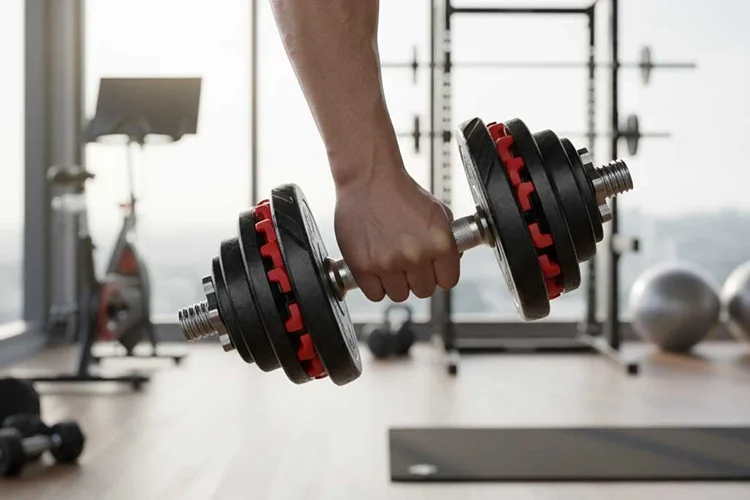
For wrist discomfort: You can perform the plank portion on your knuckles or use a pair of dumbbells as handles to keep your wrists in a straight, neutral position.
Frequency matters: Performing 5 repetitions on each side daily is typically much more effective than doing 20 reps once a week. Consistency is the true bridge between a stiff body and a mobile one.
By incorporating this versatile movement into your morning routine or taking a quick break during long work hours, you give your body the exact input it needs to maintain a healthy, upright posture. It is a simple, effective tool to help you move better and feel more agile, without needing a single piece of equipment.
Sources & References
- [1] American Council on Exercise (ACE) (2025). "5 Stretches to 'Un-desk' Your Body." ACE Health & Wellness Articles.
- [2] National Academy of Sports Medicine (NASM) (2024). "5 Huge Benefits of Stretching: Learn the Advantages of Flexibility." NASM Blog.
Read Next