What One Visit to Neko Health Can Tell You About Your Body
At a Glance
- Neko Health, the Swedish preventive-health startup co-founded by Spotify's Daniel Ek, opened its first U.S. location at 300 Lafayette Street in SoHo on September 24, 2026, with the 60-minute scan priced at $499.
- The scan combines skin imaging, cardiovascular testing, circulation mapping, and body composition analysis in one visit, and over 100,000 scans have already been completed across Sweden and the UK.
- The peer-reviewed literature on full-body screening is a useful reminder that more data doesn't automatically mean more clarity, so it's worth understanding what a flagged finding does and doesn't mean before you book.
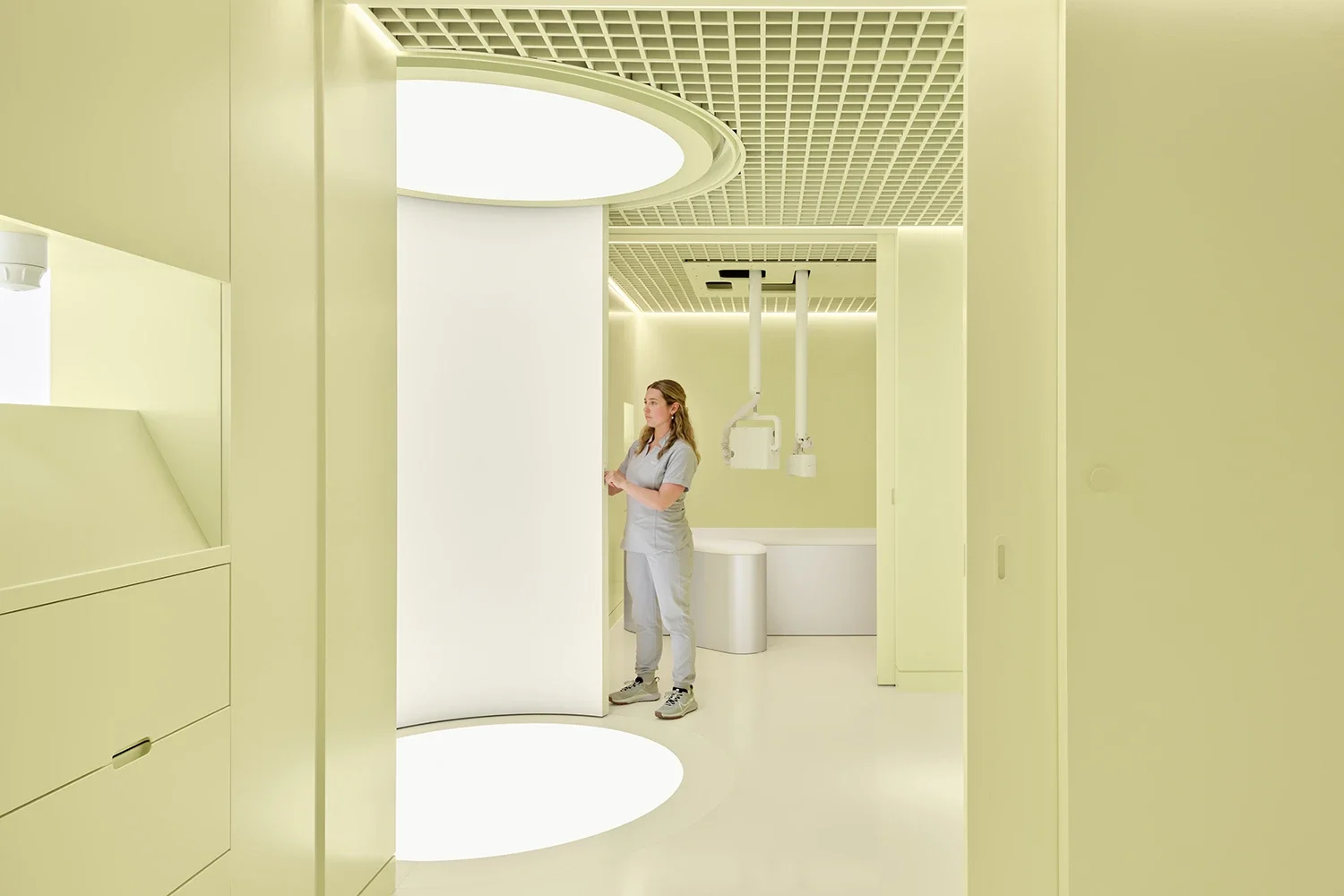
Inside a Neko Health clinic in the UK. Neko says the SoHo location is built in the same signature style. / Neko Health
When a health-tech company raises $700 million and gathers a 25,000-person waitlist before opening a single U.S. location, it's worth slowing down and asking what, exactly, is being offered.
Neko Health, the Swedish preventive-health startup backed by Spotify co-founder Daniel Ek, opened its first American clinic in New York City on September 24. The pitch is straightforward. One 60-minute visit surveys your skin, heart, circulation, and body composition, with lab results and a clinician's interpretation delivered the same day. We went through what the underlying technology is actually doing, and cross-checked it against what the published research says about preventive scanning more broadly. Here's what we found.
What Neko Health Is, in Plain Terms
Neko Health was founded in Stockholm in 2018 by Daniel Ek and CEO Hjalmar Nilsonne. The company operates on a fairly simple thesis. Most of us only see a doctor once something already feels wrong, and that reactive model is familiar to nearly everyone. It's also the exact problem the company was built to sidestep.
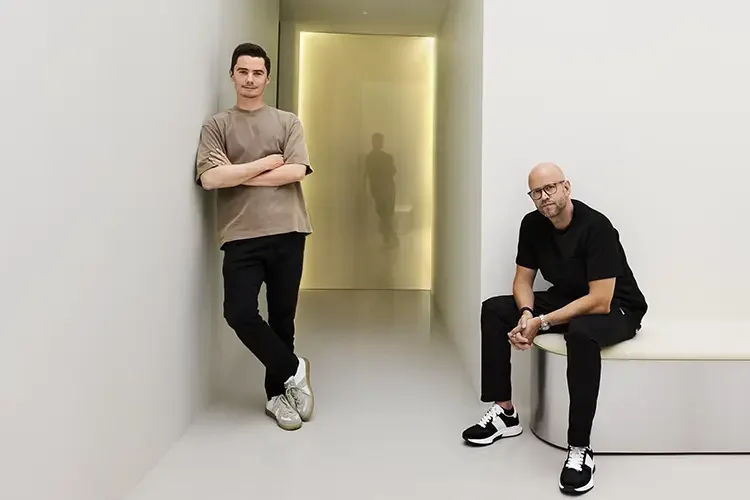
Neko Health co-founders Daniel Ek and Hjalmar Nilsonne. / Neko Health
It's an appealing framing, and it's clearly resonating.
Breaking Down the Technology, Piece by Piece
The marketing language around Neko leans on phrases like "millions of data points," which can obscure more than it explains. So let's unpack what actually happens across the five components of the scan.
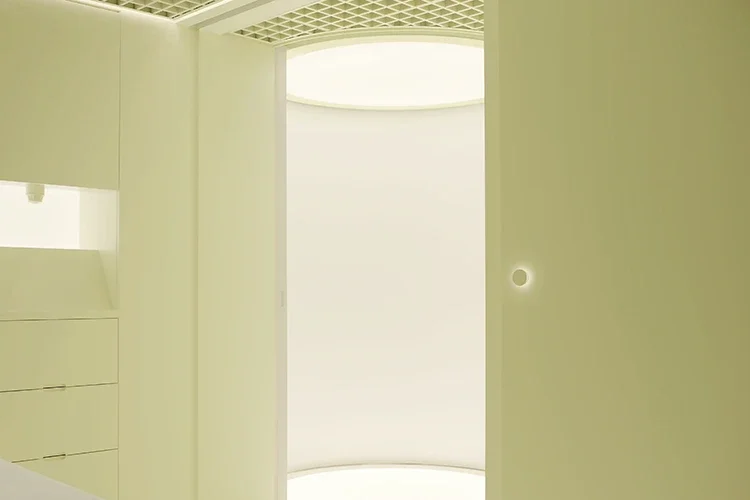
The path into one of Neko Health's scan rooms. / Neko Health
Skin
Rather than a brief visual check, the system captures more than 6,000 high-resolution images per visit, building a full-body map of moles and pigmentation that can be compared against future visits to flag anything that's changed shape, color, or size over time.
Heart
Several non-invasive measurements work together here. Electrical activity is read alongside arterial health, and a laser sensor picks up the tiny mechanical motion of each heartbeat from more than a meter away, rather than relying on any single measurement.
Circulation
This part looks at the smallest blood vessels, using multi-wavelength light at the feet to measure how much blood reaches the tissue and how much oxygen it carries, essentially reading circulation without ever touching the body.
Body composition
Visceral and overall body fat percentage are estimated without a DEXA or MRI machine, and grip strength is measured as a simple, well-established proxy for physical resilience.
Blood
Samples are processed in an on-site lab, so cholesterol, HbA1c, and inflammation markers come back the same day rather than after the usual week-long wait most of us are used to.
Why "Precision Health" Is Growing So Quickly
Neko isn't operating in isolation. It sits inside a broader shift toward consumer-facing preventive screening. Elective bloodwork panels, at-home biomarker testing, and full-body imaging services have all expanded rapidly over the past few years. The underlying appeal is easy to understand intellectually, even if the evidence hasn't fully caught up. People want earlier answers, and they're increasingly willing to pay for them directly rather than wait on a referral system that can take months.
What the Research Actually Says About Full-Body Screening
A Harvard Health article on full-body MRI has raised a related concern, noting that these elective scans are less precise than an MRI ordered for a medical reason, and that they can turn up harmless quirks that send people for follow-up tests they didn't need.[5] Neko's scan isn't MRI-based, so this isn't a direct equivalence, but the underlying principle transfers. A flagged result is a starting point for a conversation with a clinician, not a diagnosis on its own.
None of this is a reason to dismiss the category outright. It's simply the context that makes an informed decision possible, and understanding that context is really the whole point of writing about this kind of technology at all.
Timing, Location, and Cost in New York
The clinic opened on September 24, 2026, at 300 Lafayette Street in SoHo, with seven scan rooms spread across two floors. The visit costs $499 for the full hour, a price that includes the same-day clinician consultation. Neko says follow-up reviews and referrals from its in-house cardiologists and dermatologists are also included, free of charge.
More than 25,000 New Yorkers had joined the local waitlist before opening day, part of a reported 350,000-plus people signed up globally. Neko has also indicated it's planning more New York locations, followed by Miami, Washington D.C., and San Francisco, which suggests SoHo is meant as an opening chapter rather than a one-off.
For readers who are curious about precision health and want a fairly accessible entry point, this is a reasonable one to understand well before deciding whether it's right for you. It's worth treating as a complement to your existing care, not a replacement for the relationship you already have with your doctor.
Frequently Asked Questions
-
No. Neko doesn't bill insurance, so the $499 visit is paid out of pocket, though the company says HSA and FSA funds can be used.
-
Neko describes the scan as non-invasive and radiation-free, relying on cameras, light-based sensors, and lasers rather than X-ray or CT.
-
Your annual physical remains the foundation of your care, tied to your medical history and typically covered by insurance. Neko's scan adds a broader, same-day snapshot across several systems at once, which some people choose to use alongside their existing physician rather than as a substitute.
-
A clinician reviews the findings with you the same day. Where possible, Neko says it handles follow-up in-house, including ultrasounds and echocardiograms, and prepares a detailed referral if you need care elsewhere. In screening research more broadly, a share of flagged findings turn out to be false alarms, so expect a confirming test before any conclusions.[4]
-
The SoHo location has been open since September 24, 2026. With more than 25,000 people on the waitlist before opening day, signing up sooner is a reasonable step for anyone seriously considering it.
With a waitlist that was five figures deep before the doors even opened, plenty of New Yorkers were clearly curious to see what one visit turns up. We'll be curious to hear what they find, too.
Sources & References
- [1] Neko Health (2026). "Neko Health Is Opening in New York City – With 25,000 People Already Waiting." Neko Health Press Room.
- [2] Bort, J. (2026). "Daniel Ek's Body-Scanning Startup Neko Health Opens First US Office, in New York." TechCrunch.
- [3] Gonzalez-Billandon, J., et al. (2026). "Automated Measurement of Left Ventricular Ejection Time via Contactless Suprasternal Notch Laser Vibrometry." Scientific Reports.
- [4] Kwee, R.M., & Kwee, T.C. (2019). "Whole-Body MRI for Preventive Health Screening: A Systematic Review of the Literature." Journal of Magnetic Resonance Imaging.
- [5] Salamon, M. (2026). "Full-body MRI Screening: Reassurance or Overdiagnosis?" Harvard Health Publishing.
Read Next