Your Eye Prescription Is Basically a Code — Here's How to Crack It
At a Glance
- One number, SPH, tells you if you're nearsighted or farsighted. Two more, CYL and Axis, map the actual shape of your cornea.
- Your Pupillary Distance (PD) is the number almost nobody talks about, and getting it wrong is a quiet, common cause of headaches and eye strain.
- Tracking your prescription over the years helps you and your eye doctor spot whether a change is normal aging or something worth a closer look.
Credit: Joshua Hoehne / Unsplash
That slip of paper you get after an eye exam is dense with abbreviations and decimal points, and most of us never learn to actually read it.
But it's not just a ticket for glasses. It's a rough blueprint of your eye's real shape, not unlike how a resting heart rate hints at how your heart's doing.
Once you know what SPH, CYL, and PD actually mean, you stop stuffing that slip in a drawer and start paying attention to what it's actually telling you about your eyes.
Your Cheat Sheet
| Term | Stands For | What It Tells You |
|---|---|---|
| OD | Right eye (Oculus Dexter) | This row is your right eye's numbers |
| OS | Left eye (Oculus Sinister) | This row is your left eye's numbers |
| SPH | Sphere | Minus (–) means nearsighted, plus (+) means farsighted — 0.00 is perfect vision, and the bigger the number, the stronger your prescription |
| CYL | Cylinder | The higher the number, the more light bends unevenly in your eye — causing blur that a matching lens easily corrects |
| Axis | — | Just the angle (1–180) your correction lines up at — about direction, not how bad your vision is |
| PD | Pupillary Distance | The distance between your two pupils, in millimeters — used to line up your lenses correctly; even a small mismatch can cause headaches or eye strain |
| Add | Add power | A little extra strength added for reading and close-up tasks — common as you get older |
Compiled from the sources cited throughout this article. See full references below.
OD, OS, and the Number That Actually Matters Most
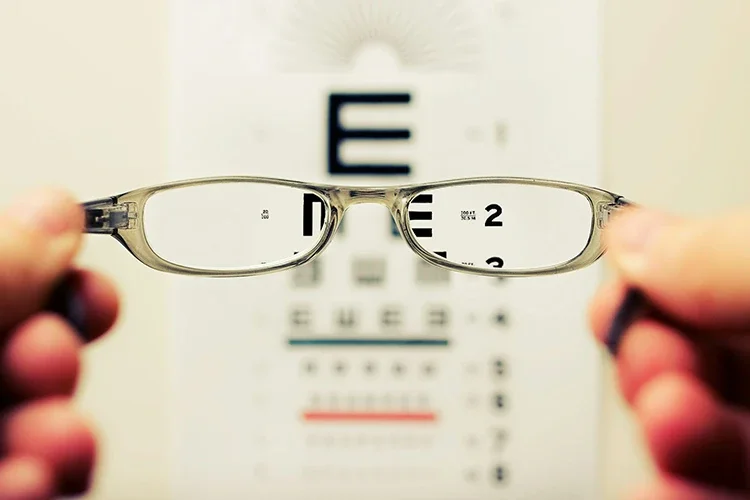
The number that tells you the most sits under SPH, Sphere. It's the lens power your eye needs to focus light correctly on your retina.
A minus sign means you're nearsighted, myopic, distant things blur. A plus sign means farsighted, hyperopic. The further that number sits from zero, say -5.00 or -6.00, the more your eyeball itself has elongated compared to average, and that's exactly why doctors keep a closer eye on high myopia: a longer eye also means thinner, more stretched retinal tissue, which is worth monitoring over time.
Credit: David Travis / Unsplash
Astigmatism Is Just a Shape
A lot of people hear the word astigmatism and expect bad news. Really, it just means your cornea isn't perfectly round, more like a football than a basketball, so light bends a little unevenly when it hits your eye. That's it. It's a shape, not a diagnosis to panic over.
Most people are simply born this way. It usually comes down to genetics, the same reason eye color runs in families, and it isn't caused by common myths like reading in dim light or sitting too close to the TV. In rarer cases it can develop later, after an eye injury or with a condition like keratoconus, where the cornea gradually thins and bulges outward.
This is exactly why CYL and Axis numbers matter for contact lenses too, since even a small mismatch can bring on headaches and screen fatigue.
A quick way to keep these straight:
Sphere (SPH)
Is the blur far away or close up? (Distance adjustment.)
Cylinder (CYL)
Are images doubled or smeared? (Shape correction.)
Axis
What angle stops the blur? (Angle adjustment.)
The Number Most People Never Hear About: PD
One measurement often skipped in a standard exam, but it makes a real difference in how glasses actually feel: PD, Pupillary Distance.
It's the space between your pupils, in millimeters, and it's what keeps the optical center of each lens directly in front of your eye.
Off by even a couple millimeters, and your brain works harder to merge what each eye sees. Optometrists call the result "induced prism": two slightly mismatched pictures your eye muscles then have to tug into alignment.
That tugging is often the pulling feeling behind your eyes, or the fatigue you can't quite explain.
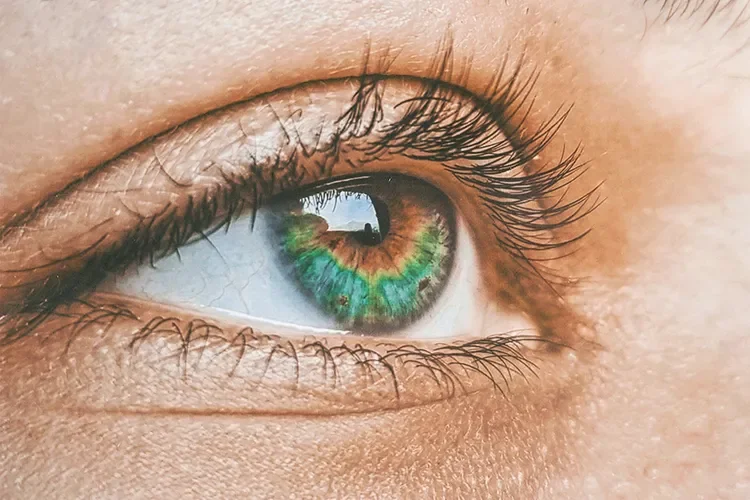
Credit: Nitin Mendekar / Unsplash
Small Habits That Actually Move the Needle
Knowing your numbers is the easy part. What you do with them is where it actually counts.
Our eyes are dealing with more screen time and artificial light than ever before, and it's a real driver behind the rise in myopia worldwide. A few habits genuinely help:
The 20-20-20 Rule
Time Outdoors
Even 1 to 2 hours of natural light a day appears to help regulate eye growth, especially in kids, and may help keep nearsightedness from worsening.
Actual Screen Breaks
Blue-light glasses get a lot of attention, but the habit that tends to help more is simply stepping away from the screen every so often. No product required.
What Your Doctor Really Means by "Stable"
When your doctor says your vision has stabilized, they mean the physical shape of your eye has stopped shifting quickly. That's usually the point where LASIK becomes worth discussing. If your numbers are still moving fast, myopia control strategies come up instead.
We don't see declining vision as something you just accept with age. We see it as data worth paying attention to. A sudden shift in one eye alone is worth a same-week call to your doctor, not a wait-and-see. A rising Add power usually points to presbyopia, where the lens inside your eye gradually loses flexibility. It's less a warning sign than a fact of getting older, and it's why almost everyone eventually needs reading glasses or a multifocal lens, no matter how sharp their distance vision stays.
Frequently Asked Questions
-
A big shift in a short window is worth a closer look, not panic. It often means your eyes are working overtime on close-up tasks, or not getting enough natural light. Worth a conversation with your eye doctor about ways to slow it down.
-
Every 1 to 2 years is a solid rhythm for most adults. Past 40, or with a stronger prescription, a yearly check is the smarter habit.
-
This trips a lot of people up. What you're feeling is Visual Acuity, how crisp the letters look. Your prescription measures Refractive Error, the lens power your eye's shape requires. Different things. Even with identical SPH numbers, your eyes can differ in contrast sensitivity, or in how well they work together, sometimes called binocular vision. Less about whether the numbers match, more about how your eyes perform together day to day.
The Bottom Line
Your eye prescription isn't only a ticket to new glasses. It's a small, oddly detailed record of how your eyes are built, and how they're shifting over time.
Once you can read it, the question changes. You stop asking whether you need new glasses and start asking what's actually going on with your eyes, and how to keep it that way. Keep a copy of every exam. Watch how the numbers move year over year. That one habit puts you ahead of most people, who take the drops and never look at the paper again.
Sources & References
- [1] Cleveland Clinic (2024). "Got a New Eye Prescription? Here's What It Means." Eye Care.
- [2] Porter, D. (2023). "How to Read an Eyeglasses Prescription." American Academy of Ophthalmology, Glasses & Contacts.
- [3] Sprabary, A. (2025). "Everything You Need to Know About Your Pupillary Distance (PD)." All About Vision, Types of Eye Exams.
- [4] Mayo Clinic (2024). "Eyestrain." Diseases & Conditions.
Read Next