A Golden Glow You Can Get Without Leaving Your Room
At a Glance
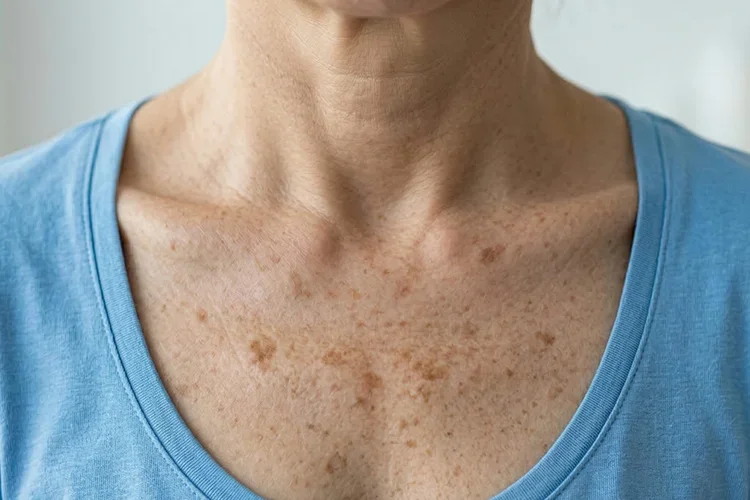
- UV tanning speeds up photoaging and dark spots over time. A DHA self-tanner is a gentler way to get color without that damage.
- Exfoliating beforehand makes for a smoother, more even result. Sunscreen still matters afterward, since self-tanner offers zero UV protection on its own.
- Rich moisturizer plus steady hydration, roughly 90 to 125 oz of water a day, helps the color last longer.
Credit: Luiz Rogério Nunes / Unsplash
The image most people associate with a healthy summer glow tends to be the same one. Sand, tanning oil, hours spent directly under the sun.
A Gentler Way to Get There
There is a gentler alternative that doesn't require leaving the house. A method exists indoors, without direct sunlight, through the use of self-tanning products.
This approach allows the golden tone many people want without the sun-related stress that typically accompanies it. That said, for those with particularly sensitive skin or conditions such as eczema, a patch test on the inner arm beforehand is generally recommended.
Preparing the Skin for an Even Application
Gently buff away dead skin cells with an oil-free scrub, paying extra attention to drier spots like elbows and knees so the tan takes evenly.
Sweep on the mousse or lotion in circular motions with an applicator mitt, starting at the ankles and working up. About 4 to 6 oz should cover you.
Skip water contact for the rest of the night and slip into loose, dark clothing so the color develops undisturbed.
The result of indoor self-tanning depends largely on how the skin is prepared beforehand. Because the tanning ingredient reacts directly with the dead skin cell layer, any unevenness in the skin's surface can lead to patchy or streaked results.
The day before application, gently removing dead skin cells with an oil-free body scrub tends to produce a more even canvas. Scrubs that leave a heavy oil residue are best avoided, as the film can interfere with even absorption. A water-based scrub is typically the better choice. Extra attention to areas prone to friction, such as elbows, knees, and ankles, tends to make a noticeable difference in the final result.
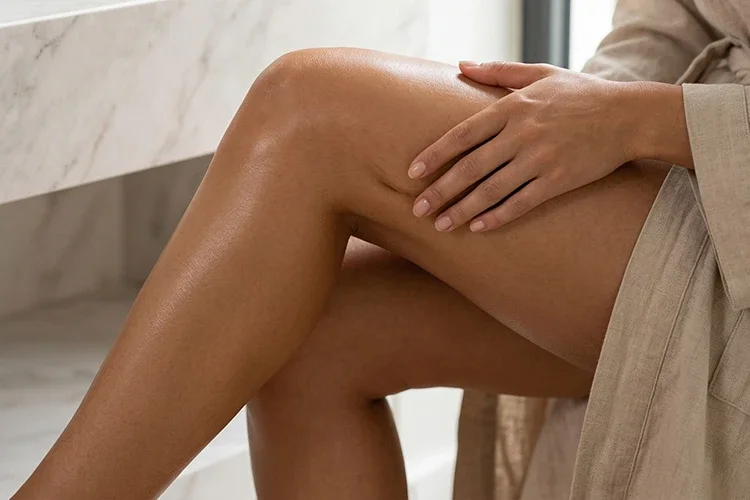
After showering, a lightweight, non-greasy lotion can be applied specifically to drier areas and allowed to fully absorb. Once the skin feels hydrated but not tacky, a dedicated applicator mitt can be used to smoothly sweep the self-tanning mousse or lotion over the skin in circular motions, starting at the ankles and working upward. A volume of 4 oz (approximately 118 mL) to 6 oz (approximately 177 mL) is typically sufficient to cover the entire body.
Avoiding water contact for several hours after application is highly recommended. Once the product has fully dried, loose-fitting, dark-colored clothing is generally recommended overnight to minimize friction against the skin and avoid staining sheets or sleepwear.
Maintaining a Streak-Free Tone Over Time
Once the desired tone has been achieved, the next consideration is maintaining it. Unlike natural sun tanning, a self-tan gradually fades as skin cells go through their normal turnover cycle. This is largely why a consistent moisturizing routine plays such a significant role in extending the tan's lifespan.
Switching from harsh, stripping body washes or hot water to lukewarm water during showers tends to reduce unnecessary irritation.
When drying off, patting the skin instead of rubbing with a towel helps preserve the tone for a longer period.
Heavy artificial fragrances or high-alcohol formulas can accelerate flaking, so moisturizers formulated with ceramides or shea butter tend to be a better fit for daily use.
Applying a rich body cream immediately after showering, before the skin has a chance to dry out, helps maintain the skin barrier. Keeping indoor temperatures at a comfortable 70°F (approximately 21°C) can also help prevent dehydration from excess ambient heat.
Frequently Asked Questions
-
This is generally not recommended. Facial skin is thinner, more sensitive, and has a higher pore density than skin elsewhere on the body. Body formulas tend to be richer and contain heavier lipids, which can clog facial pores and contribute to breakouts. A dedicated facial tanning drop or serum, mixed into a daily moisturizer, tends to be the safer option for the face.
-
On average, a self-tanned result lasts between 5 to 7 days from a single application. Because DHA interacts only with the outermost dead skin cells, the color fades as the skin undergoes its normal weekly turnover.
For those looking to maintain the tone throughout the summer, a retouch every 4 to 5 days is generally recommended. Timing matters here. Waiting until the current tan begins to subtly fade, prepping the skin with a mild shower, then applying a fresh, thin coat tends to produce the best result. Letting a tan fade completely, over 10 or more days, before reapplying can lead to patchier results, so a consistent 4-to-5-day cycle tends to be the more reliable approach.
-
Direct sun exposure or tanning oil immediately following a self-tanning session is best avoided. During the initial development window, at least the first 24 hours, the skin barrier can be temporarily more vulnerable to UV radiation and environmental stress, which raises the risk of sunburn and deeper cellular damage.
Combining the two methods also doesn't extend a self-tan's lifespan. If anything, it tends to accelerate peeling. Natural sun exposure, if desired, is best delayed until the self-tanner has fully set, generally 24 to 48 hours, and should always involve broad-spectrum sun protection.
For anyone already dealing with sunburned, irritated skin, our post-sunburn 72hr recovery ritual is worth following to help the skin barrier repair itself safely.
-
Without proper aftercare, yes, a self-tan can fade unevenly. Because the tan essentially colors the superficial dead skin layer, aggressive friction, such as scrubbing with a rough washcloth or towel, or persistent dryness in high-friction areas like elbows and knees, causes pigmented cells to shed prematurely. This tends to show up as noticeable light patches. Avoiding intense exfoliating tools during regular showers, along with consistent use of a nourishing moisturizer, helps the skin shed more evenly.
-
This depends largely on the formula and how thoroughly it's dried. Products with a built-in guide color, a temporary tint that shows where the product has been applied, are more likely to transfer onto fabric if the skin is still tacky. Allowing the product to dry fully, generally 15 to 30 minutes of standing or walking around, helps prevent this. Loose, dark, long-sleeved sleepwear is generally the safer choice for protecting linens overnight.
Credit: Nataliya Melnychuk / Unsplash
Supporting the Glow From Within
A healthy-looking glow depends on more than surface color. Even a well-applied self-tan can look somewhat dull if the underlying skin isn't adequately hydrated.
Adequate internal hydration tends to extend how long a self-tan holds its color, and the skin generally appears firmer and more even as a result.
For those who've long associated tanning with hours spent under direct sun, this offers a considerably gentler alternative. Indoor self-tanning allows the skin barrier to be treated with more care while still achieving a golden tone.
Sources & References
- [1] Harvard Health Publishing (2016). "Why suntanning is still a bad idea" Harvard Health Letter.
- [2] Turner, J., et al. (2023). "In search of the perfect tan: Chemical activity, biological effects, business considerations, and consumer implications of dihydroxyacetone sunless tanning products" Journal of Cosmetic Dermatology.
- [3] American Academy of Dermatology Association (2024). "10 skin care secrets for healthier-looking skin" AAD Public Resource.
- [4] Mayo Clinic (2026). "Water: How much should you drink every day?" Healthy Lifestyle Guide.
Read Next