Why Your Body Skin Ages Faster Than Your Face (And How to Slow It Down)
At a Glance
- Body skin has fewer oil glands and slower cell turnover than facial skin. That's why dryness and sagging tend to show up there first.
- Hot water and daily UV exposure break down collagen and elastin. Temperature control and SPF go a long way toward slowing that down.
- Treat your body skincare like your facial routine. Gentle chemical exfoliants and lukewarm water keep the skin barrier intact instead of stripping it.
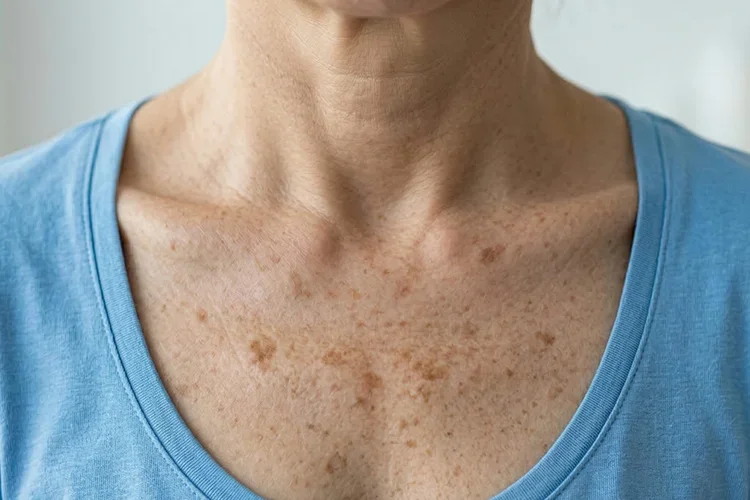
Visual evidence of accelerated aging on less protected body skin. (Image: AI-generated)
Most people build a whole skincare routine around their face and stop right at the jawline. It's an easy habit to fall into. But body skin isn't the tougher, more forgiving one here. If anything, it's built to show its age faster.
Your face usually gets the full routine (cleanser, serum, sunscreen, maybe a retinol at night). Your chest, hands, and knees get whatever's left over, even though they're working with less oil production and a slower repair cycle. That gap is exactly why the wear tends to show up there first, not on your face.
We'll walk through why that biological gap exists, and what a realistic body-care routine looks like once you understand what you're working with.
Fewer Oil Glands, Slower Cell Turnover
That gap alone explains a lot of the chronic dryness people notice on their arms, legs, and torso. Skin that stays dry for too long loses its bounce-back ability, which is part of what dermatologists mean when they describe skin as crepey.
Cell turnover slows things down further. Facial skin renews itself on a fairly quick cycle, but body skin cells take noticeably longer to cycle through, and that lag lets dull, flattened cells pile up right where every fine wrinkle or fold is easiest to see.
The Sun Damage You're Probably Not Blocking
Your neck and chest get almost as much daily UV exposure as your face, but most people never think to extend sunscreen past their jawline. That skin is also thinner with less fat underneath, so when the damage does happen, it tends to show up more.
A broad-spectrum SPF applied to your neck, chest, and hands protects against exactly this kind of damage, not just your face.
Losing the Fat Layer That Keeps Skin Plump
The soft layer of fat just beneath your skin starts thinning as you age, and it doesn't thin evenly. Your upper arms, inner thighs, and stomach tend to feel it first. Once that internal cushioning shrinks and the skin above it is already weaker, sagging is what shows up on the surface.
There's no product that replaces lost volume from the outside, but strengthening the skin itself, its hydration, its collagen support, can soften how much that internal change ends up showing.
A Body Routine Built Around These Habits
Treating your body with the same care you give your face makes a real difference. That means going beyond a basic lotion and adding habits that support real repair, not just surface hydration.
- Switch to lukewarm water in the shower. Hot water strips the lipid barrier that keeps your skin's moisture in place.[3]
- Reach for chemical exfoliants, like lactic or salicylic acid, instead of harsh physical scrubs. They support healthy cell turnover without the extra abrasion.
- Apply antioxidants like Vitamin C or niacinamide to your chest and hands, the areas doing the most sun exposure and free-radical damage.
- Work a retinoid or peptide into your evening body routine to support collagen production overnight.
Ingredients Worth Looking For
Body-specific formulas matter here. Skin on your body is thicker than facial skin, so a retinol or anti-aging body cream usually needs a slightly higher concentration to reach it.
If your legs and arms run especially dry, look for a formula that pairs a humectant with a rich occlusive, like shea butter or a facial-grade oil, to lock that moisture in and keep it there.
What You Do Off Your Skin Matters Too
Topical care only gets you halfway there. What's going on inside your body plays a real role in how your skin ages, and dehydration is a good example. It shows up on body skin much faster than facial skin, leaving it looking withered and tired. A diet with enough omega fatty acids and antioxidants gives your skin the raw materials it needs to repair itself.
Chronic stress plays a role too. It raises cortisol, which is linked to collagen breakdown over time. Managing stress and getting enough sleep matter just as much as whatever cream you're applying. Staying consistent with these habits tends to pay off more, over the long run, than any single product ever will.
Frequently Asked Questions
-
You can use a facial retinol on your body, but body skin is thicker and usually needs a higher concentration to see real results. For visible firming, a body-specific treatment with a stable delivery system is generally the better investment.
-
Patience matters most here. Because body skin cell turnover is naturally slower than facial skin, it takes longer to see a difference than it would on your face, often a matter of weeks rather than days. Peptides or retinoids can give an immediate plumping effect from hydration alone, but the deeper structural improvement, more collagen, more elastin, builds gradually over several months of consistent care.
-
Shower temperature is one of the most overlooked factors in body skin aging. A hot shower feels relaxing, but it's genuinely rough on the lipid barrier that keeps skin firm.[3] Very hot water strips away the oils and proteins holding your skin cells together, which leads to chronic dehydration and eventually sagging. Lukewarm water, finished with a slightly cooler rinse, is the gentler choice, and it sets your skin up to hold onto whatever treatment you apply next.
A Few Small Changes Add Up
Body skin is the largest organ you have, and it's worth more attention than a quick swipe of lotion. Once you understand what it needs (oil, protection, the right ingredients), slowing down sagging and fine lines becomes a lot more realistic.
It's never too late to start. A few consistent habits, done well, do more for how your skin ages than any single product ever could. We're not chasing perfection here, just the healthiest version of the skin you're already in.
Sources & References
- [1] Cleveland Clinic (2022). "Sebaceous Glands." Cleveland Clinic.
- [2] Skin Cancer Foundation (2019). "Photoaging: What You Need to Know About the Other Kind of Aging." Skin Cancer Foundation.
- [3] Cleveland Clinic (2026). "Temp Check: Are Your Showers Too Hot?" Cleveland Clinic Newsroom.
- [4] Purnamawati, S., et al. (2017). "The Role of Moisturizers in Addressing Various Kinds of Dermatitis: A Review." Clinical Medicine & Research.
Read Next