How Many Days Can You Actually Reuse a Bath Towel After a Shower?
At a Glance
- 70% of Americans already wash towels within five uses, keeping up with standard hygiene guidelines.
- The classic, full-sized bath towels we use everyday stem from historical bathhouse traditions, while Eastern cultures favored smaller, climate-practical linens.
- Reusing body towels is fine with proper drying. Just keep a separate, fresh towel for your face daily.
Credit: Christian Agbede / Unsplash
Imagine stepping out of a refreshing shower, feeling completely renewed, and wrapping yourself in that huge, plush bath towel hanging on your bathroom wall. It is a comforting routine that most of us never second-guess.
After all, the logic feels incredibly sound. You just washed your body thoroughly, so it seems perfectly reasonable to assume the towel stays clean too. While there is a common stereotype that people in the U.S. comfortably reuse a single towel all week, the actual data reveals a surprising twist.
On the flip side, nearly a quarter of respondents (about 23%) still hold onto the habit of stretching a single towel's use for about a week or even longer.
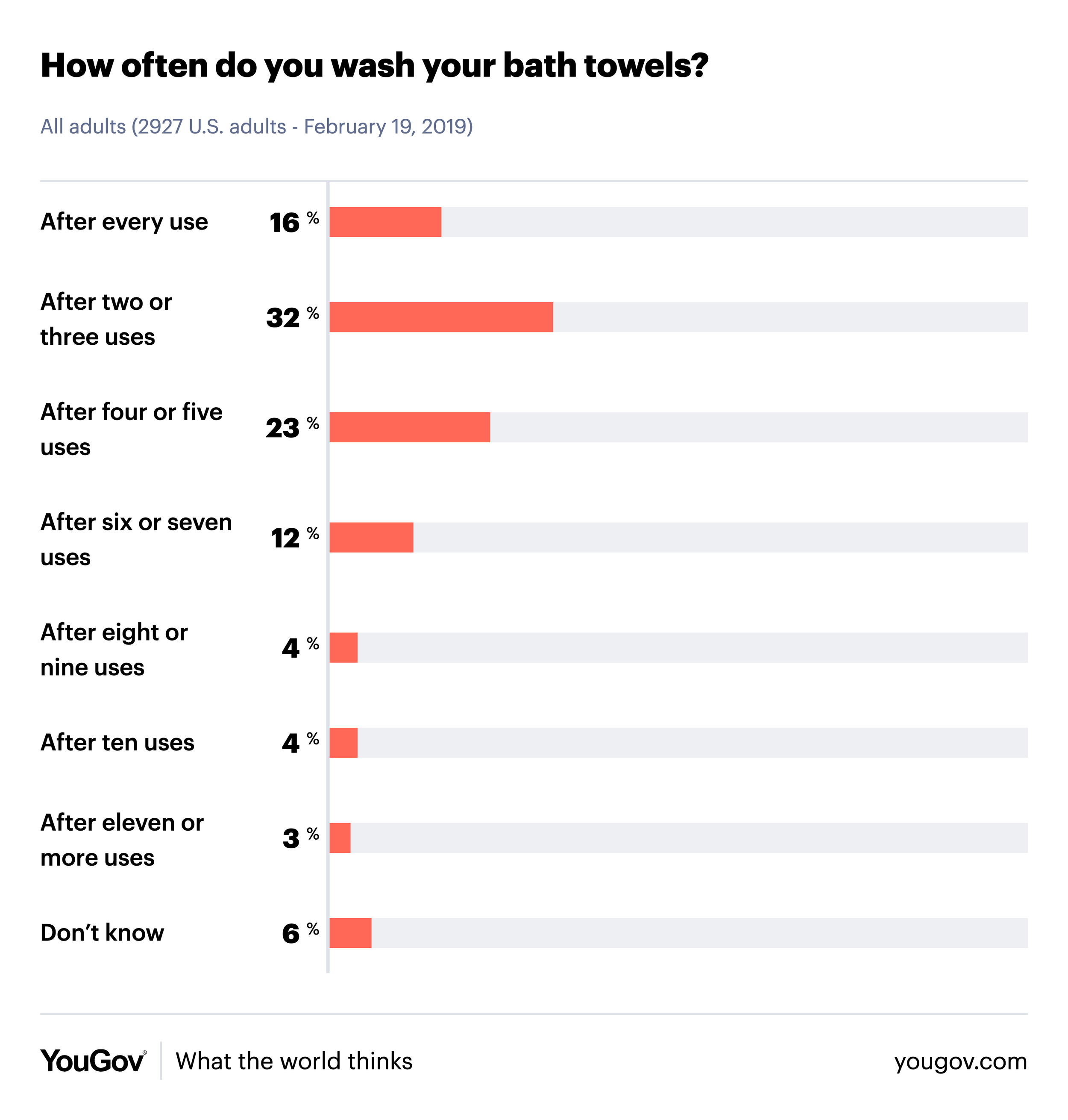
A YouGov survey on the washing frequency of bath towels among 2,927 U.S. adults. (Source: YouGov)
However, if you have been investing in high-quality serums and moisturizers yet still find your skin texture looking slightly dull or uneven, the culprit might be staring right at you from the towel rack. A towel that looks dry and feels soft on the surface can secretly harbor microscopic everyday impurities that work against your skincare efforts.
Today, we will dive into the fascinating history of why towel sizes and habits differ across cultures, and explore how a simple shift in your daily towel routine can be the easiest way to keep your skin barrier clear and healthy.
The Grand History Behind the Oversized Western Bath Towel
To understand why we became so accustomed to massive towels, we can look back at an intriguing cultural history that began centuries ago.
In those days, a hammam was far more than just a place to wash. It served as a vibrant social hub where citizens gathered to converse and relax for hours. Consequently, people naturally used a large, woven cloth called a peshtamal to elegantly wrap around their bodies for modesty while slowly absorbing moisture.
The Western style of bathing historically centered around the bathtub, where one would soak, step out, and wrap the entire body in a large cloth to let the water absorb naturally. That preference for a full-body wrap still shows up today — the standard American bath towel is generally sold around 30 inches by 56 inches (about 76 by 142 centimeters), though sizes vary by brand.
Standard Towel Setups vs. the Wisdom of Eastern Minimalist Routines
"Wait a minute.
Most bathrooms don't just have giant bath towels. We have those standard three-piece towel sets with hand towels and washcloths neatly displayed!"
That is entirely true. Walk into any home or home goods store, and you will see beautifully coordinated options arranged by size. However, if we look honestly at our actual daily habits, the reality tells a different story.
The hand towel hanging next to the sink often becomes a shared linen used by family members and guests alike throughout the day. Meanwhile, the small square washcloth is frequently used with soap during a shower as a body scrubber rather than for post-wash facial drying. As a result, many people end up using their large body towel to dry their face after a shower, or unconsciously bury their face in the shared hand towel after a quick sink rinse. While a full variety of towels exists on the rack, a dedicated, hygienic boundary for facial skin is often missing.
In contrast, traditional towel history in countries like Korea and China centered around compact, medium-sized face towels designed to dry quickly and wash easily. This choice stems from a practical washing heritage where smaller cloths were soaked, wiped across the body, and wrung out repeatedly. Thanks to this background, Eastern routines naturally formed around using separate, smaller towels for the face and body, transitioning them to the laundry basket after brief use.
Even in the humid regions of Southeast Asia, lightweight traditional sarongs were utilized to adapt to the climate. At the end of the day, what really matters isn't how many types of towels you display, but how strictly you separate and how frequently you rotate the fabric that touches your face.
The Microscopic Reality of a Reused Towel
The primary justification for keeping a bath towel on rotation for a full week is the perception that it dries quickly. In many homes with modern heating or in naturally dry geographic regions, a towel can feel completely dry to the touch just a few hours after use. However, according to the official laundry guidelines from the American Cleaning Institute (ACI), what happens inside the woven fibers tells a completely different story.
Reusing a single towel for a whole week pushes past this recommended sanitary threshold.
Even when your body feels pristine after a shower, the mechanical friction of drying rubs off microscopic dead skin cells, natural body oils, and invisible cellular debris. When these organic materials lodge deep within the damp fibers of a towel, they create an environment where everyday bathroom humidity can trap unwanted particles. This deep-seated dampness is highly prone to trapped moisture, which mimics the same environment that triggers a stubborn scalp odor when wet hair is left wrapped up in a towel for too long. Reusing a damp bath towel multiple times introduces these accumulated everyday impurities back onto your freshly cleansed skin.
On top of that, using an improperly dried towel filled with this buildup doesn't just threaten your facial complexion. It can also irritate your body and trigger back and chest acne if you already struggle with body breakouts. Rubbing a week-old towel over your face right after cleansing can negate the benefits of your premium skincare steps by introducing unnecessary buildup to the skin surface.

Credit: Michiel van Kaam / Unsplash
A Practical Towel Separation Routine for Busy Lifestyles
Admittedly, laundering a massive, heavy bath towel after every single shower is an exhausting chore that few have the time to manage. If your living situation involves using a shared building laundry room or making trips to a local laundromat, washing multiple bulky towels every week can quickly become overwhelming. Fortunately, protecting your skin radiance does not require making your daily chores unmanageable. A smart compromise can bridge the gap between practical maintenance and proper hygiene.
The ideal solution is to cleverly redistribute the towels you already own. You can continue using your large, comfortable bath towel for your body for three to four days, ensuring it is hung completely flat in a well-ventilated room outside the damp bathroom to dry thoroughly between uses. At the same time, take a few of those smaller hand towels or face towels and dedicate them exclusively to your face and neck. Instead of reaching for the shared sink towel, adopt a single-use routine for your personal face towels, dropping them into the laundry bin after one use. This practice isolates your most sensitive skin from the environmental impurities that naturally accumulate on full-body or shared linens. Because these smaller towels take up minimal space in a washing machine, utilizing seven small towels a week adds virtually no noticeable burden to your standard laundry routine.
Frequently Asked Questions
-
A musty smell usually means everyday bathroom humidity has trapped dampness inside the fibers, allowing unwanted organic elements to multiply. To prevent this, always hang your towel completely flat in a well-ventilated space outside the damp bathroom to ensure it dries thoroughly between uses.
-
It is actually best to skip the fabric softener. While it makes towels feel soft initially, it leaves a microscopic chemical coating that alters the cotton fibers, significantly reducing their ability to absorb water over time.
-
Even with proper laundering, towel fibers degrade and lose their absorbency over time. Generally, rotating your towels out for fresh ones every one to two years is a good baseline to maintain optimal hygiene and fabric performance.
Small Adjustments That Yield Maximum Barrier Resilience
The real secret to a successful beauty lifestyle isn't about overly complicated routines, but the small, consistent habits that protect your natural glow. Paying closer attention to your facial towel hygiene is one of the most direct and logical ways to support a clear, thriving complexion. For the best results, remember that drying off is only half the battle. Tweaking your body care routine order by applying treatments or lotions within 60 seconds of stepping out of the shower will trap maximum moisture and keep your skin barrier happy. There is no need to compromise your skin comfort simply because standard household habits lean toward reusing large towels for convenience. In this context, your skin barrier refers to the delicate outer layer of your skin that locks in moisture and keeps environmental stressors out.
Try placing a neat stack of fresh, small hand towels right next to your sink starting today. When you blot your face dry after an evening cleanse, take a moment to appreciate the crisp, clean sensation of fabric that has not been exposed to bathroom humidity for days. The gradual accumulation of small lifestyle adjustments, like separating your towels, can restore remarkable vitality and freshness to tired skin. Within a couple of weeks, as you notice a clearer texture and a more vibrant, natural glow in the mirror, you will appreciate how a simple shift in your towel routine can completely revitalize your daily beauty maintenance.
Sources & References
- [1] YouGov (2019). "How often do you wash your bath towels?" YouGov.
- [2] James, K.R. (2023). "A Brief History of Turkish Towels." Handwoven Magazine.
- [3] Bryk, N.E. (2006). "Bath Towel." Encyclopedia.com.
- [4] American Cleaning Institute (n.d.). "Do I need to wash this?" American Cleaning Institute.
Read Next