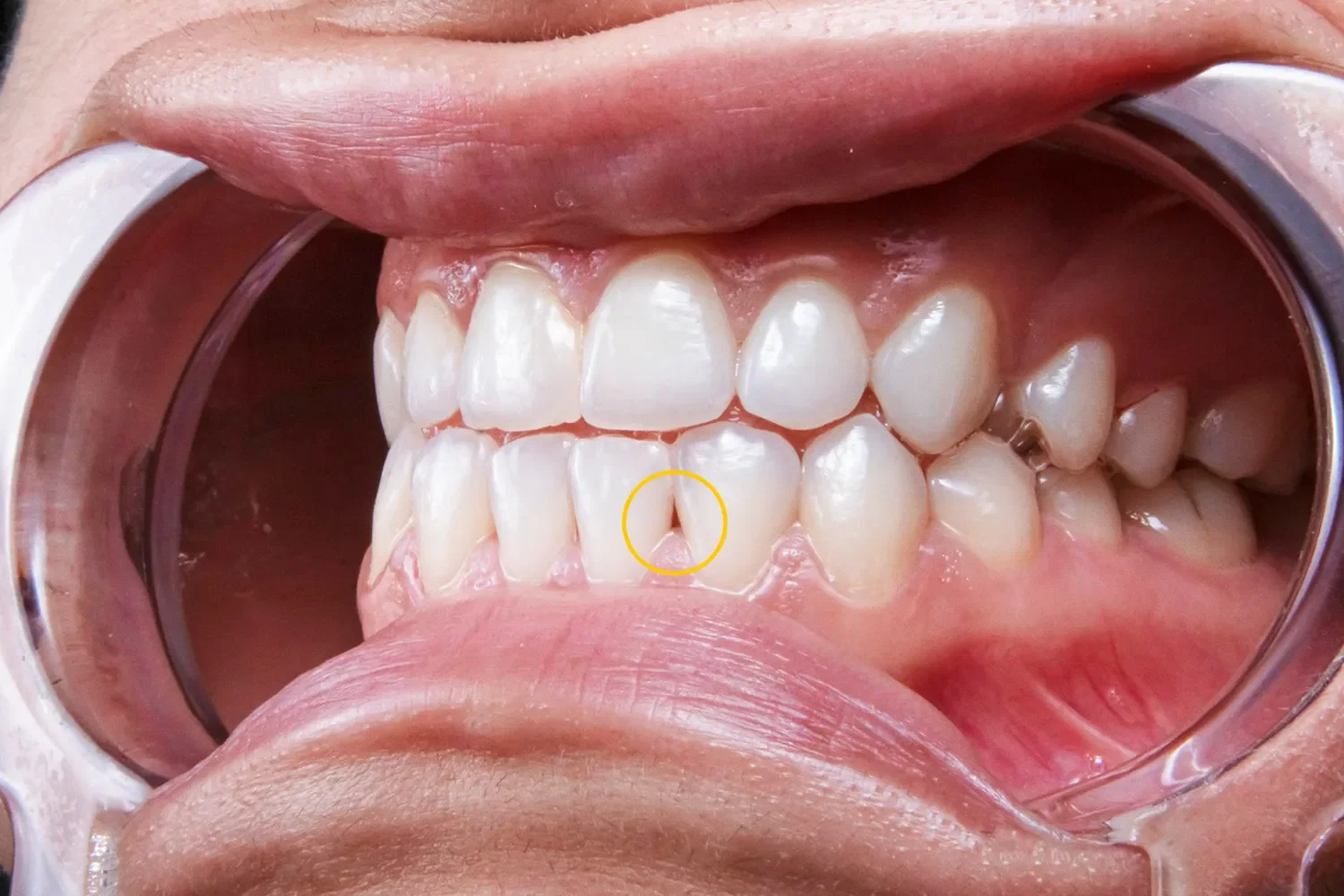
An Analog Bio-Marker You've Been Clipping Off Every Week
At a Glance
- Fingernails grow about twice as fast as toenails—fingertip motion keeps more blood flowing to the nail matrix.
- Ridges, peeling, yellowing, and pitting all have real dermatological explanations—but most come down to mechanical wear, not a missing vitamin.
- A nightly cuticle-oil habit plus good hydration is a reasonable routine. Biotin mainly helps if you're actually deficient.
- Changes that persist—thickening, growth arrest, pain—are worth a dermatologist visit, not a search bar.
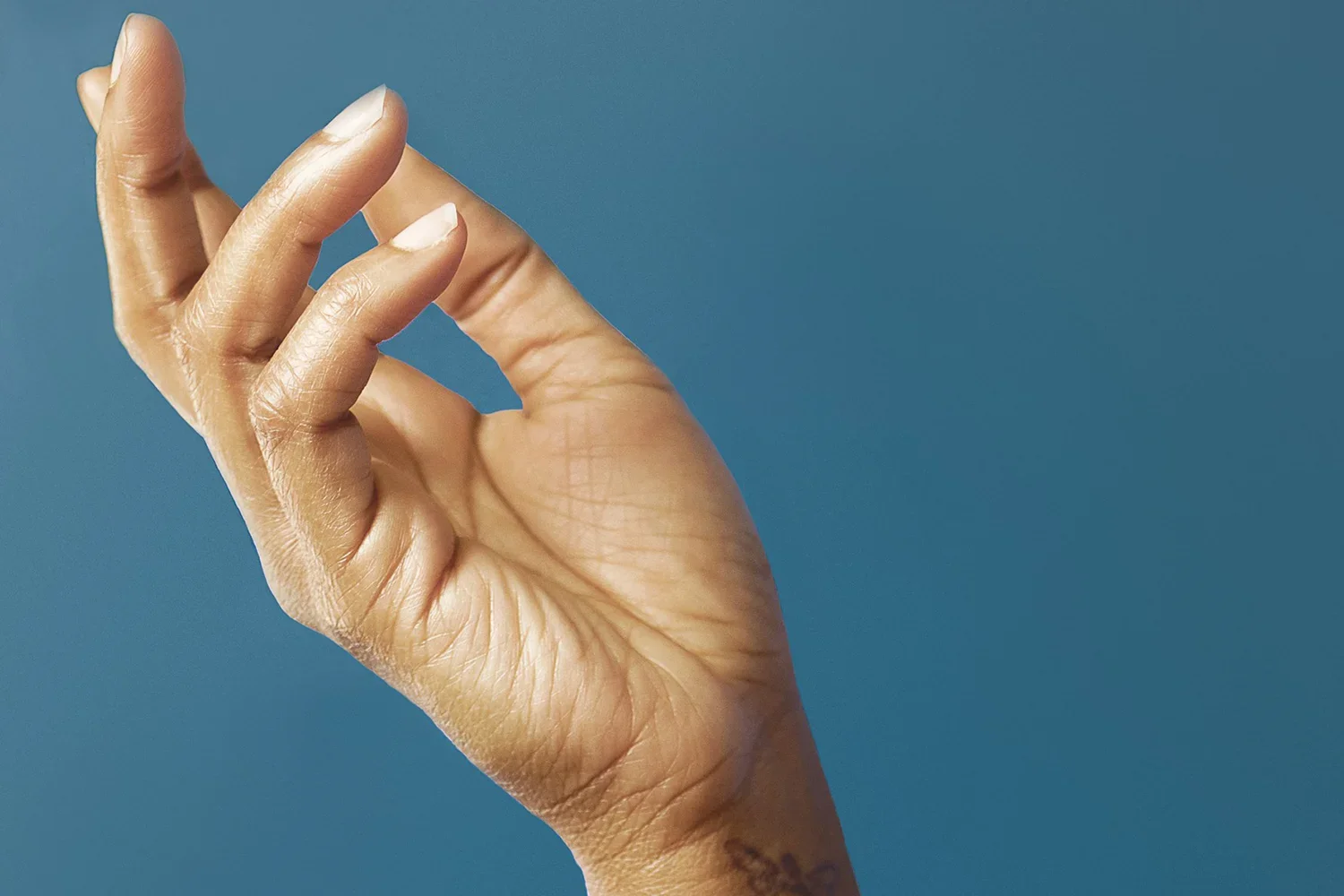
Credit: Lawrson Pinson / Unsplash
I'm clipping my fingernails. Again.
Feels like I just did this. Days ago, maybe. Meanwhile my toenails are over there living their best, slow-motion life, completely unbothered. For years I just rolled my eyes at this as some tedious weekly errand. But the deeper I've gotten into precision health, the more I've started seeing it differently—my nails have basically been handing me a status report this whole time, and I never once thanked them for it.
No Oura ring. No CGM. No subscription fee, no app pinging me at 2am. Just an analog dashboard, staring back at me every time I reach for the clippers.
So if you've been ignoring yours—or just burying them under gel polish every three weeks like I used to—it might be worth a second look. Here's how I've been reading the small "glitch signals" mine have been sending lately, checked against what the dermatology literature actually says.
Why Fingernails Grow Faster Than Toenails
Why do fingers grow so much faster than toes? It's not random.
I'll admit, I've started wearing my own rapid growth as a small badge of honor. Feels like proof my cell turnover is doing its job, that my metabolism is humming along the way it should. But if yours have slowed down out of nowhere? Probably not a manicure problem. Might be worth quietly checking in on circulation, or thyroid function—both are legitimate, dermatologist-recognized influences on nail growth rate.
"Annoyed at having to clip your nails every single week? Weirdly, that's kind of a good sign—your cells are clocking in and doing the work."
What Your Nails Are Actually Telling You
If you've been hiding your nails under gel or polish, you might be missing these signals entirely. Here's what shows up once you strip it all back.
Vertical Ridges
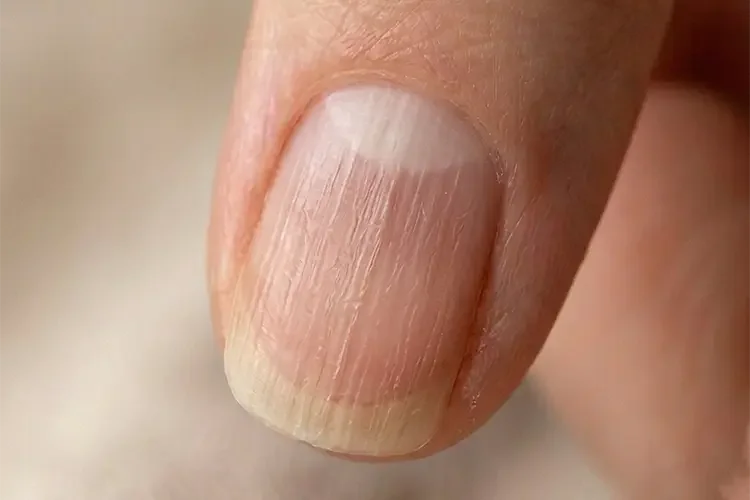
Mine showed up sometime around my mid-thirties and never left, running top to bottom like tiny corduroy lines.
I went looking for the magnesium-and-zinc explanation that keeps circulating in wellness circles, hoping to hand you something more actionable than "you're getting older." Came up empty. It's not in the clinical literature I could find—so consider it an unproven internet rumor rather than a diagnostic clue. If yours show up suddenly, deepen fast, or drag other symptoms along with them, that's the version worth a dermatologist visit.
The Peeling Layers (Onychoschizia)
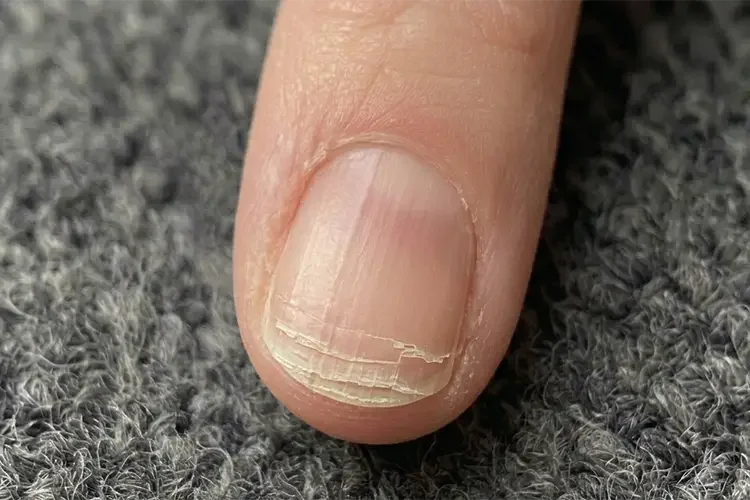
Here's the mechanism, no guesswork required: your nail plate is built like stacked sheets, held together by a thin layer of lipids. Wet them, dry them, wet them again—dishes, long showers, peeling off gel polish—and that layer starts to give. The sheets separate. That's onychoschizia, and it's mechanical before it's anything else.
Calcium gets blamed on reflex, the way people reach for "protein" whenever anything in the body seems weak.
Gloves for chores, a moisturizer applied right after wetting, and patience. That covers most of it.
The Yellow Hue
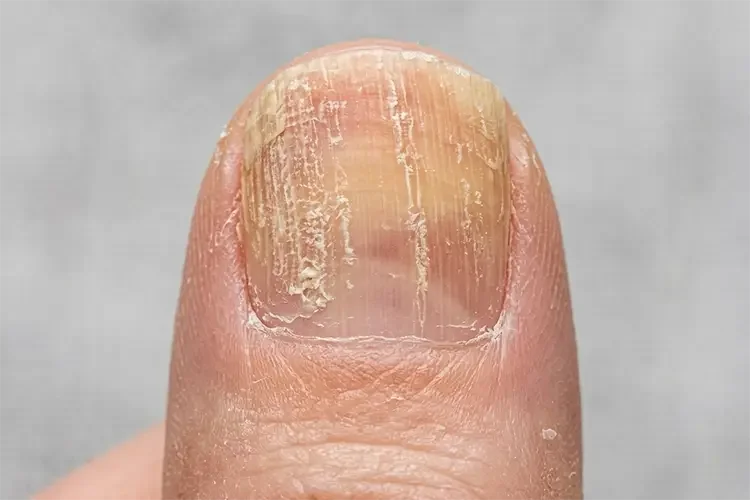
Red polish worn without a base coat will do this. So will smoking. Boring answers, but the likely ones—rule those out first before you spiral into anything else.
Not oxidative stress. Not blood sugar. Those two get repeated a lot because they sound plausible, but they're not actually part of the conversation dermatologists are having about yellow nails.
Tiny Pits and Dents
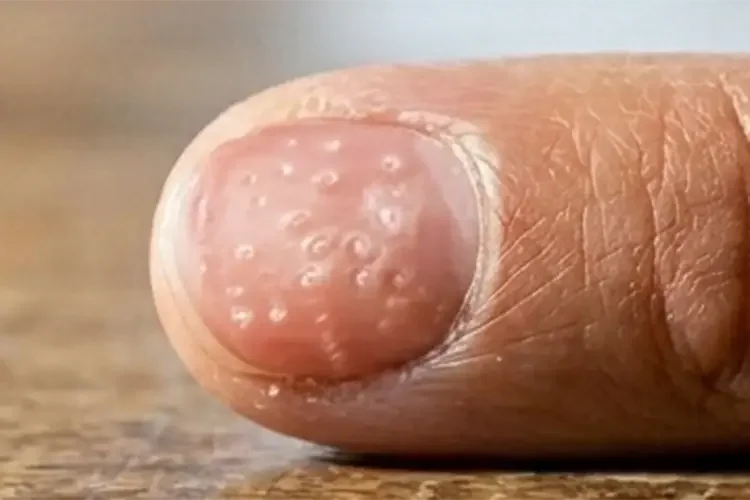
Little divots, like the surface got stippled with a fine needle.
So "immune system running a bit hot" isn't wrong, exactly. It's just vaguer than the reality, which has actual names attached to it.
How I Deal With It Now
I've never been a fan of just covering things up with polish or stickers and calling it handled. I'd rather work from the inside, using whatever data my body's already handing me.
The 5-Second Oil Ritual
Most nights, I massage a drop of jojoba or squalane oil into my cuticles. Not purely cosmetic—it's feeding the nail matrix, where growth actually starts, and replenishing the lipid layer that keeps peeling at bay.
Biotin, Silica, and the Boring Stuff That Works
Biotin (B7) has a permanent spot in my supplement routine.
Silica's evidence base is thinner still. I keep taking both anyway—filed under "reasonable, low-risk habit," not "proven fix."
The Hydration Habit
I used to repeat "18% water" like it was gospel, because it's everywhere—skincare accounts, dermatologist captions, wellness roundups not unlike this one.
So I've quietly retired the specific percentage and kept the behavior that's actually backed by something: fewer hours with pruney fingers, gloves at the sink.
The Body Never Lies
Wearable tech gets all the attention lately, but there's something almost funny about how we overlook the sensors we were just born with.
Next time you grab the clippers, maybe pause for a second first. Look at the ridges. The color. How easily it splits or doesn't. Your analog dashboard's been talking. Might be worth listening—just maybe don't let it self-diagnose for you.
Sources & References
- [1] Yaemsiri, S., et al. (2010). "Growth rate of human fingernails and toenails in healthy American young adults." J Eur Acad Dermatol Venereol.
- [2] American Academy of Dermatology (AAD) (n.d.). "12 nail changes a dermatologist should examine."
- [3] Scheinfeld, N., et al. (2007). "Vitamins and Minerals: Their Role in Nail Health and Disease." J Drugs Dermatol.
- [4] Chessa, M.A., et al. (2020). "Pathogenesis, Clinical Signs and Treatment Recommendations in Brittle Nails: A Review." Dermatol Ther.
- [5] Stern, D.K., et al. (2007). "Water content and other aspects of brittle versus normal fingernails." J Am Acad Dermatol.
Read Next