Credit: Vitaly Gariev / Unsplash
Picture this. You and your partner just shared a genuinely great moment together, close, warm, everything clicking. Lights go out. And within seconds, your partner rolls over, back turned.
The Sudden Turn That Causes Misunderstandings
We get why that stings a little. Your brain wants to read it as distance, maybe even rejection. And if you're the one who rolled over first, you've probably fumbled through an explanation at 1am trying to convince someone that nothing changed.
Run the numbers on this one though, and the story falls apart fast. This isn't a gendered thing, and it's not an emotional signal at all. It's your nervous system executing a fairly efficient shutdown protocol, shifting the whole system into recovery mode for the night. Same as your heart rate dropping after a hard training session. Your body's just doing its job.
Why Your Body Hits the Brakes After
Let's talk chemistry for a second.
But here's the part people miss. That emotional high costs energy, real, measurable energy. Once things wind down, the body starts working to restore balance, and the nervous system makes a pretty fast switch from excited to recovery mode.
During that switch, arousal signals drop and melatonin starts climbing. Think of it like a dimmer switch on a light, not a light switch. It's not a decision your partner is making to tune you out. It's just the system resetting on its own schedule.
It's Not You, It's the Temperature
Temperature matters more than people give it credit for. The body needs to cool down a bit to transition into deep sleep, that part isn't up for debate.
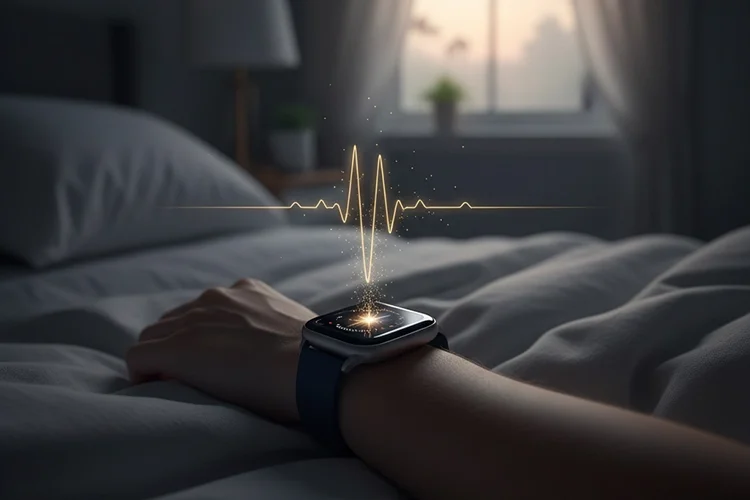
Now stay locked in a tight embrace after an intense moment and you're basically trapping heat between two bodies. Skin temp stays elevated, and the deeper sleep stages get harder to reach. A few of us on the team have actually tracked this ourselves with a sleep monitor, tangled-up nights against nights with a little more space, and the difference in deep sleep percentage wasn't subtle.
Rolling away is the body hunting for a cooler patch of mattress. Let the skin breathe, let core temp drop, and you're both setting up for a better night.

Credit: Acton Crawford / Unsplash
Too Much Skin Contact Is a Real Thing
There's a practical side to this too, separate from hormones and temperature. Face-to-face sleeping means you're breathing in air your partner just exhaled, and that CO2-heavy air cuts into your oxygen intake. Not dramatic, but enough to leave you tossing more than you'd like.
Skin contact has a ceiling too. After a stretch of close physical contact, touch receptors basically want a break. Keep the contact going all night and what felt comforting an hour ago can start registering as too much.
So when your partner rolls away, that's really just them opening up room to breathe easier and move freely.
Sleeping Apart Is What Actually Keeps You Close
Tight spooning all night sounds great in the movies. Real life is different.
So here's the actual math on this. Protecting your own sleep quality is one of the more practical things you can do for the relationship, not the other way around. Wake up rested and you've got the emotional bandwidth to actually show up for your partner.
Keeping your emotional responses in check during the day tends to keep stress levels lower overall.
A little physical separation at night is a pretty effective way to avoid getting jolted awake by your partner's 3am toss and turn.
Waking up rested just makes you a more attentive, more affectionate partner, full stop.
Bottom line, taking your own sleep seriously is one of the more underrated ways to keep a relationship solid over the long haul.
Frequently Asked Questions
-
That oxytocin and prolactin surge right after intimacy usually pulls you toward sleep pretty fast. Miss that window though, and your body clock can get a little thrown off. Here's the thing, when you physically separate after being that close, your skin temp drops suddenly, and your brain can read that shift as "something changed in the environment," which triggers a small alertness signal. Heart rate and blood pressure are also up from the intimacy itself, and it can take your body a little while to settle back to its usual baseline. That kind of overnight recovery is basically what your heart rate variability is tracking. Nothing wrong with you, your system's just still catching up.
-
Honestly, yes, and the research backs it up pretty well. Couples running on poor sleep fight more over small stuff, that's a consistent finding. Forcing yourselves into the same bed if it's wrecking both your sleep isn't doing the relationship any favors. Better rested partners tend to be more patient, more present, more willing to let small things go.
Quick Relief: If you feel too alert after moving apart, practicing these simple vagus nerve exercises for stress relief can help calm your nervous system.
-
The trick that actually works is keeping the room cool but customizing the bedding per person. Your brain wants that cooler room, somewhere around 65°F (18.3°C), to drop core temp for deep sleep. So set the thermostat for whoever runs cold, and let the person who runs warm layer up on their own side instead, a dual-zone comforter works well here, or just an extra blanket on one half of the bed. One tip people sleep on, warm feet actually help your body ease into sleep. Sleep socks dilate the blood vessels in your feet, which helps heat escape faster from your skin, and that heat-loss cue is part of what tells your brain it's time to wind down.[6] Interestingly, your actual core temperature seems to drop at about the same pace either way, the socks just help your body send that falling-asleep signal more smoothly. Small fix, works surprisingly well for both people.
Small Habits That Keep You Close Without Wrecking Your Sleep
If the whole rolling-away thing still feels a little off to you, there are easy fixes. You don't have to pick between your partner's feelings and your own recovery, that's a false choice.
Try building in ten, fifteen minutes of just cuddling and talking before either of you actually tries to sleep. Let your bodies wind down together first. Then, when you're both ready, just say so and roll over. No mystery, no guessing.
Want to keep some contact anyway? Roll over but reach one hand back, rest it on their arm or leg. Small point of contact, still gets the message across, and you're both still getting the space you need to actually sleep well.
Here's the real takeaway. Once you understand what's actually happening biologically, the guilt just kind of drops away. Turning away isn't rejection. It's just your body doing its job so you both wake up functional, rested, and actually able to enjoy each other the next day.
Sources & References
- [1] Magon, N., & Kalra, S. (2011). "The orgasmic history of oxytocin: Love, lust, and labor." Indian J Endocrinol Metab.
- [2] Pacheco, D. (2025). "The Best Temperature for Sleep." Sleep Foundation.
- [3] Johns Hopkins Medicine (n.d.). "The Science of Sleep: Understanding What Happens When You Sleep." Health & Wellness Library.
- [4] Walters, E. M., et al. (2020). "Vulnerability and resistance to sleep disruption by a partner: A study of bed-sharing couples." Sleep Health.
- [5] Anwar, Y. (2013). "Sleepless nights can turn lovers into fighters." UC Berkeley Newsroom.
- [6] Ko, Y., & Lee, J.-Y. (2018). "Effects of feet warming using bed socks on sleep quality and thermoregulatory responses in a cool environment." Journal of Physiological Anthropology.
Read Next