What to Know Before Trying a Home HIFU Device
At a Glance
- Ultrasound skips right past the surface to work in the skin's deeper layers. Clinical-grade devices can reach the SMAS, the same tissue plane surgical lifts target, though home devices generally stay a layer above that.
- The right depth of heat signals your skin to start building new collagen, which is what creates the lifting effect over time.
- Home devices work at a gentler intensity than in-clinic treatments, so consistency matters here more than any single session.
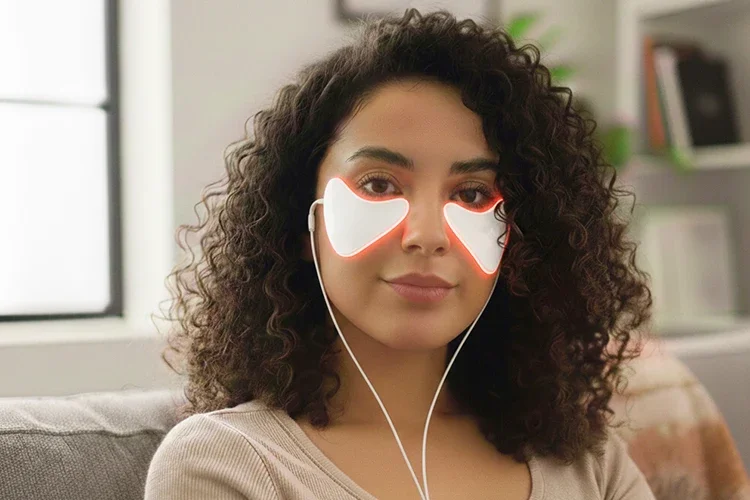
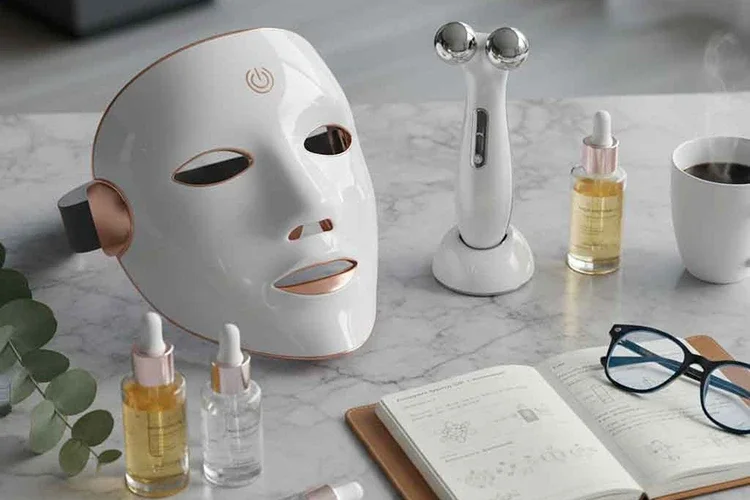
A quiet, at-home moment with a handheld ultrasound device, the kind of routine we've been talking about. (Image: AI-generated)
Let's start with the acronym, since it sounds more intimidating than it is. HIFU stands for High-Intensity Focused Ultrasound, the same kind of ultrasound energy used for prenatal scans, just aimed and concentrated very differently. Dermatologists have used it in-office for well over a decade to lift and tighten skin without surgery.
What's new is that it's showing up in handheld devices built for your bathroom counter, not a treatment room.
Your usual creams and serums work on the surface. The kind of lift most people are chasing happens in a layer well below that, and that's exactly where HIFU comes in.
Ultrasound Waves Can Reach the Dermis and Beyond
The challenge with most anti-aging treatments is getting past the skin's outer barrier. Topical ingredients, no matter how expensive, mostly can't get through it.
Ultrasound works differently. Instead of relying on molecules to absorb into skin, it uses sound waves that pass straight through the surface.
In a clinical setting, these waves can travel deep enough to reach the SMAS (short for Superficial Muscular Aponeurotic System), the same structural layer that surgical facelifts work on directly. That's the depth clinical-grade HIFU research is actually measuring. Home devices work with the same underlying technology, but at a lower, safety-conscious energy level. Most stay in the dermis rather than reaching all the way to the SMAS, so think of them as working one layer up from what a clinic-grade treatment can do.
What sets ultrasound apart from something like laser treatment is precision. It can pass through the surface without disturbing it, then release its energy at one specific depth.
How Heat Triggers New Collagen Production
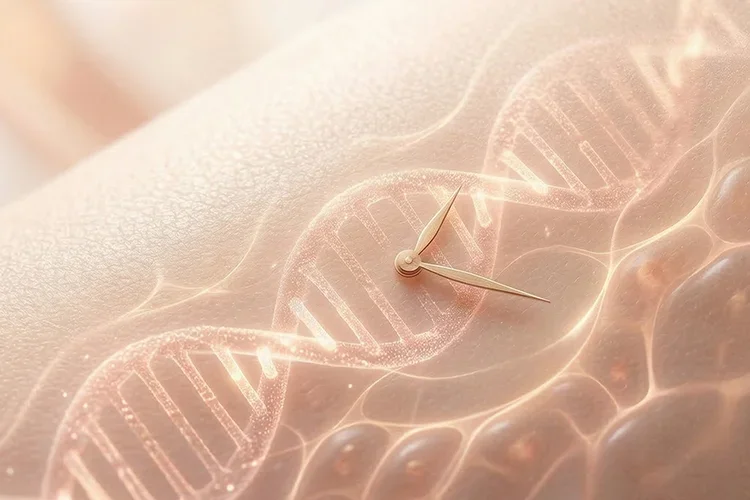
The lifting effect isn't instant. It comes from a real biological process called neocollagenesis. When deep tissue reaches the right temperature, existing collagen fibers contract right away, which is why some people notice a little tightening almost immediately.
The bigger change happens after that. The heat signals your fibroblasts, the cells that build collagen and elastin, to start producing more of both.
Because collagen production runs on your body's own timeline, results build slowly. Most people notice a difference somewhere between 4 and 12 weeks in, not overnight.
What You Trade and Gain With a Home Device
Home ultrasound devices work at a lower intensity than what's used in a clinic, which also means they typically don't reach as deep. That's the trade-off. What you get in return is consistency.
A clinical session is one high-intensity treatment. A home device is something you can use regularly, building up the effect over many smaller sessions instead of one big one.
Sticking to a regular schedule keeps those collagen-building signals active, without the downtime or mild inflammation that can come with more intense in-office procedures.
Getting the Most From Your At-Home Sessions
A few habits make a noticeable difference in how well this works, and if you're already working an LED mask or microcurrent wand into your routine, sequencing your devices the right way matters too.
Use Enough Gel
Ultrasound needs a conductive gel to work properly. Skip it, and the energy scatters at the surface instead of reaching where it's supposed to, which can also cause irritation.
Give It Time
Collagen production isn't instant, so don't judge results too early. The timeline runs in weeks, not days.
Support It From the Inside
The building blocks matter too. A diet with enough protein and Vitamin C gives your skin what it needs to build new collagen.
Frequently Asked Questions
-
Without gel, the ultrasound waves scatter as soon as they hit the air instead of reaching your skin. That wastes energy and can also cause surface burns. The gel is what lets the energy travel into skin cleanly.
-
It takes a little patience. You might feel some mild tightening right after a session, but the real change, new collagen, takes about 4 to 12 weeks to show up.[2]
-
Standard dental work like fillings or crowns is fine, though you might feel a brief tingling or cooling sensation as the waves pass near it. Providers commonly recommend waiting at least 4 weeks after Botox or filler before treating that area, though this isn't something with a hard research consensus behind the exact number, so when in doubt, it's worth checking with whoever administered the injectable. For anything involving pacemakers or metal implants, see the precautions above.
Playing the Long Game With Your Skin
We think of skincare in two buckets, things you put on top, and things you set into motion underneath. Home ultrasound lives in that second bucket. Instead of sitting on the surface, it works in the skin's deeper layers, the same general territory a surgical facelift targets, and nudges those tissues to start repairing themselves.
None of this happens overnight. Collagen remodeling runs on your skin's own clock, so results build over weeks, not days, and tend to hold up well once they arrive.
Think of it less as a single fix and more as an ongoing habit, the same way a good skincare routine pays off with consistency.
Sources & References
- [1] Shome, D. et al. (2019). "Use of Micro-focused Ultrasound for Skin Tightening of Mid and Lower Face." Plastic and Reconstructive Surgery Global Open.
- [2] Ayatollahi, A. et al. (2020). "Systematic review and meta-analysis of safety and efficacy of high-intensity focused ultrasound (HIFU) for face and neck rejuvenation." Lasers in Medical Science.
- [3] Biskanaki, F. et al. (2025). "Complications and Risks of High-Intensity Focused Ultrasound (HIFU) in Esthetic Procedures: A Review." Applied Sciences.
Read Next