LED or Microcurrent First? The Order That Helps Your Skincare Sink In
At a Glance
- Skin is built to keep things out, which is why even your most expensive serum can just sit on the surface instead of sinking in.
- Microcurrent gives ingredients a gentle push deeper into skin, and LED supplies the energy skin cells need to actually use them.
- Use your microcurrent device first, then follow with LED, and stick to water-based serums since oil blocks the current.
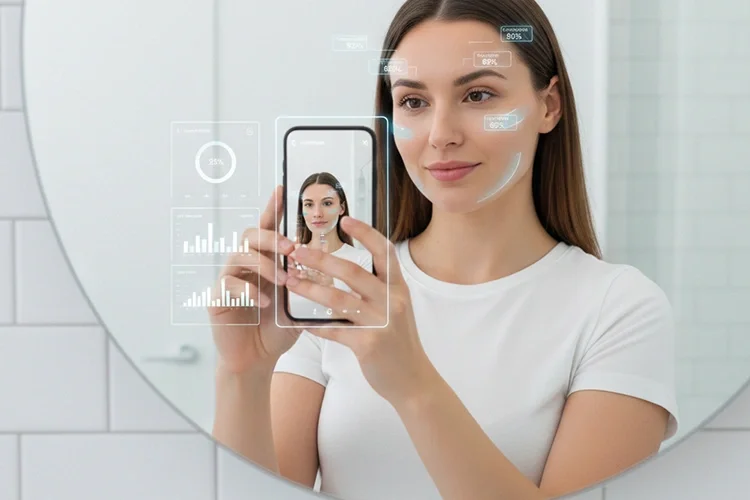
Image: AI-generated
We spend a small fortune on high-performance serums packed with peptides, rare botanicals, and stabilized vitamins.
Here's the humbling part. Skin is built to keep things out, so even your priciest cream can just sit on the surface instead of actually sinking in.
That's where LED therapy and microcurrent come in. Used the right way, these two tools can help your serums finally do their job.
How LED Therapy Helps Your Skin
LED masks aren't just a futuristic accessory. They work more like a power station for your skin cells.
Think of it like warming up an engine. Your skin may simply be better able to make use of what you put on it.
What Microcurrent Does for Absorption
If LED is the recharge, microcurrent is the delivery system. It uses a very low level of electricity, similar to signals your body already produces on its own.
The idea is that a mild current can briefly loosen skin's outer barrier just enough to help ingredients, especially water-based ones, move a little deeper than they would on their own.
Think of it like the difference between a drop of water sitting on a sponge and gently pressing the sponge to help that water soak in.
Putting It All Together
Getting the most out of these two tools comes down to using them in the right order, one after the other.
Step 1: Prep Your Skin First
Start with clean, dry skin. Skip oil-based creams for now, since oil can block both the electrical current and the light. Apply a water-based serum instead, ideally one with hyaluronic acid or peptides. This gives the microcurrent something to travel through instead of just sitting on the surface.
Step 2: Start With Microcurrent
Use your microcurrent device first, focusing on slow, upward strokes. This can help ingredients move a bit deeper into skin, and it gently drains puffiness from the face at the same time.
Step 3: Finish With LED
Follow up with an LED mask, ideally one with red and near-infrared light. LED gives skin cells the energy to make use of what the microcurrent just helped move in, and the near-infrared light can also help calm any redness left over from the microcurrent session.
Frequently Asked Questions
-
No. Oil blocks the electrical current from moving through skin. Stick to water-based serums while you're using microcurrent, and save your oils for after you're done with both devices.
-
With LED, daily use is generally fine. Microcurrent is different. Think of it like exercise for your facial muscles, so give it 24 to 48 hours to recover between sessions instead of using it every day.
-
Start with LED, especially red and near-infrared light. It's gentle and non-invasive, and it can actually help calm inflammation, unlike microcurrent, which involves more physical stimulation.
The Bottom Line
Skincare is shifting from how much product you use to how well your skin can actually use it.
Applying a good serum and hoping for the best isn't enough anymore. What matters more is helping your skin actually absorb what you put on it.
Used together the right way, LED and microcurrent can help your routine do more of what it's already supposed to do.
Your tools matter just as much as your ingredients. A few extra minutes with the right device, in the right order, can make a real difference over time.
Sources & References
- [1] Avci, P., et al. (2013). "Low-level laser (light) therapy (LLLT) in skin: stimulating, healing, restoring." Seminars in Cutaneous Medicine and Surgery.
- [2] Huang, A., et al. (2020). "Light Emitting Diode Phototherapy for Skin Aging." Journal of Drugs in Dermatology.
- [3] Dixit, N., et al. (2007). "Iontophoresis - an approach for controlled drug delivery: a review." Current Drug Delivery.
Read Next