At a Glance
- Since 80% of visible aging is driven by UV exposure, consistent sun protection is one of the most effective investments for preserving your skin's collagen structure.
- The effectiveness of your sunscreen depends less on a high SPF number and more on the consistency of applying enough product and reapplying throughout the day.
- Healthy skin integrity is a year-round commitment, extending beyond the summer sun to include protection against winter light and indoor blue light.
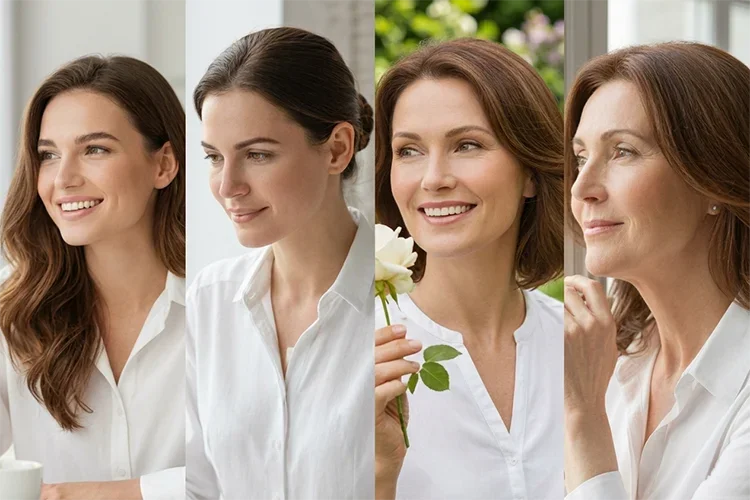
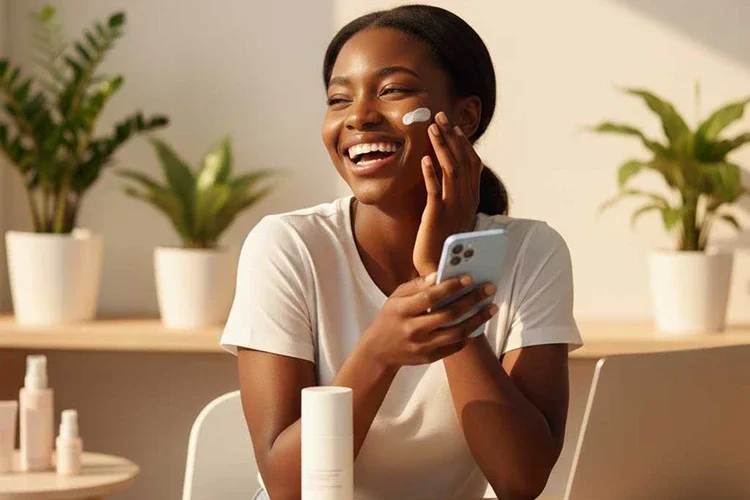
Your two most reliable anti-aging tools might already be sitting on your bathroom counter. (Image: AI-generated)
Expensive serums and in-office laser treatments get a lot of credit for youthful-looking skin, but the real secret might already be sitting in your bathroom cabinet. We keep coming back to the same finding. Consistent sun protection does more for how your skin ages than almost anything else you could buy.
Sunscreen isn't just about avoiding a burn either. Used every day, it protects the collagen and elastin that keep skin looking smooth and even-toned, which means the habit works quietly in the background long before you'd ever notice sun damage showing up.
Here's a simple sun care routine you can actually stick with, no expensive routine required.
Why Sunscreen Belongs in Your Anti-Aging Routine
Collagen Preservation
UV rays break down the collagen that keeps skin firm. Sunscreen acts as a protective layer to minimize this internal damage.
Managing Pigmentation
Dark spots and uneven skin tones can make the skin appear tired. Regular protection helps maintain a clear and even complexion.
Smart Investment
Applying an adequate amount of sunscreen daily is often a more practical way to save on future dermatological costs than relying on expensive serums alone.
The Science of SPF and Anti-Aging Benefits
The Sun Protection Factor represents how much longer it takes for UVB rays to cause skin redness.
That said, SPF isn't really a measure of time, even though many of us learned it that way.
SPF 15 filters about 93 percent of UV rays while SPF 30 filters about 97 percent and SPF 50 filters about 98 percent. A higher rating does not mean double the protection but rather a more refined level of filtration.
You may have heard SPF explained in minutes, the idea that SPF 1 buys you roughly 10 to 15 minutes before burning starts, with higher numbers multiplying that out. It's a helpful shortcut, but sweat, oil, and everyday light exposure wear a product down faster than any formula accounts for. That's why reapplying really is the part that matters most, regardless of the number on the bottle.
Why Application Amount Matters More Than the SPF Number
It is common for people to use SPF 50 but only receive the protection equivalent to SPF 10. The reason usually lies in the amount applied.
If you apply only a small fraction of that amount, the protection factor drops significantly. Layering an adequate amount of a moderate SPF product is often more effective than applying a very thin layer of a high SPF product once.
Routine for a Healthy Skin Tone All Year Round
Sun protection isn't just a summer thing. Winter sunlight and the light bouncing off clouds on an overcast day can be doing just as much damage, even when it doesn't feel that way outside.
Protective ingredients need time to settle into the skin. Make it a habit to apply it as the final step of your morning skincare.
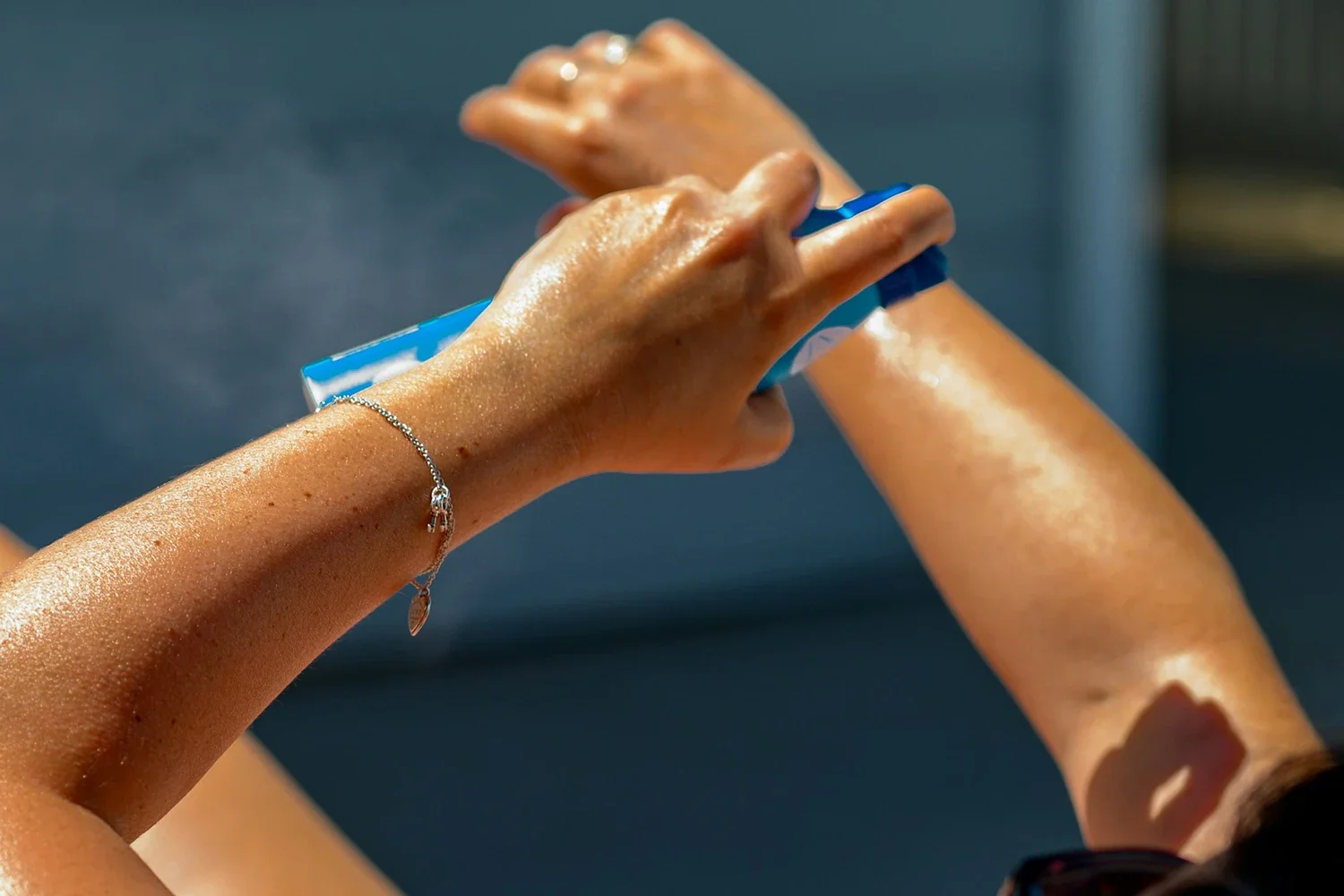
The amount squeezed along your index and middle fingers is the standard recommended amount for the face and neck. Creating a sufficient protective layer is the key.[4]
Regardless of the math, reapplying every two hours is the simplest way to keep your protection level where it should be.[4] Try a sun stick or a sun cushion for easy touch-ups over makeup.
Making Sun Care One of Your Daily Habits
Sun care should not be a chore but a positive habit for self care.
Choose the Right Texture
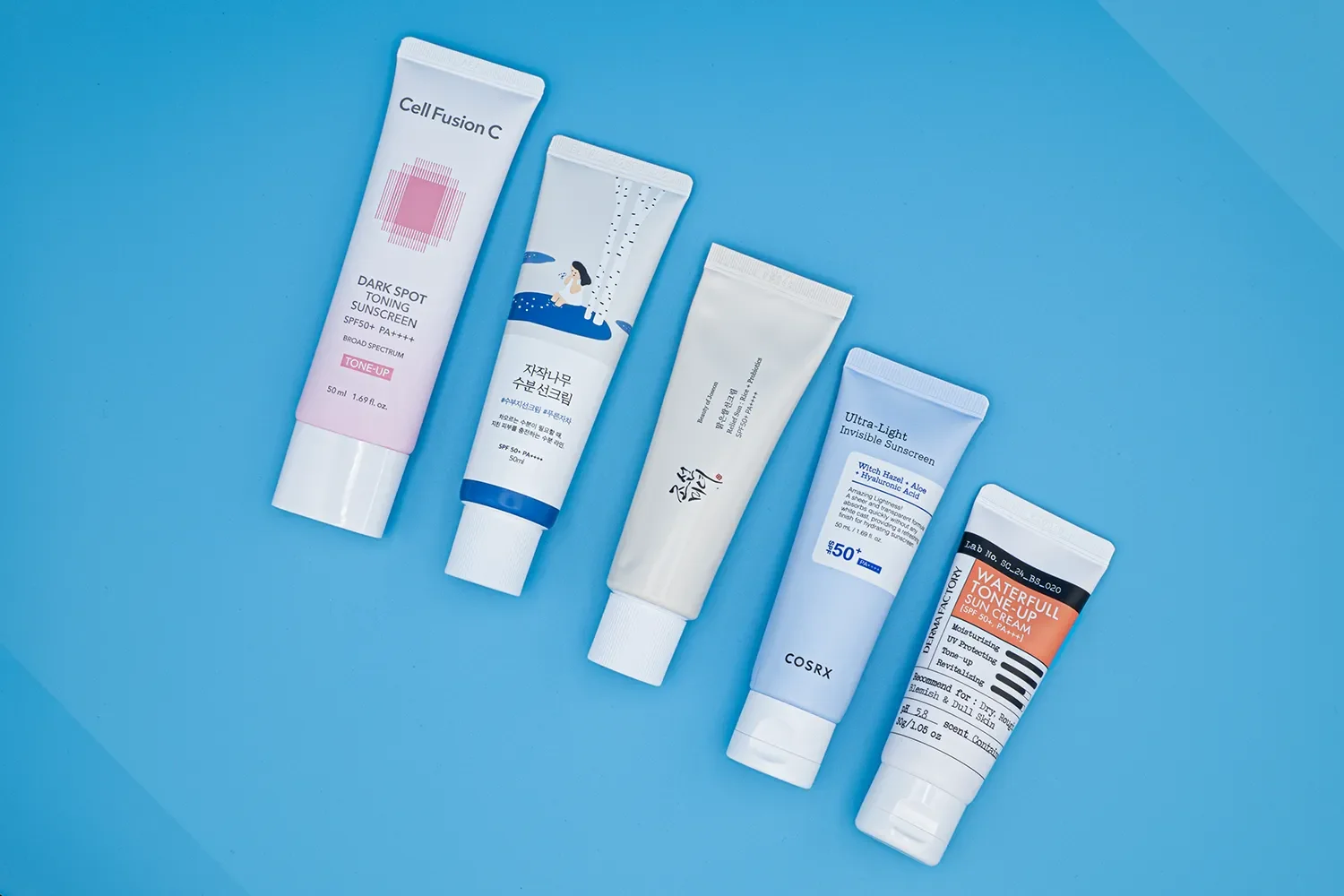
If you have oily skin try a lightweight essence. If your skin is dry look for a moisturizing cream. Many modern products also provide a natural tone up effect for a sophisticated look.
Manage Blue Light Indoors
Skin aging doesn't stop once you're indoors. Some emerging research points to blue light from screens as a contributing factor too, so a product that also filters blue light can be a nice bonus, even though the science on this is still developing.
FAQ
-
Not necessarily. A higher SPF filters UV rays more thoroughly, but it's easy to end up with a false sense of security. How much you apply, and how often you reapply, usually matter more than the number on the bottle.
Sunscreen ratings are tested using about 2 milligrams per square centimeter of product,[5] more than most people actually apply. That's why a thin layer of SPF 50 often performs closer to an SPF 15 in real life. Reapplying every two hours[4] does more for your skin than chasing a higher number ever will.
-
Yes. UVA rays, the ones most responsible for long-term skin aging, pass through glass and clouds just as easily as they do outdoors.[3]
Once they reach your skin, UVA rays trigger enzymes called MMPs that break down collagen over time.[6] That's true year-round, so keeping up the habit through winter is worth it even when you're not planning to be outside long.
-
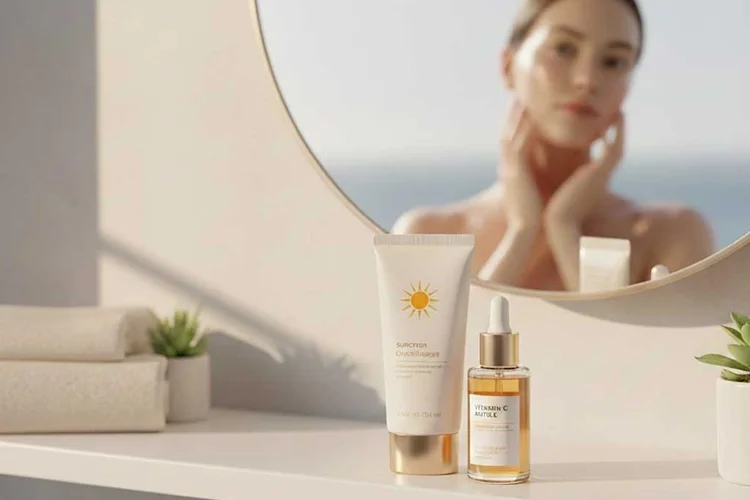
They work well together. Sunscreen blocks UV rays before they reach your skin, while antioxidants like vitamin C help neutralize the stress that gets through anyway, so the two cover different parts of the same job rather than doing the same thing twice.
The Bottom Line on Sunscreen and Aging Well
Sunscreen might be the simplest step in your whole routine, but it's doing some of the heaviest lifting for your skin's long-term health. Instead of treating it as a hassle, think of it as a few seconds of care that pays off for years.
We really do think this is one of the best-value habits in skincare. Staying consistent with it now can help keep your skin firmer and more even-toned down the road, no expensive treatments required.
Make it part of your routine the same way brushing your teeth is, something you just do, without needing much convincing.
Sources & References
- [1] Yale Medicine. (n.d.). "Photoaging (Sun Damage)." Yale Medicine.
- [2] Flament, F., et al. (2013). "Effect of the Sun on Visible Clinical Signs of Aging in Caucasian Skin." Clinical, Cosmetic and Investigational Dermatology, 6, 221-232.
- [3] AIM at Melanoma. (n.d.). "Ultraviolet (UV) Radiation." AIM at Melanoma.
- [4] American Academy of Dermatology. (n.d.). "Sunscreen FAQs." American Academy of Dermatology.
- [5] U.S. Food and Drug Administration. (2012). "Labeling and Effectiveness Testing: Sunscreen Drug Products for Over-The-Counter Human Use — Small Entity Compliance Guide." FDA.
- [6] Brar, G., et al. (2025). "A Comprehensive Review of the Role of UV Radiation in Photoaging Processes Between Different Types of Skin." Cureus, 17(3), e81109.
Read Next