At a Glance
- That deep red in tomatoes comes from lycopene, which research has linked to skin that holds up a little better against UV light.
- Cooking tomatoes and pairing them with a little fat, like olive oil or creamy burrata, helps your body absorb more of their lycopene.
- A quick, hot roast softens cherry tomatoes and brings out their sweetness for a warm-meets-cool caprese.
Credit: Pinar Kucuk / Unsplash
Slice a ripe summer tomato in half and the color alone tells you something. Tomatoes get their red from lycopene, a carotenoid in the same family as the beta-carotene in carrots, and it’s one of the more studied food compounds when it comes to skin and sunlight.
Raw, though, a tomato holds onto its lycopene pretty tightly. A quick roast and a generous pour of olive oil help loosen that grip, which is exactly what this warm-meets-cool caprese is built around.
What Lycopene Can Do for Your Skin

Credit: Mustafa akın / Unsplash
One thing worth knowing. That study used tomato paste, which packs far more lycopene per spoonful than fresh tomatoes do. A cup of roasted cherry tomatoes won’t match it gram for gram, which is exactly why how you prepare them matters.
Why a Little Heat and a Little Fat Help
That sauce was cooked far longer and hotter than anything you’d do in a home oven, so a quick roast won’t recreate it. What a short roast does do is soften the tomatoes, burst their skins, and turn them jammy and sweet.
That’s where the burrata and a generous drizzle of olive oil earn their spot on the plate, flavor and function in the same bite.
Credit: Klara Kulikova / Unsplash
What Goes on the Plate
Ripe cherry tomatoes. Pick the deepest red ones you can find, since that color comes from lycopene.
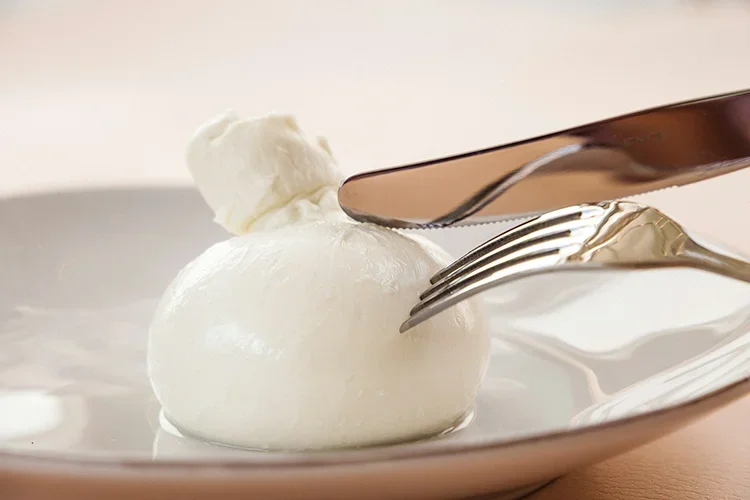
Burrata. Creamy, rich, and the fat partner that helps lycopene along.
Extra virgin olive oil. A second source of fat, and the flavor that ties the whole plate together.
Fresh basil and lemon zest. Pure brightness, there to cut through all that richness.
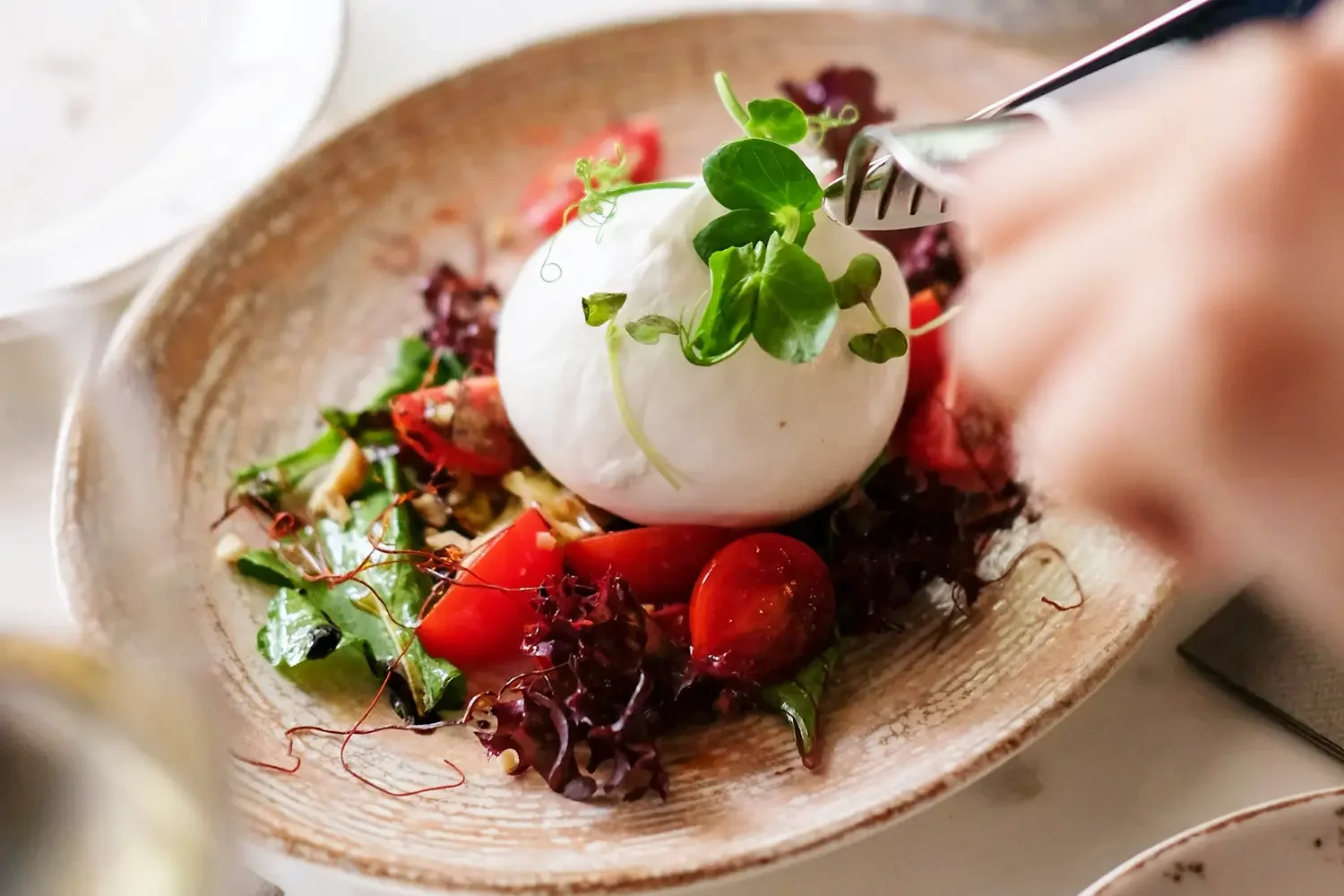
The Ruby Burrata Caprese
Roasted tomatoes bring the lycopene, and creamy burrata and olive oil bring the fat that helps your body absorb it.
The Ruby Burrata Caprese
Warm Roasted Tomatoes Meet Cool Burrata
Nutrition estimates based on USDA FoodData Central.
Frequently Asked Questions
-
About 10 to 15 minutes at 400°F (200°C), until the skins start to split and wrinkle. Pull them while they’re still holding their shape, since they’ll keep softening a little as they sit.
-
You can, fresh mozzarella or part-skim ricotta both work. Just keep the olive oil drizzle generous, since lycopene absorbs best with some fat on the plate.
-
Yes. Cut them into thick wedges and expect them to need a few extra minutes in the oven, since they hold more water. Roma tomatoes are a good pick here, they’re meatier and roast up less watery.
A Salad That Pulls Its Weight
Caprese has always been a little bit of summer on a plate, red, white, and green like the Italian flag. Give it a quick roast and a proper pour of olive oil, and it quietly does a bit more for your skin too. Keep the sunscreen on, keep the tomatoes coming, and let the two work together.
Sources & References
- [1] Rizwan, M., et al. (2011). "Tomato paste rich in lycopene protects against cutaneous photodamage in humans in vivo: a randomized controlled trial." British Journal of Dermatology.
- [2] Unlu, N. Z., et al. (2007). "Lycopene from heat-induced cis-isomer-rich tomato sauce is more bioavailable than from all-trans-rich tomato sauce in human subjects." British Journal of Nutrition.
- [3] Basu, A., et al. (2007). "Tomatoes versus lycopene in oxidative stress and carcinogenesis: conclusions from clinical trials." European Journal of Clinical Nutrition.
Read Next