At a Glance
- Sunscreen does the heavy lifting, and the beta-carotene in carrots adds a steady layer of support from the inside, building up your skin’s sun defenses over time.
- Oranges and mango add vitamin C, which your body uses to build and stabilize collagen.
- Grating or steaming the carrot and pairing the smoothie with a little fat helps you absorb more beta-carotene.
- Drink it cold and fresh, since vitamin C breaks down with heat and light.
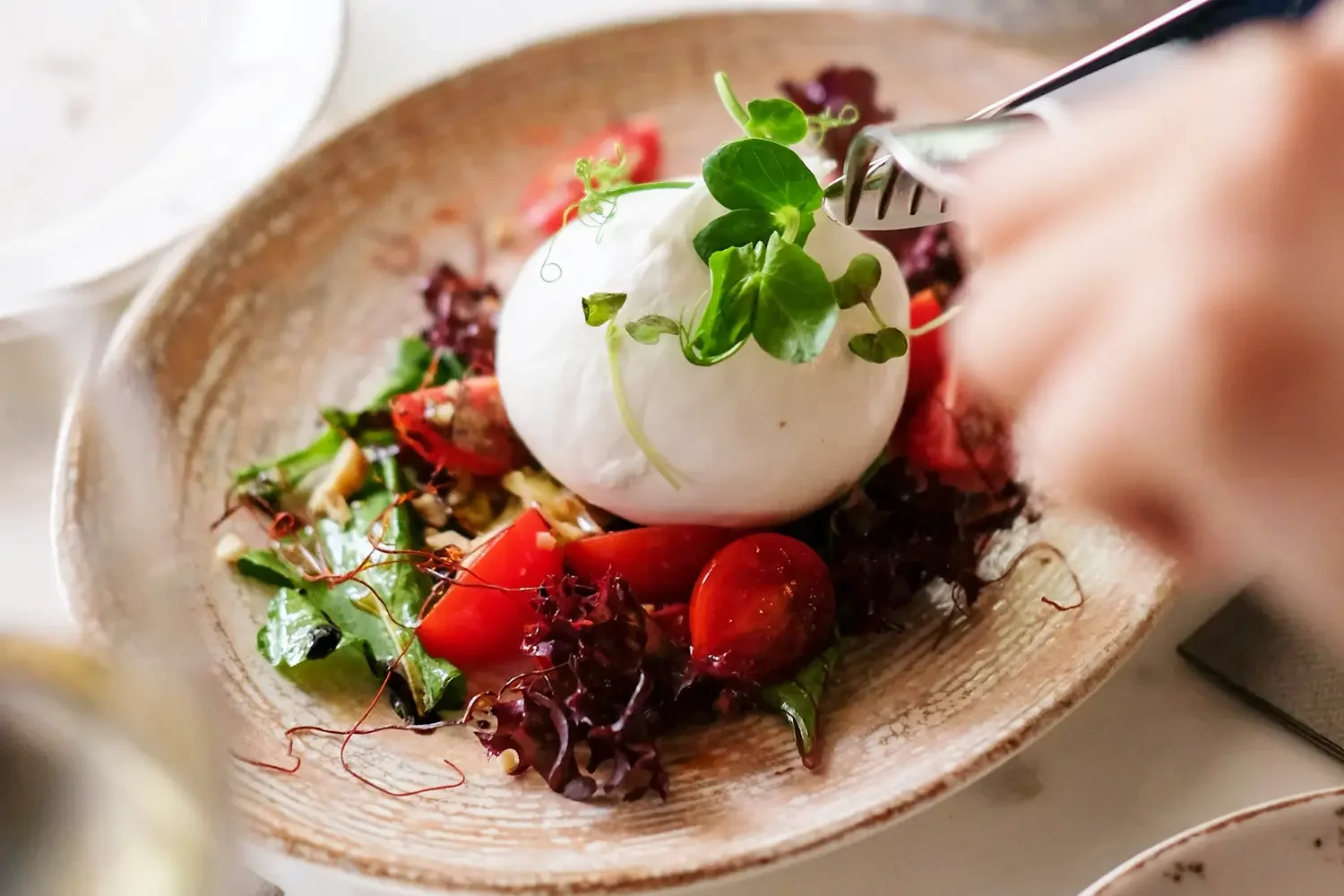
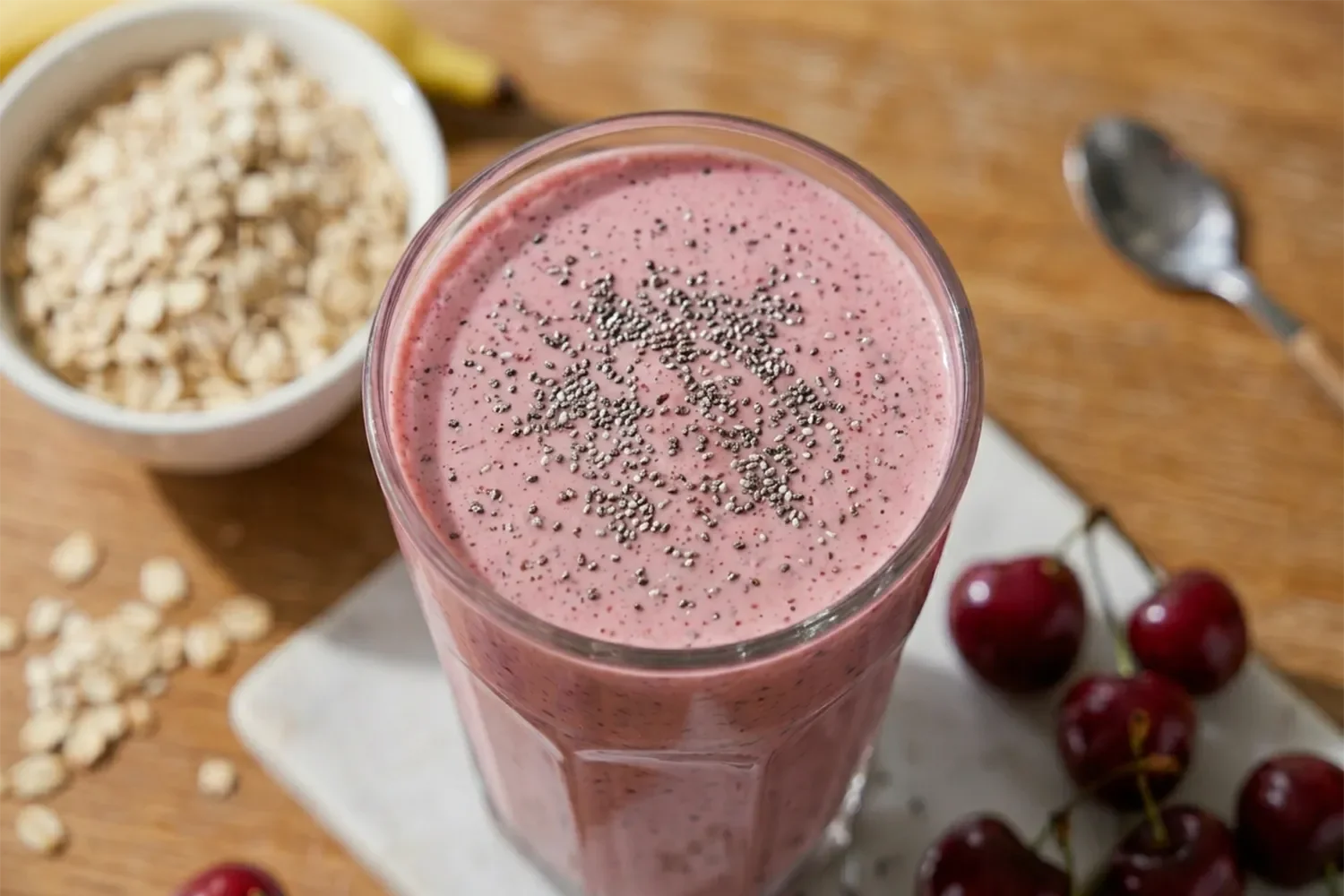
A carrot, orange, and ginger smoothie with walnuts on the side for a little healthy fat. (Image: AI-generated)
You know that friend whose skin always looks rested, even on a Monday? It’s rarely one miracle serum. More often it’s a stack of small, unglamorous habits, and what lands on the breakfast table is one of them.
This smoothie won’t replace your sunscreen or your sleep. What it does is put carrots, oranges, and fresh ginger into one glass you’ll look forward to drinking. Here’s what each brings to your skin, and the little prep tricks that help your body get more out of them.
What Carrots Can and Can’t Do for Your Skin
Carrots get their color from beta-carotene, a plant pigment in the carotenoid family, the same group that gives tomatoes and sweet potatoes their warm tones. It’s also one of the most studied nutrients when it comes to skin and sunlight, and what researchers found is more modest, and more useful, than the usual smoothie marketing suggests.

Credit: Josh Millgate / Unsplash
Sailors Learned About Citrus the Hard Way
Frozen mango pulls double duty, more vitamin C and that thick, frosty texture that makes this feel like a treat instead of a chore.
Ginger, the Warm Note in the Glass
What nobody has studied is whether half a teaspoon in a smoothie changes anything you’d see in the mirror. So think of ginger here like the accent note in a good perfume. It rounds everything out and makes the whole glass more interesting to come back to.
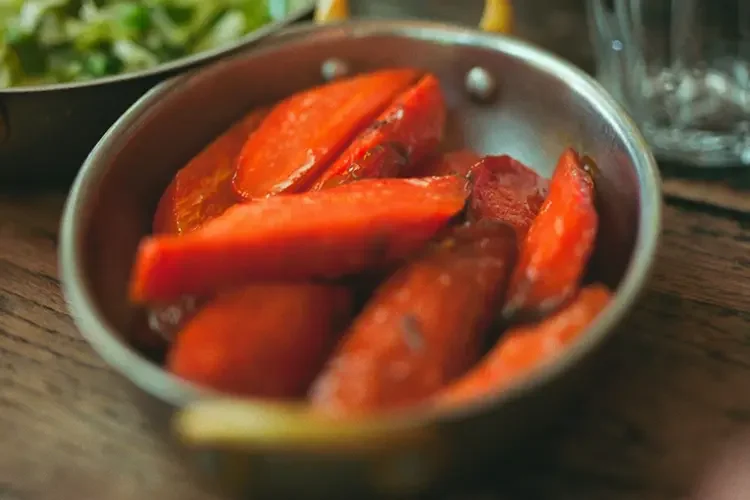
A little heat and a little fat help carrots share more of their beta-carotene. Credit: Intrepid / Unsplash
Small Prep Habits That Make a Difference
A few easy habits help you get more out of every glass.
Grate or steam the carrot first. Finely grated or steamed for a few minutes, it breaks down far more easily than raw chunks, and that’s the whole point.
Give it a little fat. Beta-carotene is fat-soluble, so a small handful of walnuts on the side, or a spoonful of nut butter blended in, helps it along.
Keep it cold and drink it fresh. Vitamin C breaks down with heat and light, so frozen mango and drinking it right after blending are the easy wins.
Make it part of breakfast. Between the orange and the mango, this is a naturally sweet glass, so pairing it with some protein or fat is a smart way to round it out.
The Sunshine Glow Smoothie
Five ingredients, one blender, about five minutes. Grate or steam the carrot first, and the rest takes care of itself.
The Sunshine Glow Smoothie
A Bright, Gingery Morning Glass
Nutrition estimates based on USDA FoodData Central.
Frequently Asked Questions
-
You can, just expect it to taste a little more tart. One thing to check first. Grapefruit can change how some medications work, including certain cholesterol and blood pressure drugs, so if you take anything daily, ask your doctor or pharmacist before making the swap.[6]
-
Fresh is better here. Vitamin C breaks down with heat and light, and the texture turns watery as it sits. If mornings are rushed, grate or steam the carrot the night before, keep it in the fridge, and blend everything in the morning.
-
Give it a while. Skin renews itself slowly, and researchers note that it takes several weeks for carotenoids to start showing a protective effect at all.[1] Think of this as a habit worth keeping for a few months.
Good Skin Is a Slow Build
No single glass is going to change your face by Friday. What moves the needle is the stack, sunscreen every morning, real sleep, and a breakfast that quietly hands your skin something useful. This smoothie is just a bright, easy way to keep that last part going.
Sources & References
- [1] Stahl, W., et al. (2012). "β-Carotene and other carotenoids in protection from sunlight." The American Journal of Clinical Nutrition.
- [2] Harvard T.H. Chan School of Public Health (n.d.). "Vitamin C." The Nutrition Source.
- [3] Pullar, J. M., et al. (2017). "The Roles of Vitamin C in Skin Health." Nutrients.
- [4] Mashhadi, N. S., et al. (2013). "Anti-Oxidative and Anti-Inflammatory Effects of Ginger in Health and Physical Activity: Review of Current Evidence." International Journal of Preventive Medicine.
- [5] NIH Office of Dietary Supplements (n.d.). "Vitamin A and Carotenoids: Fact Sheet for Health Professionals." National Institutes of Health.
- [6] U.S. Food and Drug Administration (n.d.). "Grapefruit Juice and Some Drugs Don't Mix." FDA Consumer Updates.
Read Next