At a Glance
- Sweat on its own helps skin hold moisture. Problems tend to come from letting it sit, or from washing it off with harsh cleansers and hot water.
- Ceramides can help restore the lipid layer between skin cells, and panthenol helps skin hold on to water.
- Wash gently after training, apply ceramides and panthenol while skin is still damp, and use water-resistant SPF 30 or higher if you're heading back outside.
Exercise brings more blood flow to the skin, which is why cheeks flush after a run. (Image: AI-generated)
Few things feel better than a hard workout. Your face is flushed, and you can feel the sweat drying on your skin.
It’s easy to assume all that sweat is wearing down your skin barrier. Dermatologists see it a little differently.
Sweat isn’t the problem. What you do afterward is.
What Sweat Does, and Doesn’t Do, to Your Skin
Training often means more showers, too. And every wash puts your cleanser in direct contact with your skin’s surface.
Clearing sweat off gently, then giving your barrier a little support, covers most of what post-workout skin needs.
How Ceramides Hold Skin Together
The outer layer of your skin is made of flattened cells held together by a thin layer of fats.
That research focuses on skin conditions rather than post-gym skin. Frequent showers can leave skin feeling tight and dry, though, and a light layer of ceramides is a sensible way to support the barrier while it repairs itself.
Look for ceramides paired with cholesterol and fatty acids, ideally in a lotion or gel that won’t feel heavy after a workout.
Where Panthenol Fits In
For skin after training, its hydration benefits are the part with the strongest support.
A Simple Post-Workout Routine
Pat your skin, leaving it slightly damp, and apply your ceramide and panthenol product right away so it goes on before your skin dries.[6]
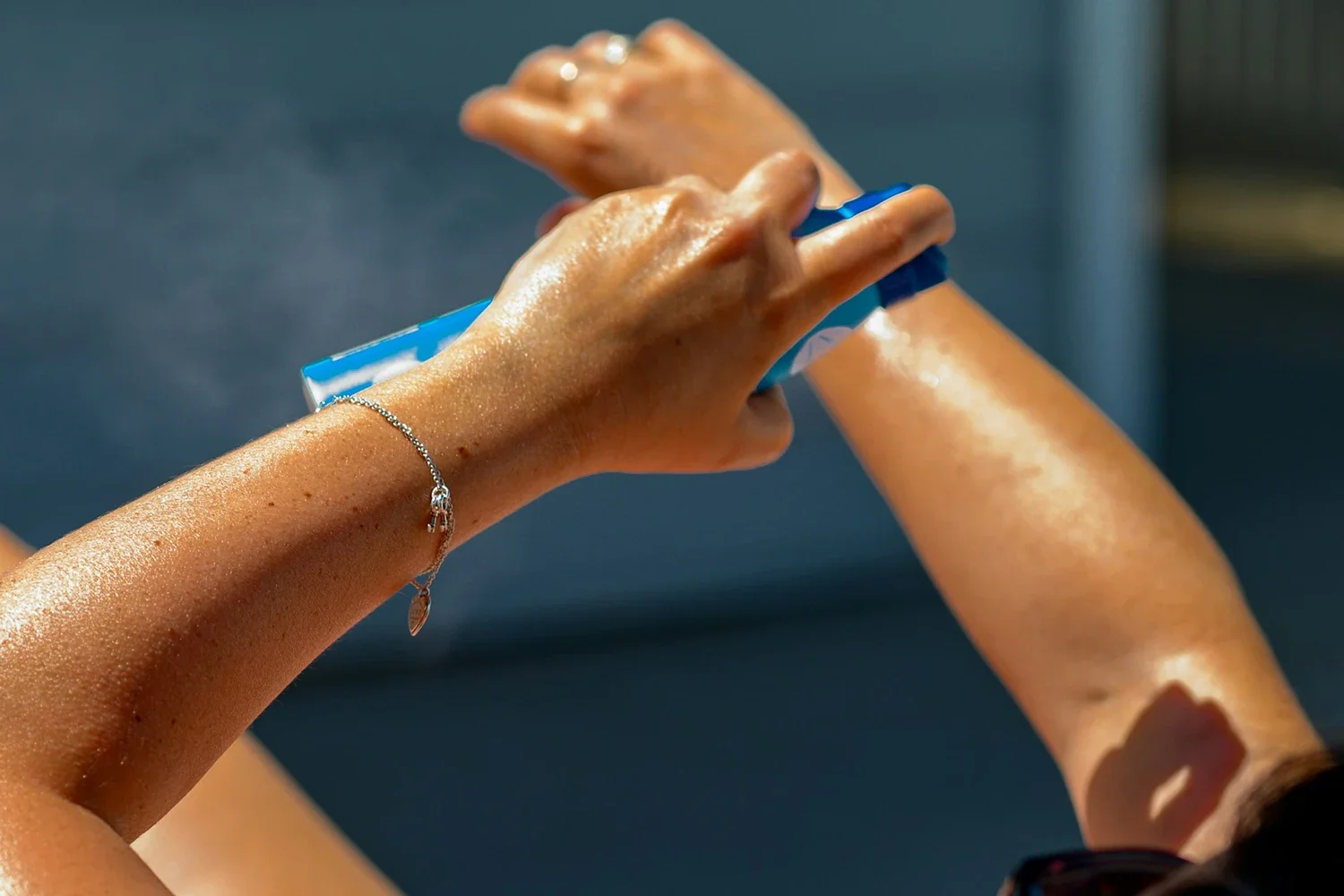
Going back outside? Use a broad-spectrum, water-resistant sunscreen with SPF 30 or higher, labeled non-comedogenic. On long sessions, reapply every two hours and after heavy sweating.[2]
Frequently Asked Questions
-
Ceramides are part of the lipid layer your skin already makes.[4] Whether a product feels heavy depends on the rest of the formula, so if you’re breakout-prone, choose a lightweight lotion or gel labeled non-comedogenic.
-
In a pinch, yes. When no cleanser is around, lukewarm water alone can help prevent breakouts. If you can’t shower at all, wash your face with a gentle, non-comedogenic cleanser and change into clean clothes.[2]
-
The Bottom Line
Sweat helps keep your skin hydrated, so the aim is simply to rinse it off before it sits too long.
Shower soon after training with warm water and a gentle cleanser. While your skin is still damp, apply a light layer with ceramides and panthenol.
The whole routine takes a few minutes, which makes it easy to keep up.
Sources & References
- [1] U.S. Dermatology Partners (2024). "6 Benefits of Sweating That'll Make You Extra Thankful for That Post-Workout Glow." U.S. Dermatology Partners.
- [2] American Academy of Dermatology (n.d.). "How your workout can affect your skin." American Academy of Dermatology.
- [3] Schmid-Wendtner, M. H., et al. (2006). "The pH of the skin surface and its impact on the barrier function." Skin Pharmacology and Physiology.
- [4] Coderch, L., et al. (2003). "Ceramides and skin function." American Journal of Clinical Dermatology.
- [5] Cho, Y. S., et al. (2022). "Use of Dexpanthenol for Atopic Dermatitis—Benefits and Recommendations Based on Current Evidence." Journal of Clinical Medicine.
- [6] Ludmann, P. (n.d.). "Dermatologists' top tips for relieving dry skin." American Academy of Dermatology.
Read Next